Minneapolis ‘violence interrupter’ CEO salary triples to $246,000 as audit exposes lack of oversight
(The Center Square) – The founder of a government-funded nonprofit that patrols crime-ridden areas of Minneapolis had his salary nearly triple to $246,000, and the city program that pays his…
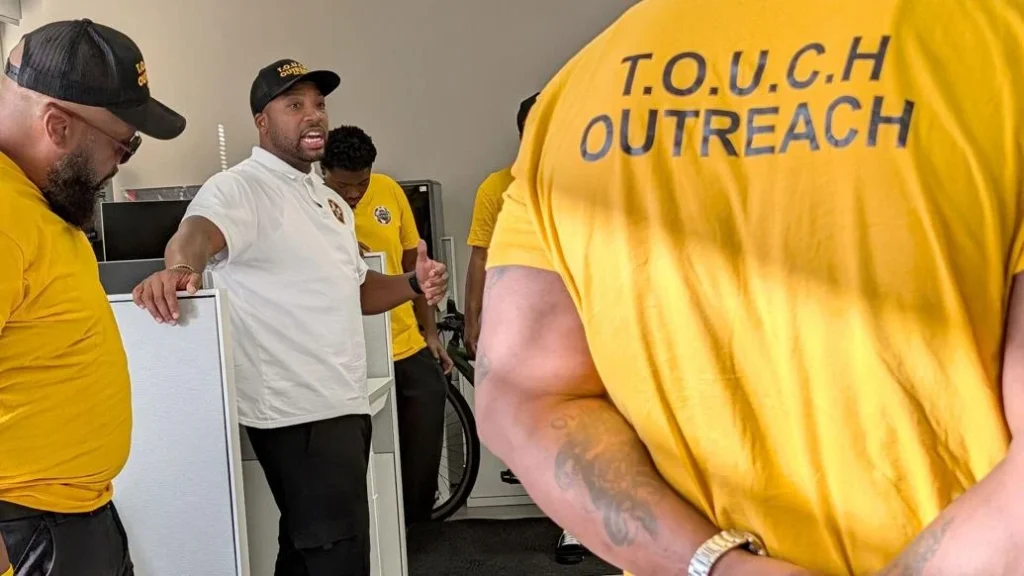
(The Center Square) – The founder of a government-funded nonprofit that patrols crime-ridden areas of Minneapolis had his salary nearly triple to $246,000, and the city program that pays his organization was found to lack proper financial oversight, an investigation by The Center Square found.
Muhammad Abdul-Ahad, chief executive officer of T.O.U.C.H. Outreach, defended his 2024 compensation — the most-recent year for which the nonprofit’s tax filings are publicly available — and told The Center Square he is underpaid for his important and sometimes dangerous work.
The substantial salary came in a year in which Minneapolis leaders approved a big increase in annual funding to his nonprofit to about $1.5 million, according to city records.
T.O.U.C.H., which stands for Teaching Our Urban Communities Hope, is among three “violence interrupter” groups contracted by the city to maintain a presence and deescalate disputes in targeted areas of Minneapolis.
A recent city audit of the Neighborhood Safety Department — which oversees the contracts — found significant weaknesses in its oversight, including deficiencies in invoice reviews and the verification of contracted work.
“The city is at increased risk of fraud, waste and abuse within Neighborhood Safety contracts,” the city auditor’s office concluded in June.
Abdul-Ahad declined to say how much he was paid in 2025 but that it was likely less than in 2024. Records show Minneapolis funding to his nonprofit was cut by about half in 2025. The nonprofit’s tax filings for 2025 are not yet publicly available.
His 2024 compensation exceeds the salaries for many of the highest-paid city leaders for Minneapolis, including the mayor, city attorney and chief financial officer, who was paid about $234,000 last year, according to city data.
Abdul-Ahad said he should be making more money than the city’s highest-paid executive — interim Community Safety Commissioner Toddrick Barnette — who oversees the city’s public safety departments, including police, and was paid about $365,000 last year.
“Let’s put him out on the streets to see what happens,” Abdul-Ahad said of Barnette, who has said he would leave the job at the end of the year.
The city audit that warned of fraud risk followed a lawsuit filed by a Minneapolis resident in 2023 that alleged the department had arbitrary procedures for issuing the contracts and failed to properly oversee contract payments, according to court records. In a settlement agreement in 2024, the city agreed to modify its procedures and require the “violence interrupter” groups to report more specifically how they are spending taxpayer money.
That agreement happened late in the year in which Abdul-Ahad’s compensation from his nonprofit tripled. He was paid nearly double the salary of the leader of a similar nonprofit in Minneapolis that also receives city contracts for the same work, according to tax filings.
Jess Olstad, a spokesperson for the city, said there are limits to how much the city will reimburse for contracted work, but that “city contractors are independent entities that determine what they pay their own employees.”
She initially wanted to know how The Center Square determined the salaries despite them being in publicly available filings. She then declined to specifically comment on Abdul-Ahad’s salary or to reveal whether the city examines the publicly available tax filings to verify how taxpayer money is being spent.
Foot patrols
T.O.U.C.H. Outreach employs people as independent contractors to walk streets, alleys and parking lots south of downtown Minneapolis five days a week.
They don bright yellow shirts with the nonprofit’s name in black capital letters across the back and travel in groups for seven or eight hours.
They spend much of their time making drug dealers and users and other potential ne’er-do-wells feel uncomfortable, by occupying their spaces, Abdul-Ahad said. In the roughest areas, a dozen of T.O.U.C.H.’s workers fan out and simply stand around.
The tactic has been effective at driving the drug trade away from some locations after it becomes entrenched, Abdul-Ahad said, but he acknowledges the solution is temporary: The troublemakers just move elsewhere.
His workers also talk with businesses to learn about emerging problems and log people — many of them homeless — in an effort to enroll them for public services.
Their work interrupting violence comes sporadically. On a recent day that The Center Square accompanied T.O.U.C.H. for most of its patrol, three of its workers intervened in a dispute between coworkers at the Midtown Global Market that had escalated to shoving. They accompanied one of the men outside and talked to him to cool the situation.
They sometimes encounter people who are armed with weapons. That includes knives and guns, but the biggest threat is often bear spray, which has grown in popularity among youth, Abdul-Ahad said. None of his workers has been seriously injured, but they don’t patrol during the more-dangerous overnight hours.
Not long after The Center Square left the group on a recent night, the sounds of gunshots were reported across the street from the nonprofit’s office, according to the Minneapolis Police Department. A whiteboard the group uses for planning has bullet holes, Abdul-Ahad said, from a time in recent years when shootings were more prevalent.
Shootings drop 50%
The reports of shots fired citywide have plummeted more than 50% since a 2021 peak, along with the number of gunshot victims, according to police data. Abdul-Ahad attributes much of that improvement to the work of his nonprofit and other similar groups.
But city leaders aren’t convinced. Mayor Jacob Frey has proposed cutting the city’s funding for its street-level violence interrupter program by more than 70% in next year’s budget, in favor of the city’s new Community Safety Ambassador program.
The ambassadors’ work is similar to the violence interrupters, but they are city employees who are trained to disengage from unsafe situations and call police.
“Crime is going to go up,” Abdul-Ahad predicted if the mayor’s plan is approved.
The city embedded new restrictions into the violence interrupter contracts last year that effectively capped how much Abdul-Ahad’s workers can be paid to about $20 per hour. He had been paying them more than $30 and lost many of his workers because of the change, he said.
Those who remain tend to be very familiar with the patrol areas and the people who inhabit them, and several have served long prison sentences, he said.
Abdul-Ahad was sentenced to up to 10 years in federal prison in 2009 for his role in a violent drug ring that was operated out of his family’s house, according to federal court records.
The federal Bureau of Alcohol, Tobacco, Firearms and Explosives used cellphone wiretaps to investigate the crimes and, in one instance, intervened in a planned armed robbery of another drug dealer, court records allege.
A co-defendant in the case, who made a deal with prosecutors, told investigators that he saw Abdul-Ahad with 3 kilograms of cocaine on one occasion and that Abdul-Ahad and his brother Akbar had “so damn many guns,” the records show.
A lucrative side hustle?
Abdul-Ahad worked construction jobs and delivered auto parts after being released from prison and launching T.O.U.C.H., he said.
In 2021 and 2022, the nonprofit reported annual revenues of less than $50,000. Because the revenues were so small, the nonprofit was not required to report how the money was spent.
His compensation jumped to $88,400 in 2023 after the organization received city funding. That year the nonprofit reported revenues of about $881,000 with nearly all of it coming from government sources.
The filings to the Internal Revenue Service do not specify the government sources, but Abdul-Ahad told The Center Square that the nonprofit is almost entirely funded by the city of Minneapolis.
His compensation nearly tripled to $246,000 when the nonprofit’s revenues increased to about $1.4 million in 2024.
For comparison in that same year, the leader of another nonprofit that received Minneapolis money for violence intervention, Metro Youth Diversion Center, was paid about $134,000, according to IRS filings.
Abdul-Ahad told The Center Square that an unspecified portion of his compensation in 2024 came from consulting work he does for other cities across the country, but that is not evident in the group’s tax filings.
In a follow-up interview last week, Abdul-Ahad said he is personally contracted by those cities and that some of the money goes to his nonprofit. When pressed to elaborate on that flow of money — including an estimate of how much he kept and how much went to the nonprofit — Abdul-Ahad abruptly ended the interview.
He had said he was in Tennessee at the time for consulting work on a weekday, even though his job at the nonprofit is full-time, the tax returns filed with the IRS show. The nonprofit listed nearly $40,000 worth of unspecified travel expenses it paid in 2023 and 2024, even though its day-to-day work is in the area of its office.
Metro Youth Diversion Center reported about $2,500 of travel expenses for that same time period.
“If a charity employee is performing consulting work while on the clock using charity time, the revenue such consulting generates should go to the charity, not the employee,” said Laurie Styron, executive director of CharityWatch, a prominent nonprofit watchdog.
Further complicating the situation is that Abdul-Ahad was treated as an independent contractor by T.O.U.C.H. for the first two years he earned a significant salary from the organization and was listed as its chief executive.
“Misclassifying executives as independent contractors can allow a charity to avoid payroll tax obligations and obscure the true nature of its executive compensation arrangements,” Styron said.
Chloe Jackson, an unpaid member of the nonprofit’s five-person board of directors, told The Center Square that Abdul-Ahad’s salary “was established within the parameters and the requirements of the contracts, considering all the applicable provisions.”
She declined to be more specific about how the board determined his compensation but defended it by saying: “I don’t think folks realize the type of work that T.O.U.C.H. Outreach does and how hard it is to be in the community and what folks deal with on a day-to-day basis.”
(Image credit: Jared Strong / The Center Square)