Maryland district wrestles with $3 billion maintenance backlog, blames data centers for pulling away workers
Maryland’s largest school district is struggling to address years of deferred maintenance – amounting to $3 billion and growing each day, according to The Baltimore Banner.
“Even if we…
Maryland’s largest school district is struggling to address years of deferred maintenance – amounting to $3 billion and growing each day, according to The Baltimore Banner.
“Even if we did win a $1 billion Powerball, that would cover one-third of where we are,” Thomas Taylor, superintendent of Montgomery County Public Schools, told journalists. “We really do need to have incremental planning over more than a decade to get us dug out of this hole that we’re in right now.”
In the 2026 fiscal year, the district received approximately 700 emergency work orders over infrastructure spanning more than26 million square feet – where the average campus is 30 years old, the article noted.
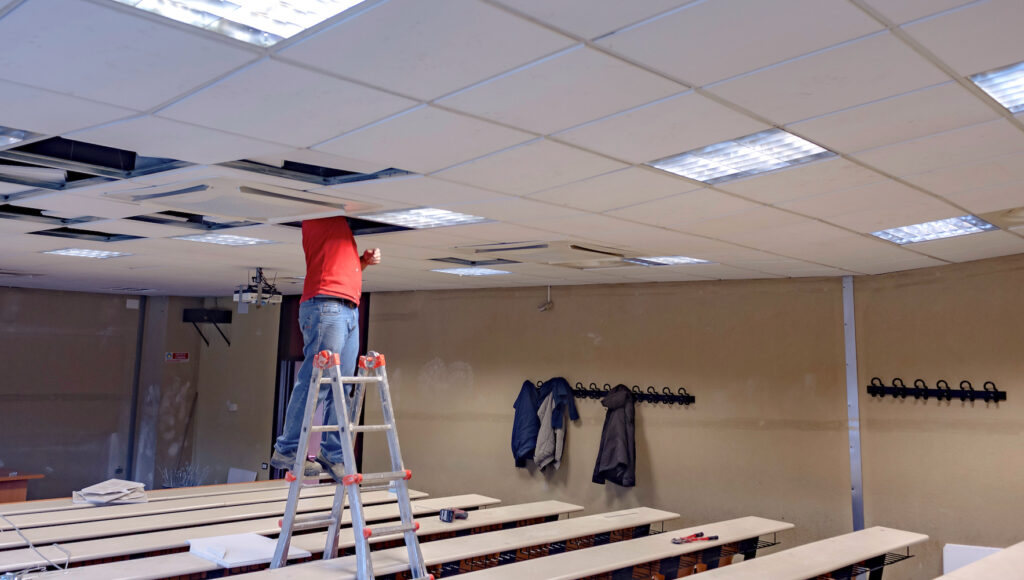
“That can mean moldy ceilings, cracked surfaces in parking lots and HVAC systems that can’t be counted on to keep them cool.”
Teachers protested the current working conditions at an Aug. 20 board meeting
“We were always without AC,” said Jess Bain, a fifth-grade teacher. “No learning happens when kids are drooping.”
District officials pushed back, saying they cannot find enough maintenance staff workers despite all their recruiting attempts.
“Our biggest competitor for trades right now is data centers,” said James Duffy, director of the facility maintenance department. “That is pulling the labor industry down. … They are paying way, way over scale.”
‘A world of numerous uncertainties’
Other states beyond Maryland are facing the same challenges, deciding in some cases to close schools instead of maintaining outdated infrastructure.
In one instance, Nevada’s Clark County School District ditched a plan to rebuild 18 schoolsafter inflationary pressures became too much.
“Inflation rates have been out of control nationwide,” said Jason Goudie, the district’s then-chief financial officer in 2024. “We’ve seen schools go from costing $29 million-$30 million, to $50 million.”
Geoffrey Lawrence, the Nevada Policy Research Institute’s director of research, criticized educational restrictions implemented during the COVID-19 pandemic by then-Gov. Steve Sisolak.
“In reality, we live in a world of numerous uncertainties, but people have been able to adapt to these uncertainties by developing elaborate, entrepreneurial systems to produce and deliver to people the things they need to overcome the challenges presented by the natural world,” Lawrence said.
“It’s therefore no surprise that economic uncertainty abounded, student achievement plummeted, deaths of despair surged, and hundreds of thousands of previously self-sufficient Nevadans were left to rely on a dysfunctional public support system that couldn’t even process claims timely just to meet their basic needs.”
Meanwhile, the Nevada Department of Health and Human Services acknowledged decisions made during the pandemic would require years of economic and educational recovery.
“Most industrial sectors were negatively impacted by the number of jobs and wages that were lost due to these closures,” a 2024 report noted, adding remote learning caused significant challenges for school-age children.