Kratom danger believed to have killed two Ole Miss students is present in Kansas, Missouri
Kratom, the drug believed to be at the center of two Ole Miss students’ deaths, was recently widely available in Kansas and is still legal in much of Missouri as well as about 39 other…
Kratom, the drug believed to be at the center of two Ole Miss students’ deaths, was recently widely available in Kansas and is still legal in much of Missouri as well as about 39 other states.
Parents and youths need to know kratom’s prevalence in the Sunflower State before the Legislature outlawed it July 1 was “striking,” says Ryan Kriegshauser, U.S. attorney for Kansas.
“Before it was [banned] in Kansas it was everywhere. I mean, you pull over at any gas station along I-70 and they had a ton of different kratom and synthetic kratom products,” he tells Heartlander News. “So, it is incredibly prevalent in states where it hasn’t been made illegal. And so, the ability for younger folks to get ahold of it is worrisome.”
Although the Missouri Legislature has yet to criminalize it, some localities have, and state Attorney General Catherine Hanaway has engineered court agreements with major distributors to stop the sale and distribution of potent derivatives known as synthetic “7-OH” in stores and online.
Kratom and its more dangerous synthetic versions have flooded American streets and stores in recent years, but their presence became a major national concern after the Sept. 21 deaths of University of Mississippi students Aidan Hamilton, a freshman from Colorado, and Robert Strang, a junior from Atlanta.
Kratom is legal in Mississippi, but only for those 21 and older. Strang was 20 and Hamilton was 18. Moreover, Oxford, the city where Ole Miss is located, has a complete ban for all ages.
Authorities have cited two stores there for illegally selling the products, and two employees of one store have been arrested in the wake of the students’ deaths.
“Our message is direct: If you choose to illegally sell these substances in our community, expect law enforcement to come looking for you,” Oxford police warned in a statement. “We will investigate. We will obtain warrants. We will seize illegal products, and we will hold those responsible accountable.”
Still, the laws in Mississippi and Oxford didn’t prevent the students’ tragic deaths, meaning it’s up to youths and parents to protect themselves and their loved ones.
Natural vs. synthetic
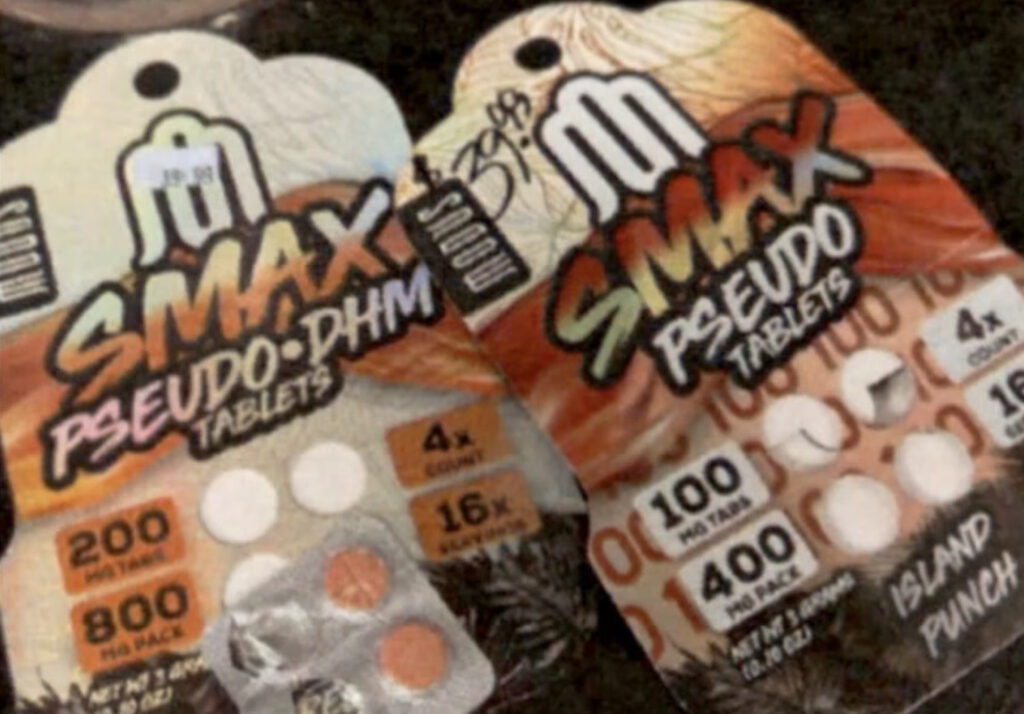
Natural kratom, which comes from a tropical evergreen tree in Southeast Asia, isn’t nearly as dangerous as its synthetic derivative 7-OH, which stands for 7-hydroxymitragynine.
Experts say 7-OH is “supercharged” in labs, is addictive, acts like an opioid and can kill.
“7-OH, or ‘7-hydroxy,’ is engineered to be addictive,” warns the Missouri Department of Health & Senior Services. “It is a potent opioid by design. These products are often falsely marketed as ‘natural kratom.’ Not prescribed or sold on the streets, this product is sold online and in stores … like candy.”
Indeed, it’s sold in stores “as gummies, candies, powders and drinks,” the state warns.
“7-OH is 13 times stronger than morphine at affecting the body’s opioid receptors. … Products with 7-OH are not tested for safety and are sold without restrictions. Isolated 7-OH has never been studied in humans. It can cause an overdose due to respiratory depression, or ‘stopped breathing.’”
Yet even in Kansas, where the Legislature banned all forms of kratom during this year’s session, five senators voted against the ban, including Sen. Cindy Holscher, the current Democratic nominee for governor.
Holscher, who could not be reached in time for this story, has said she thought the Legislature went too far, too fast in banning it.
“I have concerns about kratom’s widespread availability,” she explained in a statement at the time, “but I thought the Schedule I classification went too far for a drug that experts still don’t fully understand. Unfortunately, the legislative process was rushed.”
Instead, she promoted the Kratom Consumer Protection Act, used in some other states, which targets synthetic 7-OH specifically and sets age limits and labeling requirements for the natural drug.
At the same time, Holscher proposed an amendment to the kratom bill to legalize medical marijuana in Kansas. Her amendment failed.
Kriegshauser declined to weigh in on the politics of kratom but agreed with the outcome of the Legislature’s efforts to ban it.
“I couldn’t speak directly to the exact legislative process,” he says. “I mean, I followed it collaterally. But the legislative process is what it is, and it passed and was signed by the governor. I know of nothing improper about the way that it was passed.
“I do know there was a lot of testimony on the effects of kratom. I know there was a lot of discussion about the difference between natural kratom and synthetic kratom. And so, I think the issue was pretty well aired out throughout the committee process.”
Does the U.S. attorney think the Kansas ban goes too far, as Holscher maintains?
“No,” he says. “I mean, the state has the prerogative to do what it wants when it views a substance as potentially dangerous, and it chose to go this route and that’s a policy decision up to the state.”
But as a law enforcement official, does he think the ban is a reasonable position?
“Yeah. I think so.”
Do U.S. attorneys across the country want a federal ban?
“I think there’s a lot of concern about synthetic kratom at the federal level,” Kriegshauser says. “And so, I think it’s something that DEA is looking at – and definitely should look at.”
(Image credit: Screenshot/Fox News)