‘Important victory’: Court finds Tennessee universal school choice program constitutional, upholds private school scholarships
School choice scholarships will continue supporting Tennessee students and families after a district court dismissed a lawsuit challenging the program’s constitutionality.
“This is an…
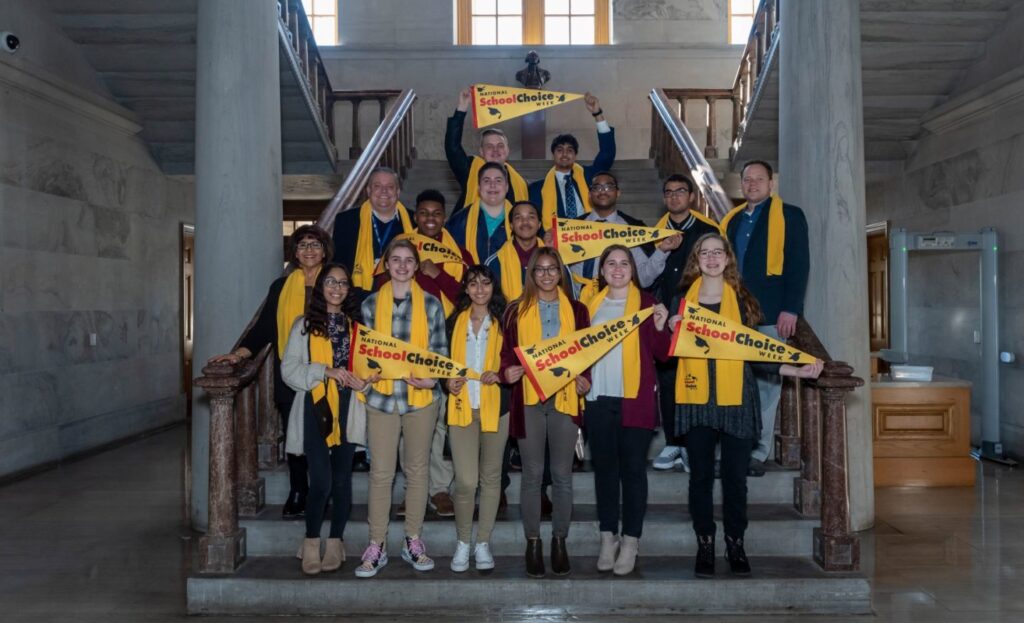
School choice scholarships will continue supporting Tennessee students and families after a district court dismissed a lawsuit challenging the program’s constitutionality.
“This is an important victory for Tennessee families, and especially for the parents who stood up to defend their children’s education,” said Melinda Hudson, an attorney with EdChoice Legal Advocates who argued the case.
Tennessee’s Education Freedom Scholarship (EFS) program, enacted in February 2025, provides state-funded scholarships to help students pay private-school tuition and other educational expenses. The program awarded 20,000 scholarships in its inaugural year and expanded by 75% to 35,000 scholarships for the 2026-27 school year, proving its popularity.
In November 2025, a coalition of parents with children in public schools sued Gov. Bill Lee and other state officials, arguing that Tennessee’s constitutional directive supports only public education and that the EFS program’s use of state funds harms public schools.
A three-judge panel of the 12th Judicial District Court in Davidson County dismissed both claims. The judges unanimously rejected the constitutional claim, while two judges ruled against the funding claim. The court found that Tennessee’s Constitution requires the state to provide for “an orderly arrangement of the teaching of children” but does not limit that provision to public education.
“… the Court concludes that the text of the Education Clause cannot support a claim premised upon the reading that it prohibits the funding of non-public education,” the court decision states.
Despite the plaintiffs’ claim that the EFS program weakens public schools by diverting funds, the court found that problems with public schools predated the program.
“As Plaintiffs allege here, the public-school system’s inadequacy predates the ESF Act,” the court decision states. “And the inadequacy predates the ESF Act because the laws that actually ‘provide for the maintenance, support and eligibility standards of a system of free public schools’ do so, according to Plaintiffs, inadequately.”
The court also ruled that public-school funding is governed by separate laws unrelated to the EFS program, Hudson explained.
“The program is a separately appropriated program, so it’s funded completely separately from the public school funding,” she told Heartlander News. “And part of the court’s decision went into that a little bit was about how if there’s a challenge that plaintiffs might want to make about the level of funding for the public schools, there are statutes that set those levels and create the formula. So that’s separate, though, from the EFS program.”
Two Tennessee families represented by EdChoice Legal Advocates joined the case to defend the program. The EFS program helped Denise Faith and her husband, both of whom previously worked additional jobs outside their first-responder roles to afford tuition at Lakeway Christian Academy for their two daughters.
Mike and Monica Sweeny said the EFS program covered about half the tuition for their three children to attend St. Mary’s Catholic School, according to the press release.
“I’m really proud to be able to stand with them, tell their stories, and help defend the program because reading their stories I hope it makes clear to people that these are real families who are just trying to do the best for their children,” Hudson said.
The plaintiffs could appeal the ruling, but the EFS program would remain in effect while legal proceedings continued, Hudson explained.
“The bottom line is, the program is not affected at all. This is a great win.”
Hudson noted that another state scholarship program, the Tennessee Education Savings Account Pilot Program, launched in 2019, faces an ongoing legal challenge. School choice programs in other states also face legal challenges, though advocates have won several recent cases.
Hudson said parents’ participation in lawsuits is one reason for those victories.
“When cases like this come up, parents are ready to step up,” she said. “And so we have partners in the state who know of families who would be affected by the program and want to do their part to help defend it. For their own families, but then also for the countless number of families that are going to be affected by a lawsuit like this.”