Homework debate resurfaces after first grader’s tear-filled experience
Parents are increasingly questioning the amount of homework public schools assign, especially in the elementary grades.
“We didn’t have homework like this when we were in these younger…
Parents are increasingly questioning the amount of homework public schools assign, especially in the elementary grades.
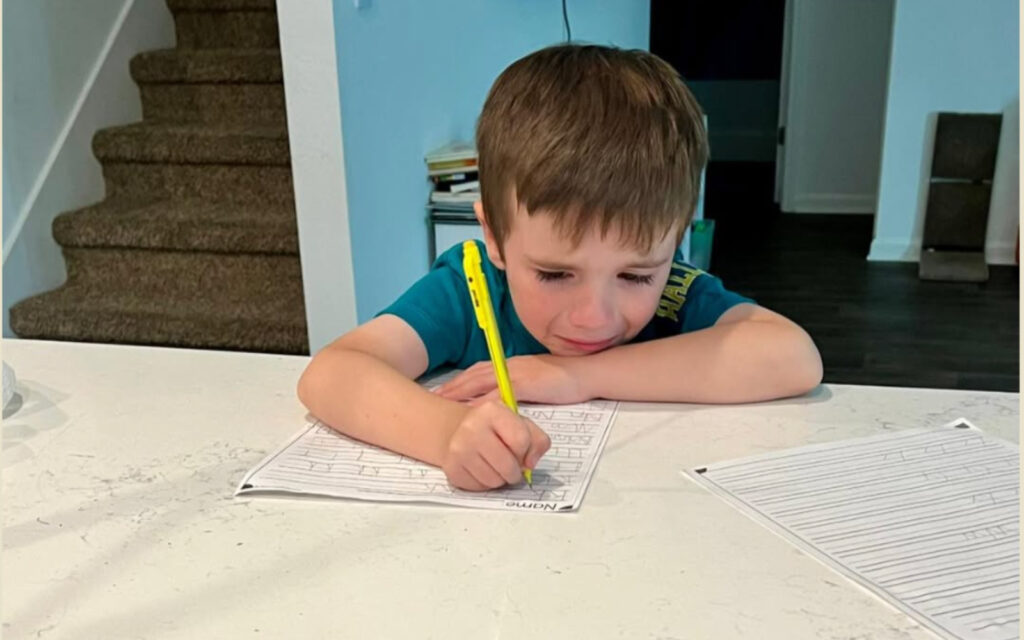
“We didn’t have homework like this when we were in these younger grades,” Cassi Nelson told journalists about her first grader’s four-page homework assignment, which generated more than 93,000 shares on Facebook.
“He broke my heart when he looked up at me with his big teary doe eyes and asked…. ‘Mommy when you were little did you get distracted a lot too?!’ Yes sweet baby, mommy sure did too! I don’t know how ppl expect little children to sit at school all day long and then ALSO come home to sit and do MORE work too.”
Both the National Education Association and the National Parent Teacher Association cite a general guideline of 10 minutes of homework per night for each grade level, a recommendation that public school teachers often disregard.
“At all grade levels, doing other things after school can have positive effects,” Duke University social psychologist Harris Cooper told the American Psychological Association. “To the extent that homework denies access to other leisure and community activities, it’s not serving the child’s best interest.”
‘It’s breaking their spirit’
An excessive homework load can increase family stress, with the effects varying according to parents’ educational levels and cultural backgrounds, a 2015 study published in the American Journal of Family Therapy concluded.
“Contrary to the 10 Minute Rule, primary school children received about three times the recommended load of homework,” researchers noted in the report’s abstract. “The amount of homework load reported also varied significantly between English and Spanish speakers, as it did between parents with limited education and those with advanced education.”
Parents without a college degree were twice as likely to fight over homework as those with a degree, supporting the study’s conclusion that parents with more education experienced less stress over the issue.
“If we do anything in this cancel culture, can we please cancel so much unnecessary homework. Especially for the younger kids,” Nelson wrote. “It’s breaking their spirit and it robs them of what little fun and family time they have when they come home after a long day of school.”
As previously reported by Heartlander News, mothers from other countries tend to agree with Nelson, even encouraging their children to skip homework in favor of other pursuits.
Annabella Daily, a mother from Finland who immigrated to the US, told Business Insider she regularly allowed her elementary-aged children to play outside after school and even schedule their own playdates.
“I have decided to consciously create more bandwidth by opting out of many voluntary but culturally encouraged American mom tasks, from participation in school activities during the daytime to scheduling — and attending — countless travel sports and choosing simpler commitments instead,” she said.
(Featured image: Screenshot/Facebook/Cassi Nelson)