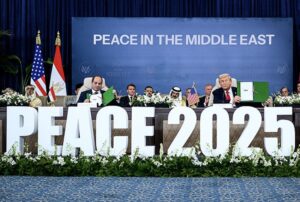
Hamas agrees to disarm in key milestone for Trump Middle East peace plan
Hamas authorities have agreed to disarm, marking an important victory in the peace process led by President Donald Trump and his Board of Peace.
Trump created the peace board as a…
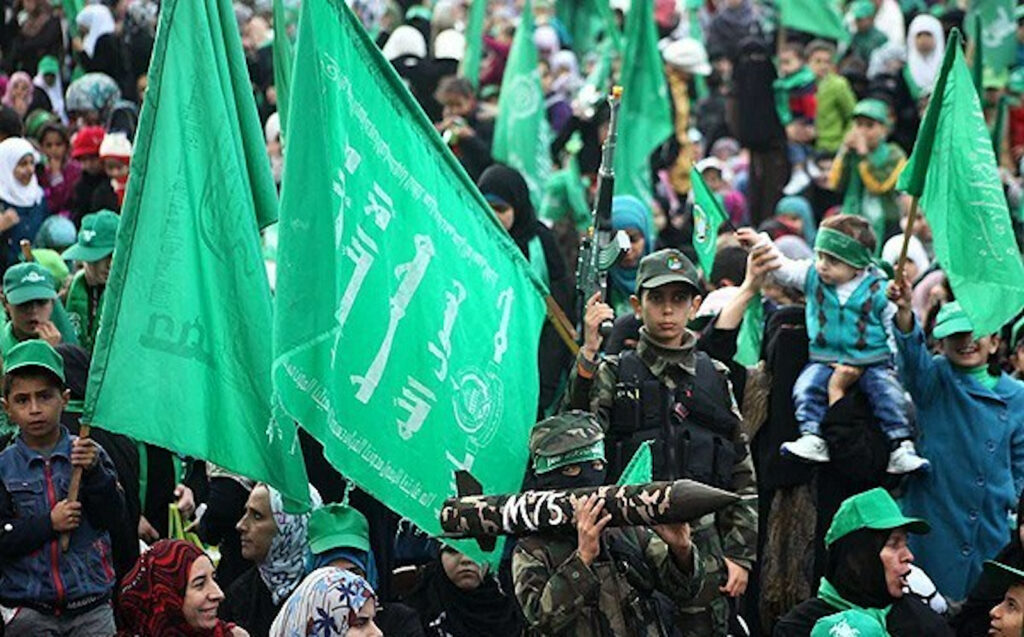
Hamas authorities have agreed to disarm, marking an important victory in the peace process led by President Donald Trump and his Board of Peace.
Trump created the peace board as a practical, less politicized way to manage Gaza’s transition after concluding the United Nations was incapable of producing results.
“Today, the Board of Peace reached a HISTORIC agreement for the COMPLETE DISARMAMENT of Hamas and all other armed groups in Gaza,” Trump said Thursday on social media. “This is a monumental step toward lasting PEACE and SECURITY.”
The president thanked mediators from Egypt, Qatar and Turkey for their contributions and called the disarmament an important milestone in his 20-point plan for peace in the Middle East.
The agreement, negotiated over several months, marks a stunning reversal for the terrorist organization.
Hamas repeatedly insisted it would never surrender its weapons after staging the Oct. 7, 2023, massacre against Israeli citizens that led to worldwide condemnation and an Israeli military campaign that gave rise to the current war.
In March, a Washington think tank affiliated with the Qatar-based Arab Center for Research and Policy Studies argued Hamas would likely become “more resistant” to disarmament.
The think tank said efforts to force the terrorist group to surrender its weapons were “unrealistic.”
But just weeks ago, Hamas dissolved its government in Gaza.
Now, a member of its negotiating delegation told Al Jazeera it has agreed to the next step in relinquishing control of Gaza by disarming.
According to a copy of the agreement obtained by Al Jazeera, an inventory of the group’s weapons will be prepared within 14 days.
A proposed International Stabilization Force will oversee the inventory as Israel begins its incremental withdrawal from Gaza.
“Hamas will not implement any step of the Gaza peace deal if the Israeli occupation forces do not fulfil their obligations under the agreement,” the Hamas source told Al Jazeera.
An Israeli source told the Jerusalem Post that Israel will not withdraw from Gaza until Hamas has been completely disarmed.
The source said Hamas’ disarmament did not come up during Trump’s meeting with Israeli Prime Minister Benjamin Netanyahu earlier this week.
“We think we’ve managed to bring Hamas to a place where they can’t say no,” another source familiar with the negotiations told the Jerusalem Post.
Axios reported Trump administration officials involved in the negotiations said the U.S. closely coordinated with Israel throughout the talks.
“We are not asking Israel for anything other than to implement their commitments under the 20-point plan,” one Trump administration official told Axios. “If they do not do that, President Trump will be very disappointed. I do not think the Israelis would want to escalate things with us right now.”
For months, critics dismissed Trump’s insistence that Hamas could eventually be persuaded or pressured to disarm as unrealistic.
Hamas itself repeatedly rejected earlier proposals demanding it surrender its arsenal.
Yet after prolonged negotiations, the organization has now accepted a framework whose stated objective is the complete demilitarization of Gaza under a new governing authority.
Now, implementation of the agreement will take center stage.
Still, the significance of the agreement reaching this point cannot be overstated.
The Trump administration spent years assembling an alternative Arab vision built around an international stabilization force, independent verification of the disarmament process and investment in modern Arab economies that normalized peace.
“Trump returned to office in January 2025 with a vision of transforming the region in his second term – he spoke regularly about expanding the 2020 Abraham Accords to include countries like Saudi Arabia and promoted the idea of creating a ‘Gaza Riviera,’” the Middle East Institute wrote earlier this month.
At the start of his term, he visited three key Gulf Arab countries on a trip that emphasized dealmaking as a new form of economic engagement in the Middle East, the institute noted.
He secured major investment deals with Saudi Arabia, the United Arab Emirates and Qatar.
Point 2 of Trump’s 20-point peace plan for Palestinians likewise includes redevelopment plans for Gaza.
The Trump administration has proposed $112 billion for redevelopment over a decade. Half would come from U.S. loans and grants, with the remainder raised from international investors.
“Under this agreement, Gaza will finally be in the hands of a new Palestinian government that serves its PEOPLE,” Trump concluded on social media when announcing the Hamas disarmament. “CONGRATULATIONS TO ALL ON THIS AMAZING DEVELOPMENT, THAT EVERYBODY SAID COULD NEVER BE ACHIEVED!”
The key question will be whether the new Palestinian government can create lasting peace with its neighbors, especially Israel.
“You’re not going to convince anyone to invest money in Gaza if they believe another war is going to happen in two to three years,” Secretary of State Marco Rubio said about the redevelopment plan.
(Image credit: Wikimedia Commons/farsnews.ir (Direct URL: https://media.farsnews.ir/Uploaded/Files/Images/1391/09/18/13910918213432373_PhotoL.jpg)