From immersive experiences to 150th birthday celebrations, CO, UT, AZ, NV, CA shine bright
(Editor’s note: A series on The Great American State Fair, held in Washington, D.C., in honor of America’s 250th birthday, written by Heartlander News interns.)
Guests…
(Editor’s note: A series on The Great American State Fair, held in Washington, D.C., in honor of America’s 250th birthday, written by Heartlander News interns.)
Guests explored the western landscapes of Colorado, Utah, Arizona, Nevada and California at The Great American State Fair in Washington, D.C., during America’s 250th birthday celebration.
Colorado
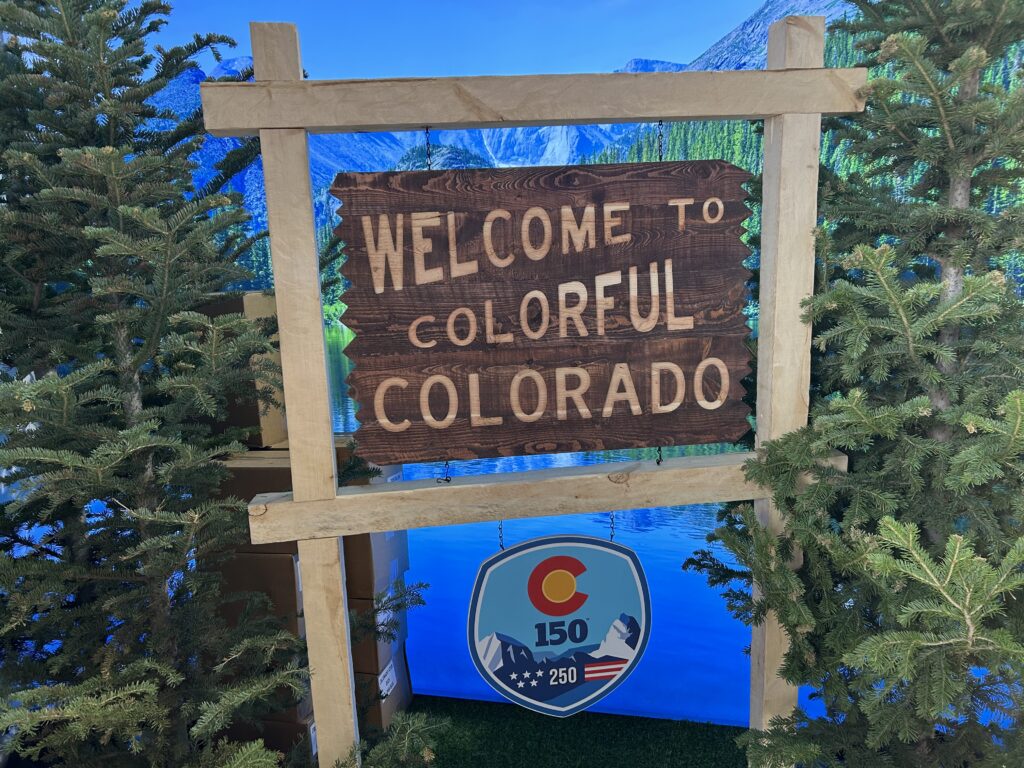
Colorado’s booth highlighted scenery from the state’s national parks and vast landscapes. It also featured replicas inspired by Red Rocks Park and Amphitheatre, live pine trees and twin red canoes for children to play in.
Colorado is home to 10 scenic railroads that traverse the state’s mountains and canyons. The state is also known for its film festivals and is set to host the Sundance Film Festival beginning in January 2027.
Guests could don cowboy hats and twirl lassos in honor of the state’s Western heritage. As America turns 250, Colorado is celebrating its 150th birthday, and volunteers sang “Happy Birthday” to the state.
Utah
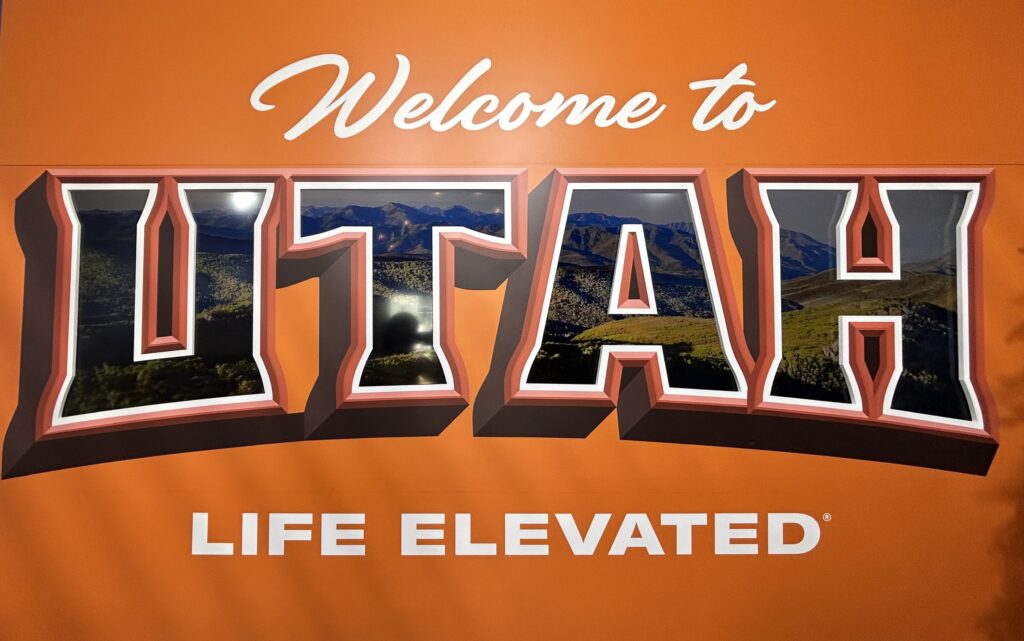
Utah’s Rocky Mountains are home to 15 ski resorts, which receive more than 500 inches of snow annually in some locations. From mountain hiking trails to the Bonneville Salt Flats on the edge of the Great Salt Lake, Utah’s booth brought the Beehive State’s landscape to life.
At the center of the booth was an in-floor replica of Camarasaurus lentus, a sauropod dinosaur. Fossils of the Late Jurassic dinosaur were discovered in Utah in the early 20th century. The original fossils are displayed at Dinosaur National Monument near Jensen, Utah.
Guests could also take free postcards commemorating the state.
Arizona
Visitors to Arizona’s booth wound through three rooms, each exploring the influence of light on the Grand Canyon State’s landscape. Guests could scan a QR code to view panoramic images of each location along with information about the area’s flora and fauna.
In the first room, replicas of a ponderosa pine forest – connected by a maze of taproots – hung overhead. Despite its hot, dry climate, nearly one-third of Arizona is forested, according to the Arizona Department of Forestry and Fire Management.
The second room highlighted Antelope Canyon, a slot canyon carved into sandstone by water and erosion.
Using black lights to simulate the stars, the third room recreated Arizona’s night sky. Low humidity, high elevation and limited light pollution make many parts of Arizona well known for stargazing. The room also featured quotations about the state’s nighttime scenery.
Arizona became the 48th state in 1912.
Nevada
Nevada’s booth glowed with neon lights inspired by Las Vegas and highlighted the state’s entertainment, sports and engineering history. Displays chronicled the rise of the Las Vegas Strip, the 4.2-mile stretch of resorts and entertainment venues that became famous through performers such as Dean Martin, Elvis Presley and Frank Sinatra.
The exhibit also highlighted Las Vegas as a destination for major sporting events, including the Ultimate Fighting Championship and WrestleMania.
Although the Civil War never reached Nevada, the Battle Born State earned its nickname because it achieved statehood during the conflict. The discovery of the Comstock Lode mining deposit in 1859 fueled the territory’s growth before Nevada joined the Union in 1864.
Nevada is also home to Hoover Dam on the Colorado River. Built during the Great Depression, the dam provides hydroelectric power and water storage for the Southwest. The state also includes Nellis Air Force Base and the nearby Nevada Test and Training Range, which encompasses the highly classified Area 51 facility.
California
California’s booth featured the state flag’s California grizzly bear and a photo display of Roy’s Motel & Cafe along historic Route 66.
California has one of the world’s most heavily engineered water systems. Much of the state’s water originates in Northern California and is transported hundreds of miles south through aqueducts to population centers.
The California Gold Rush began in 1848 after gold was discovered at Sutter’s Mill, triggering the migration of hundreds of thousands of people over the following years. California became the 31st state in 1850.