Florida bans illegal immigrants from state colleges
Florida will no longer let illegal immigrants enroll in its 28 state colleges.
The State Board of Education approved the rule June 30. The rule says Florida College…
Florida will no longer let illegal immigrants enroll in its 28 state colleges.
The State Board of Education approved the rule June 30. The rule says Florida College System schools may admit only U.S. citizens or students “lawfully present in the United States.”
Students must prove their lawful status before they enroll.
The board also approved a similar rule for adult education programs, including GED classes and English classes.
The vote adds to Florida’s push to stop providing publicly funded education to people in the country illegally.
Last year, the Sunshine State ended in-state tuition for illegal immigrants. Before that, some students who attended Florida high schools for at least three years could pay the lower in-state rate at public colleges and universities, even without legal status.
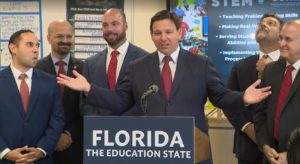
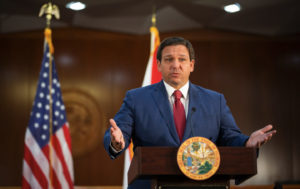
Gov. Ron DeSantis, a Republican, backed that change.
“I don’t think you should be admitted to college in Florida if you’re here illegally,” he said at the time. “But to give in-state tuition was just a slap in the face to taxpayers.”
Heartlander News previously covered the proposed college ban in April, when Florida officials started moving toward the new rule.
That story noted federal law does not require states to admit illegal immigrants to public colleges. A 1982 U.S. Supreme Court case guarantees access to K-12 public schools, but it does not require the same of public colleges.
The Higher Ed Immigration Portal estimates Florida has 49,356 illegal immigrant students in higher education. Inside Higher Ed reported about 8,000 illegal immigrant students graduate from Florida high schools each year.
The Florida College System could lose more than $15 million annually in tuition and fees because of the new rule, according to an analysis from the Florida Policy Institute, a left-leaning think tank.
However, some conservatives say colleges should not rely on money from illegal immigrants.
State Sen. Don Gaetz, R-Crestview, defended the policy.
“The policy issue is: Should illegal aliens receive taxpayer-funded higher education in Florida? And in my view, the answer to that question should be no,” he told Florida Phoenix.
Gaetz also said he would file legislation, if needed, to write the policy into state law.
Critics say the rule goes too far.
Daniel Foganholi Sr., the only board member who voted against both rules, said schools should not handle immigration policy.
“Our responsibility is to oversee education, and I believe we should remain focused on expanding educational opportunity while leaving immigration enforcement to the appropriate agencies,” he told Inside Higher Ed. “That distinction guided my vote.”
The new rule does not cover Florida’s 12 public universities. However, the Florida Board of Governors has started work on a similar ban for those schools.
The issue also gives DeSantis another way to speak to conservatives before 2028, when many expect him to seek the Republican Party’s presidential nomination.
Last year, he signed a wide-ranging immigration bill that ended in-state tuition for illegal immigrants, created a state crime for entering Florida after coming into the United States illegally and sent more money to immigration enforcement.
“Florida is setting the example for states in combating illegal immigration and working with the Trump administration to restore the rule of law,” DeSantis said at the time.
He has also criticized the Immigration and Nationality Act of 1965, commonly known as the Hart-Celler Act, which ended national-origin quotas.
The former system favored immigrants from countries with large existing populations in the United States to promote assimilation, including the United Kingdom, Ireland and Germany. But after the act’s passage, most immigrants have come from Latin America and Asia.
“Both the Hart-Celler Act of 1965 and the additions to it in the early ’90s need to be repealed,” DeSantis wrote on X.
Supporters of the old system say it helped America keep a more stable national identity and that Hart-Celler changed the country far more than the public expected at the time.