Education reform at stake in Ohio, Oregon and Texas governor’s races
Education is a top issue for voters in the upcoming midterm elections, ranking behind only the economy, the future of democracy and health care. It is also a factor in at least three major…
Education is a top issue for voters in the upcoming midterm elections, ranking behind only the economy, the future of democracy and health care. It is also a factor in at least three major gubernatorial races.
Nearly 50% of Republican voters and 75% of Democrat voters rated education as “very important,” according to an Oct. 8 Pew Research poll.
Literacy rates, school choice and school attendance are prominent talking points in the gubernatorial races in Ohio, Oregon and Texas. The states could see major shifts if they flip from their respective longstanding parties, according to an article from the Thomas B. Fordham Institute.
Ohio
In Ohio, Republican Vivek Ramaswamy, who ran in the presidential primaries in 2024, faces Democrat Amy Acton, a former state health director.
Acton is promising to restore public school funding, redirect money from school choice programs and offer every Ohio student free breakfast and lunch – all without additional costs to state taxpayers, she claims.
“You already are paying for it, except that part of what you’re paying for isn’t going to your public school, it’s going to a private school,” Acton said in an interview with 3News, a local outlet.
She is targeting the state’s school choice program, which she calls “corrupt” on her campaign website, saying the system has “no transparency or accountability.”
“They (the Republican supermajority in the Ohio General Assembly) aren’t funding our public schools, something they’re constitutionally committed to, but they are choosing to give $2 billion and counting to vouchers that have no accountability,” Acton told 3News.
Also on her website, Acton emphasizes “new, 21st century approaches to math and literacy.” Ohio performed slightly above the national average in fourth grade math in 2024 and ranked 35th in public schools in 2026, according to World Population Review.
Ramaswamy is also promising to improve Ohio’s education, but his approach targets teacher salaries and curriculum.
“A growing number of U.S. high school graduates can’t read,” the biotech entrepreneur and investor wrote in The Wall Street Journal. “We won’t fix that problem without reaffirming academic excellence as the main goal of our education system – and doing away with critical race theory, gender ideology, emotional therapy sessions and designated times for students to play video games during school hours.”
His strategy ties “teacher pay directly to students’ learning outcomes, rather than seniority or credentials,” he explains in the piece. Teachers’ salaries would be dependent on proven student improvement, Ramaswamy proposed, emphasizing how the incentive would correlate to classroom engagement and better student performance.
“What I think is we just need greater discretion for principals and superintendents of school districts to be able to pay people who work in their schools, when they do a great job, to give them the opportunity to be rewarded for it,” Ramaswamy told the Dayton Daily News.
He also insisted that teachers’ starting salaries must be higher, saying an annual income of $38,000 is no longer “enough to attract the best of the next generation into the profession.”
But unlike Acton, the Republican supports school choice programs, which he sees as keeping parents involved in education and ensuring more parental accountability for their children. Regardless of private education, however, Ramaswamy said the failing public system needs reform, and he is pledging to bring it.
“School choice is a strong solution to hold public schools accountable, but Americans should want their public schools to be well-positioned to compete against private alternatives,” he wrote in his Wall Street Journal article.
The Republican Party has held the governor’s seat in Ohio since 2011, but current polls suggest Acton is leading Ramaswamy.
Oregon
Oregon has maintained a blue governorship for 39 years, but incumbent Gov. Tina Kotek is waging a close battle against state Sen. Christine Drazan, a Republican, according to recent polling.
In Oregon, the governor is also the chief state school officer and appoints the state board of education members and the leader of the state education agency, according to the Thomas B. Fordham Institute.
“As the superintendent of public instruction, I will restore graduation requirements, focus on reading, support great teachers and empower them to keep our classrooms safe, increase classroom time and prepare students for success,” Drazan said in a post on X.
Oregon performs among the bottom four states nationwide in reading and math scores for both fourth and eighth grade.
Kotek, who took office in January 2023, is promising to reduce absenteeism and ensure every student receives the proper amount of classroom instruction in line with national averages.
Currently, Oregon requires a certain number of instructional hours that vary by grade level instead of the typical required number of school days. Drazan is proposing to switch Oregon to a school-day-based system “with statewide standards for what constitutes a school day.”
Kotek has also pledged to limit social media access on school devices, improve graduation requirements and continue “literacy efforts.” She proposed summer education as part of the 2027-2029 budget to fight the “slips” students face during the months off school.
“It will be a challenge to put my recommended budget together, but I would also say I worked on budgets in the Great Recession and through COVID,” she said in July. “Oregon can figure this out. We need to prioritize what we need to fund, and my budget will be prioritizing education and particularly summer investments again because we know it works and we need to do that.”
Drazan, likewise, wants to combat poor academic performance, but she is proposing to reinstate requirements for reading proficiency by third grade, as well as reestablish graduation requirements. Oregon removed its previously required Essential Learning Skills assessment in 2021, and the Oregon Board of Education voted to extend that removal through the 2027-2028 school year, according to the Oregon Capital Chronicle.
Drazan also supports school choice and “curriculum transparency” for parental rights, adding that she would enroll Oregon in President Trump’s Federal Scholarship Tax Credit, which will support educational freedom and extracurricular learning through tax-directed funds. Kotek has declined to join the new federal school choice program, which starts Jan. 1, 2027.
“Our state needs new leadership for our schools,” Drazan said in a post on X. “I’m committed to ensuring that we focus on reading. That our third graders have what they need for curriculum, that our teachers have what they need for support, that we have meaningful requirements for graduation so our diploma means something again and we turn our schools around to support our own future.”
Texas
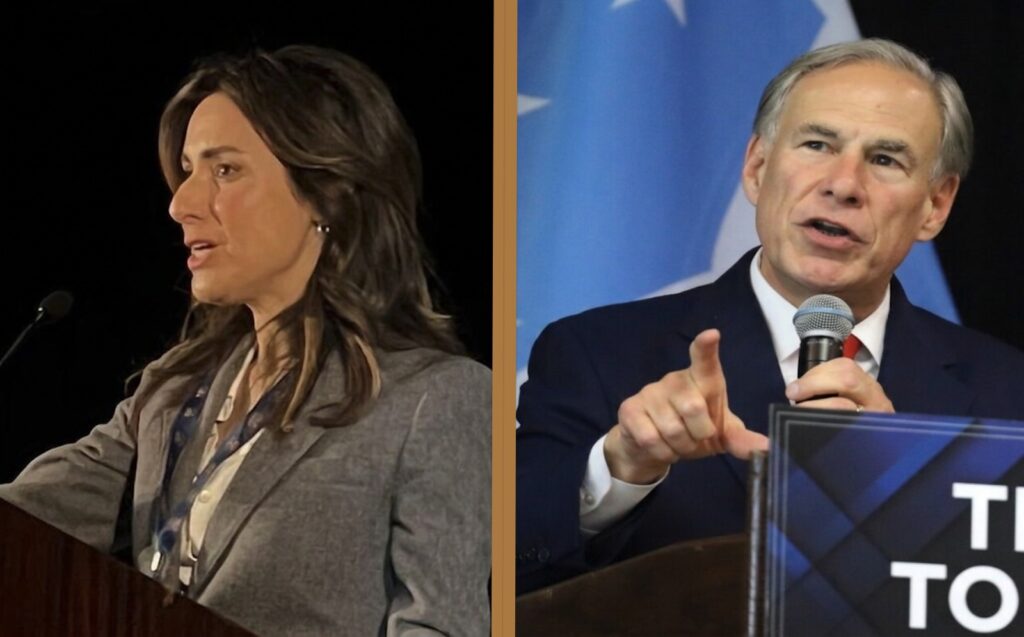
In the race for governor, incumbent Gov. Greg Abbott is seeking an unprecedented fourth term, but state Rep. Gina Hinojosa is fighting to swing the Lone Star State blue. Hinojosa opposes school choice and has promised to fire Texas Education Commissioner Mike Morath, who has held the office for more than 10 years.
Hinojosa also wants to end the state’s $1 billion education savings account (ESA) program, according to her website.
“It’s a game of chess, and I’m not going to commit that I can do away with the vouchers,” Hinojosa said, according to the Houston Chronicle. “But I will commit to using all my power to put that money back in public schools.”
These and other policies, such as teacher wages and student testing, require approval from the Republican-controlled state Legislature, meaning her plans could very well never become law. Hinojosa also opposes Texas’ school takeover model, which brings a government-appointed board of managers into a school after five years of failing performance under the state’s grading system, according to The Texas Tribune.
But in the districts the Texas Education Agency (TEA) did take over, learning and literacy improved, according to the Tribune.
The school choice program, Texas Education Freedom Accounts, have proven popular, receiving more than 274,000 applications and granting more than 100,000 scholarships. Abbott championed the legislation that created the accounts.
Additionally, Texas has implemented the Teaching Incentive Allotment, which assigns teachers’ wages based on student improvement data – the same model Ramaswamy is proposing for Ohio. This wage program has improved teacher retention and student achievement, according to a statewide study.
Abbott holds a narrow lead in most polls. Texas has not had a Democrat governor since Ann Richards. Richards won in 1990 but lost in 1994 to future President George W. Bush, the same year Texas elected its last Democrat to statewide office. Hinojosa and James Talarico, a Democrat who is running for Senate, are challenging the Republican Party’s dominance.
These three states will be “particularly consequential” due to their “extended periods of one-party control,” Dale Chu writes in the Thomas B. Fordham Institute article.
“These three races pose distinct tests for education reform,” Chu says. “A Democratic victory in Texas and Ohio, coupled with a Republican victory in Oregon, would amount to a seismic shift in the politics of education reform across three very different states.”
(Image credits: Rep. Gina Hinojosa, By RRC1701 – Own work, CC0, https://commons.wikimedia.org/w/index.php?curid=171055405; Gov. Greg Abbott/X)