California public schools now offer ‘transitional kindergarten’, free meals for 4 year olds
Gov. Gavin Newsom recently touted California’s multi-billion dollar investment in free, universal transitional kindergarten, despite mixed evidence for academic benefits.
“California is…
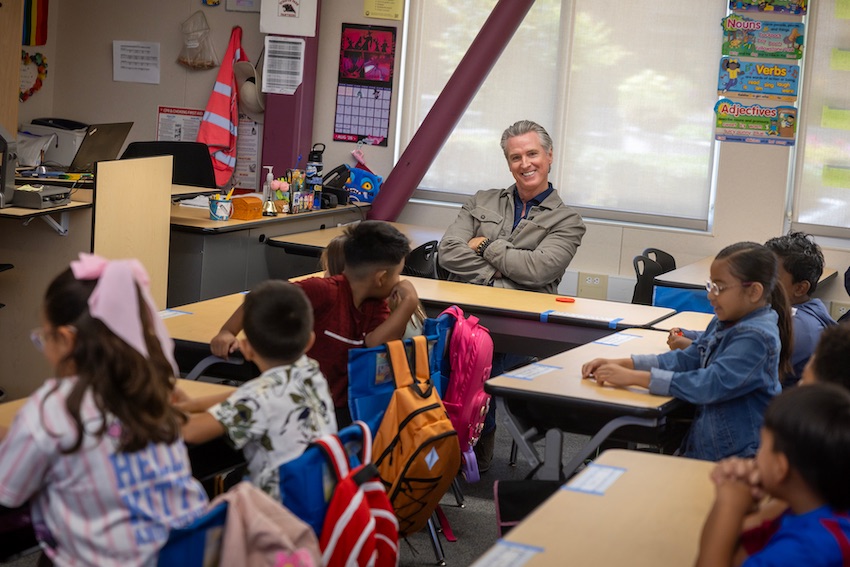
Gov. Gavin Newsom recently touted California’s multi-billion dollar investment in free, universal transitional kindergarten, despite mixed evidence for academic benefits.
“California is proving what’s possible with historic investments in the next generation,” Newsom said in Wednesday’s press release. “Free TK [transitional kindergarten] for every 4-year-old. Free meals at school. Expanded after school programs. More child care, mental health support, more help learning to read. We made a big investment in our kids, and it’s paying off.”
California started rolling out universal TK in 2021 and already enrolls over 200,000 children.
Newsom claims TK will save families $14,000 annually – presumably by avoiding childcare costs or private school tuition.
However, the tab will be picked up by tax payers.
This school year California will spend more than $27,000 on average for each student enrolled in a K-12 public school.
While funding varies by grade and other demographics such as income, the baseline funding for TK starts at nearly $17,000 and could exceed $26,000 – far more than families will be purported to save.
Overall, TK is costing taxpayers statewide $3-4 billion annually.
“California has made remarkable progress in building the conditions that allow students to learn and succeed,” State Board of Education President Linda Darling-Hammond said in the same press release. “Our responsibility now is to make sure these investments translate into meaningful opportunities and stronger outcomes for every student – in every community.”
However, research is mixed on the benefits of pre-kindergarten grades such as TK or preschool.
A 2023 report from the Public Policy Institute of California found TK may have positive social-emotional benefits for English-speaking students, but English Language Learners experienced negative effects.
And similar to preschool, academic results for TK were mixed. Students tend to show academic gains in early elementary school that fade by middle and high school.
Not all young children are ready for school at age 4, as some schools have discovered inadequate potty training at home.
The expansion of services offered by schools is part of a larger progressive agenda, as Newsom’s press release makes clear.
“At the center of this effort are California’s community schools, which bring together education, county, and nonprofit partners to provide high-quality instruction and wraparound services, including healthcare, mental healthcare, counseling, nutrition programs, and other social assistance. The model places students, families, and communities at the center of school planning and engagement.”
He boasts California has spent $4 billion to convert a quarter of its public schools into “community schools,” while simultaneously trying to keep children away from their parents as much as possible.
“The school day doesn’t begin when the bell rings – and for working parents, it doesn’t end when classes are dismissed,” the governor states.
“California has expanded before- and after-school and summer programs, helping families with the cost and logistics of child care while giving students more time for academic support, enrichment, nutritious meals and safe places to learn.”