
Bow the Missouri chimpanzee: Animal advocacy organization attempts to free America’s last ‘pet’ chimp
A federal complaint has been filed against the owner of the last known solitary pet chimpanzee in America: 24-year-old Bow of Licking, Missouri, a small town in southern Missouri.
The…
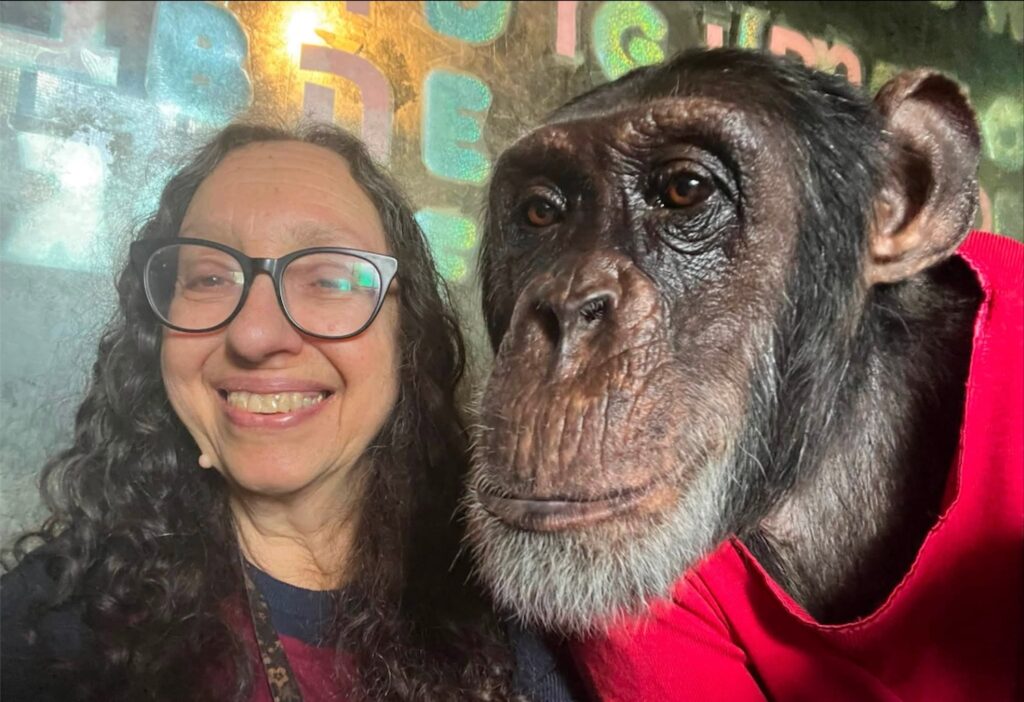
A federal complaint has been filed against the owner of the last known solitary pet chimpanzee in America: 24-year-old Bow of Licking, Missouri, a small town in southern Missouri.
The Animal Legal Defense Fund (ALDF) filed a complaint Tuesday against Bow’s owner, Aya Katz, arguing that she’s violating the Animal Welfare Act (AWA) and the Endangered Species Act (ESA).
Lincoln Park Zoo’s Project ChimpCARE has worked for decades to develop a census of all the chimpanzees living in the U.S., Brittany Peet, ALDF’s transparency and regulatory affairs program director, told Heartlander News.
“We’re very confident that Bow is the last chimpanzee held in a human home,” she said.
Katz adopted Bow when he was one month old for linguistic research, the complaint states, and Katz claims Bow can read and spell in both English and Hebrew.
Bow hasn’t been in contact with another chimpanzee since his adoption, which violates the ESA, according to the ALDF.
“Katz holds Bow in solitary confinement in her home, despite scientific consensus that denying chimpanzees the opportunity to socialize with others of their kind constitutes extreme psychological trauma,” the complaint reads.
Katz is also accused of exhibiting Bow, who belongs to an endangered species, for money without a license, which is illegal under the AWA. Katz has been posting YouTube videos of Bow for at least 17 years and offers a membership that includes exclusive content for between $1.99 and $49.99 per month, according to the complaint. Katz also sells merchandise on Amazon.
Katz also allegedly uses Bow for research without a license, ALDF says.
“Chimpanzees are so intelligent, so highly complex, so incredibly social, and also so naturally violent within their own societies,” Peet explained. “They are simply not meant to live in human homes. They cannot thrive there.”
Missouri’s history with chimps: Cases of violence
Chimpanzees have a history of hurting people and should be kept in a space with other chimps, Peet explained. Several cases of “pet” chimpanzees attacking people support her point.
For example, Sandra Herold purchased Travis the chimpanzee as an infant from the Missouri Primate Foundation (MPF). Herold and her husband kept Travis in their Connecticut home for 14 years before he aggressively attacked someone in 2009.
Herold’s friend Charla Nash, who had interacted with Travis several times, offered to help Herold when Travis escaped from home. When Nash arrived, Travis brutally attacked her, mauling her face and disfiguring her hands, nearly killing her.
Herold tried to stop Travis, wounding him in the process. Police arrived at the scene and Travis was shot and killed when he tried to get into an occupied police vehicle.
“These situations don’t end well. These chimpanzees don’t die of natural causes; they typically die from a bullet in the head, and that is the inevitability,” Peet said. “That is what will happen if these federal agencies don’t act quickly.”
Buck was another chimpanzee, also born in a chimp breeding compound in Missouri in 2004, who was taken from his mother as an infant to live with Tamara Brogoitti in Oregon.
Buck attacked Brogoitti’s 50-year-old daughter in 2021 and was subsequently shot and killed by police.
Tonia Haddix owned the Missouri Primate Foundation beginning in 2018, where several chimpanzees were illegally held in cages in a basement. Haddix made national news after she falsely said one of the seven chimpanzees who were set to be removed from the facility had passed away.
The lone chimp, Tonka, later appeared in a documentary called Chimp Crazy, proving that he was alive. Officials found Tonka locked in a cage in Haddix’s basement.
Haddix was sentenced to more than three years in prison for lying about Tonka’s death.
The federal complaint
Katz was previously cited in 2023 for illegally exhibiting Bow for money without a license, according to ALDF’s federal complaint, but she has continued to post him online seemingly without consequence.
The complaint against Katz was submitted to the Department of Justice (DOJ), the U.S. Fish and Wildlife Service (USFWS) and the U.S. Department of Agriculture (USDA).
All three agencies confirmed they had received the complaint.
“The U.S. Fish and Wildlife Service is aware of the allegations concerning the treatment of Bow, a chimpanzee in Missouri, and takes these concerns seriously,” a USFWS spokesperson told Heartlander News in an email. “Chimpanzees are protected under the Endangered Species Act, and the Service is committed to enforcing federal wildlife laws and protecting endangered species. The U.S. Department of Agriculture is responsible for administering and enforcing the Animal Welfare Act.
“Anyone who legally possesses or works with chimpanzees is responsible for understanding the animals’ lifelong needs and ensuring that their activities comply with all applicable federal, state and local laws.”
Heartlander News reached out to Katz for comment but did not receive a response prior to publication.
(Photo credit: Screenshot/Facebook/Aya Katz)


