Astronaut Butch Wilmore responds to moon landing deniers, flat earthers with faith and facts
A NASA astronaut best known for his perseverance and professionalism during a space mission gone awry says he has a simple answer for skeptics who doubt the moon landing and other basic scientific…
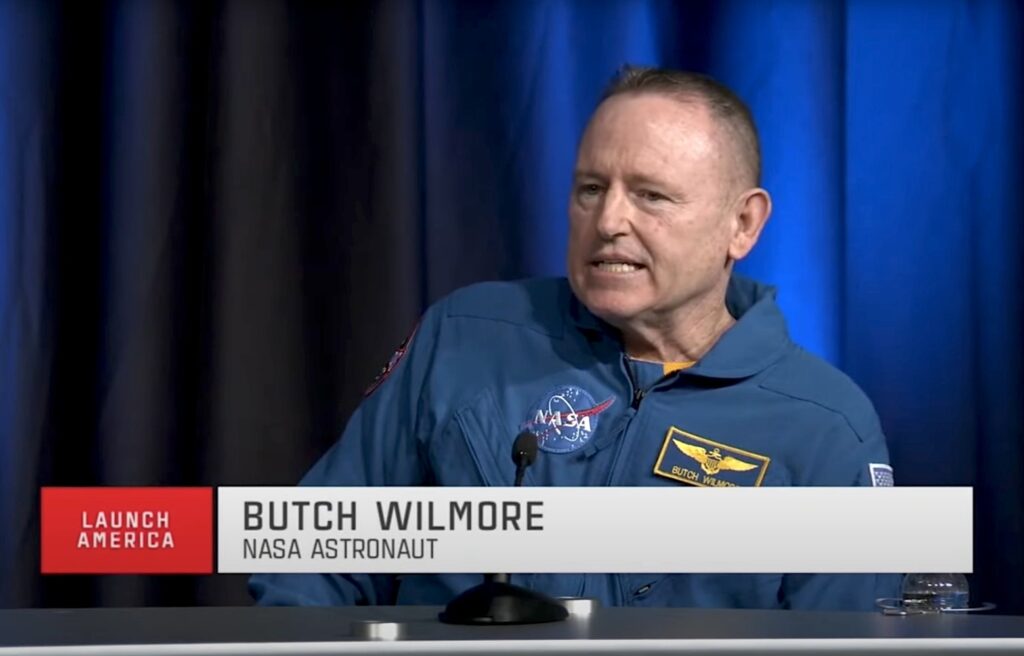
A NASA astronaut best known for his perseverance and professionalism during a space mission gone awry says he has a simple answer for skeptics who doubt the moon landing and other basic scientific facts: His faith forbids him from lying.
Barry “Butch” Wilmore has traveled to space three times, first aboard a Space Shuttle in 2009 and later as commander of Boeing’s Starliner test flight, which gained worldwide attention after technical problems turned what was supposed to be an approximately eight-day mission into a stay of more than nine months aboard the International Space Station while NASA worked to safely bring the astronauts home. Wilmore recounts the mission and the challenges surrounding it in his new book, Stuck in Space.
Although Wilmore has never traveled to the moon, he has worked alongside astronauts who have made the trek – and he says the evidence for the moon landing is overwhelming.
He regularly encounters people who question the moon landing and other widely accepted scientific facts.
“I get those questions – ‘flat earth, we didn’t go to the moon,’” Wilmore said. “I get that constantly.”
The doubt about the moon landing is far more common than skepticism about the shape of the earth. The moon landing would have been impossible to fake, he said, because of the sheer number of people involved.
“From the data, 400,000 people worked on the moon program back in the 60s and 70s – 400,000. [And] not one single person, not one, has ever come forward and said, ‘We didn’t do it.’ Not one. I mean – people are going to believe what they’re going to believe.”
Wilmore said he understands the skepticism about governments and nations sometimes deceiving their citizens.
“Nations have lied to their people. We see it today all the time. Nations are lying to their people, and so that makes you skeptical about big things like that. ‘Did it really happen?’ I get it, but there’s evidence beyond even comprehension that I could share for another 30 minutes that shows that we did go to the moon.”
Wilmore’s own faith – he’s a Christian – shapes how he responds to such claims. He believes space exploration “glorifies God.”
“As a believer in Christ, I would not lie for my nation, because my Lord tells me not to lie, and I would not do that. Charlie Duke, another gentleman, [who] went to the moon [aboard] Apollo 16, [who] I know well, he would not lie for his nation over his Lord. And so we went to the moon. We absolutely did. And we’re going again.”
Although belief in a flat earth is less common, Wilmore has encountered those views, too. Such beliefs often point to Bible passages about the “four corners” of the earth, or the “edges” and “end” of the earth.
“I try to love them, and I tell them – I try to say it lovingly – ‘If you’re using Scripture – and some do say that the earth is flat – then that is a concern. And the reason it is a concern is because you are not discerning Scripture correctly. Because the Earth is not flat. And if you’re saying that the Scriptures … lead to the fact that the earth is flat, that’s concerning, because if you’re not correctly discerning those Scriptures, you’re likely not correctly discerning other Scriptures as well. And that’s why it’s concerning. And I try to love them and just share that with them.”
Wilmore added with a quip: “I’ve circled the planet 7,424 times, and every single time I went around the planet, it was round.”