Analysis: Russian Black Sea drone attacks put pressure on NATO as predicted, not where predicted
Russian drone attacks that have sunk commercial shipping in the Black Sea are threatening the NATO military alliance just as experts have warned over the last several months.
The…
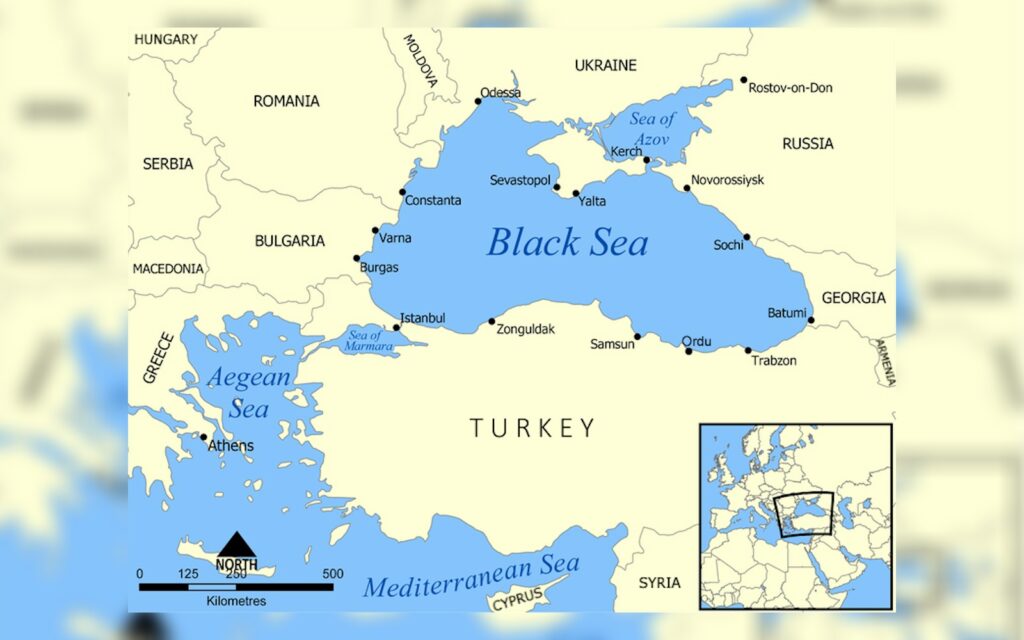
Russian drone attacks that have sunk commercial shipping in the Black Sea are threatening the NATO military alliance just as experts have warned over the last several months.
The developments come as President Donald Trump is trying to purchase large volumes of diesel fuel from Russia that would transit the Black Sea and bring Russia back to Ukrainian peace negotiations.
The big surprise is not the attacks themselves, but where the attacks are happening.
Eleven sailors were still missing after a drone attack sank a Bulgarian ship operating under a foreign flag in the country’s Black Sea exclusive economic zone (EEZ), Reuters reported.
“A Kremlin-affiliated Russian milblogger claimed on October 13 that there have been nine strikes against cargo ships off the coasts of Bulgaria and Romania in the southwestern Black Sea area in recent months,” the Institute for the Study of War (ISW) said in a briefing at Critical Threats.
The ISW noted the strikes in the Bulgarian EEZ “demonstrate Russia’s increasing acceptance of risk in its strike packages, expanding risk tolerance from aerial incursions into European airspace to maritime kinetic events.”
Bulgaria was careful not to attribute the sinking outright to Russia, but the country’s Prime Minister Rumen Radev summoned the Russian ambassador to Bulgaria for a meeting that lasted less than an hour, The New York Times reported.
Radev did note that only Russia would benefit from stopping trade that largely involved Ukraine.
“The one who carries them out knows very well what he is hitting, where he is hitting it and when he is hitting it in relation to his interests in supplying important raw materials to Romania and Ukraine or in preventing important exports from Ukraine,” Radev said, according to the Sofia Globe.
Testing NATO
Western intelligence officials have been warning that Russia would try to test the NATO alliance before the midterm elections, although the concerns typically focused on the northern NATO countries in the Baltic region, not the southern Black Sea.
At the same time, Trump’s Central Intelligence Agency Director John Ratcliffe traveled to Moscow to warn Putin against any attack on NATO.
CBS News reported in August that Russia might attempt some sort of assault that would remain within the limits of the gray-zone war it has been waging against NATO allies as it pursues territorial expansion in Ukraine. The report cited drones, missile incursions, sabotage, cyber operations and other hybrid tactics.
The current attacks threaten to draw a more significant NATO member deeper into the growing Black Sea confrontation than previously contemplated: Turkey.
Through its command of the Bosporus, the narrow waterway that separates Europe from Asia, Turkey controls trade through the Black Sea to most of the rest of the world.
Russian shipments of diesel through the Black Sea have fallen to zero recently, supported in part by U.S. sanctions, helping to drive diesel prices higher.
Unlike other NATO allies, whose reach is typically limited to Europe, Turkey is also a player in the Middle East, with significant influence in Syria, largely replacing Russia and Iran since the collapse of the Ba’athist regime.
Turkish policy on the waterway has been to constrain NATO while still assisting both Ukraine and Russia, according to a report by the Carnegie Endowment for International Peace.
The latest strikes put that balance in danger.
At least three Turkish commercial vessels carrying grain have been hit in the Black Sea in October, Euronews reported.
Turkey has also been careful not to publicly attribute the attacks to Russia.
But last week, Turkish President Recep Tayyip Erdogan raised the question of Black Sea “security” with Russian President Vladimir Putin, urging talks on the issue, according to Turkish state media.
Turkey’s Foreign Minister Hakan Fidan implied that both Russia and Ukraine were to blame for the deteriorating security situation in the Black Sea.
“At the moment, both sides are engaged in tremendous attacks to establish some sort of military superiority over each other before we go into winter, and this seriously impacts navigational safety in the Black Sea,” Fidan said, according to Reuters.
Romania, Bulgaria and Turkey agreed in July to expand cooperation on Black Sea safety issues, including mine clearance and joint missions to protect critical infrastructure, the Romanian Ministry of National Defence noted.
Bulgaria also agreed to join NATO’s anti-drone alliance, which is putting $40 billion into a system designed to protect Europe from drone attacks within five years.
But for now, NATO members seem content to respond to the immediate threat rather than escalate military confrontation with Russia.
“NATO will continue to work closely with our Allies in the Black Sea,” NATO Secretary-General Mark Rutte said. “We have already strengthened our posture along the eastern flank and will continue to monitor the security environment, adjusting our deterrence and defence posture as needed.”
(Image credit: Wikimedia Commons)