
Analysis: Oregon shooting highlights heroism, struggles for generations of men
The actions of a father in Bend, Oregon, are bringing back into focus how one good man with a gun can make a difference.
But the incident also highlights how men under 30 are struggling…
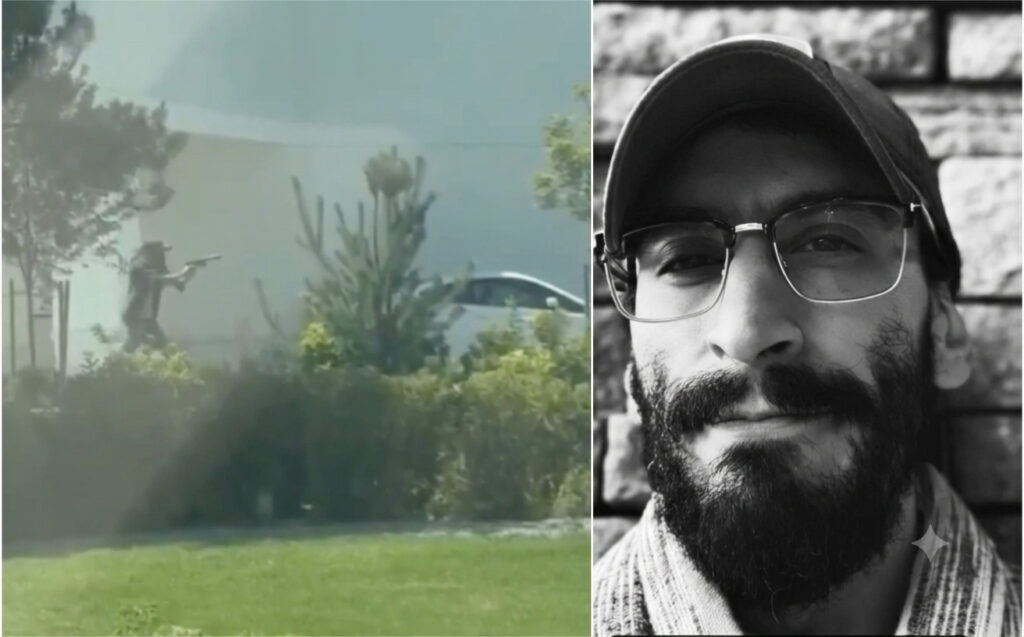
The actions of a father in Bend, Oregon, are bringing back into focus how one good man with a gun can make a difference.
But the incident also highlights how men under 30 are struggling compared with their older counterparts.
And it challenges the progressive view that “toxic masculinity” is responsible for the world’s troubles.
Men who step up in a crisis
The Bend father, Kaylub Giamanco, is being praised as a hero after stopping a gunman during an attack at an elementary school.
“I don’t think we can underestimate or under-appreciate that courage,” Bend Police Chief Mike Krantz said, speaking about a teacher and Giamanco, 36. “When someone is willing to risk their own life for others, we recognize that.”
The latest incident follows an August episode in which Jordan Salinas shot at a gunman who killed three people at an In-N-Out Burger in Twin Falls, Idaho.
While Salinas, 35, didn’t kill the gunman, he is credited with preventing further attacks.
While the media typically focuses on events such as homicides and mass shootings, data indicate that the “one good man with a gun” observation is more complex than the actions that result in a trigger pull.
A 2022 study of civilian gun use specifically examined situations in which a gun “helped deter predatory behavior,” not just incidents of self-defense, according to respondents.
Excluding law enforcement, the study suggested that 1.67 million defensive gun actions occur annually in the U.S., with 82% of those incidents resulting in no discharge of a firearm.
The survey noted that nearly 60% of gun owners are male.
That’s a lot of good guys, although that’s not to suggest only men use firearms defensively.
But survey numbers suggest those good guys – along with the guns – remain underappreciated in the U.S. until they are actually needed.
Cruelly, the deeds of gunmen who kill people are celebrated, while the good guys downplay their own heroism and courage.
Giamanco has largely avoided publicity and remained silent. The public knows only that he feels guilty about not saving more children, based on statements from his brother.
Salinas also took a low-key approach to his heroism.
“There’s a task that needs to be done, and we’re the ones who need to do it,” he said, according to the Idaho Statesman.
The Statesman reported that Salinas’ main concern after the incident was getting out of cell phone range so his phone would stop buzzing and he could spend the day with his horses.
The limits of the “toxic masculinity” narrative
By contrast, in a 2021 report on gun violence in America, ABC News said “toxic masculinity and gun availability” arguably constitute America’s most dangerous combination.
Yet in France, which is experiencing a wave of rioting, the bad guys don’t have guns, but that doesn’t make them less dangerous.
People willing to break the law won’t necessarily be deterred by more laws.
The Bend shooter, who was 16, was described by his mother in 2020 as a special needs student with behavioral and social challenges. Under the law, he probably shouldn’t have had access to a firearm.
That’s why the shooting will likely become another case in which parents face liability, as in other recent shootings in Michigan and Georgia, some experts noted.
“I think this investigation will head the same way,” CNN national security analyst Juliette Kayyem said. “How did he get access to guns? What did the parents know?”
As in the other cases the expert cites, the Bend shooting points more plausibly to emotional or mental illness than to the theory of “toxic masculinity.”
Young men face a crisis of purpose and belonging
And it’s no wonder young men, especially, are struggling with their emotional health.
Self-assessments by men under 30 suggest they live in a world they feel constantly criticizes and minimizes them.
A survey by the Institute for Family Studies paints a grim picture of life for men under 30.
“The survey found that 61% of young men often feel they have little control over what happens to them, while 54% said they never seem to do enough to please others,” the study said. “More than 4 in 10 (43%) agreed with the statement ‘I am inclined to think that I am a failure.’”
Half of the respondents agreed that “people like me will never achieve the American dream.”
“An honest assessment of where young men are today would have to begin with the breakdown of the family,” said Michael Toscano, co-author of the report.
Young men are increasingly isolating themselves through video games, gambling, pornography and social media, the survey’s authors said.
The pattern points to a lot of good guys who feel criticized and minimized, much like guns, until they are needed.
That could have implications when the next generation looks for someone like Giamanco or Salinas to step up.
“If the world around you is increasingly closing off your opportunity to be a successful man, what you might do is look for it in a synthetic environment,” Toscano concluded.
(Image credit: Jordan Salinas/X/Facebook)


