Analysis: Homeschool vs. public school – which is better?
As New York marks an explosion in homeschool growth long past the COVID-19 pandemic, at least one media outlet saw fit to continue the conversation sparked on social media.
“Hundreds of…
As New York marks an explosion in homeschool growth long past the COVID-19 pandemic, at least one media outlet saw fit to continue the conversation sparked on social media.
“Hundreds of readers joined the discussion on Facebook, weighing in on everything from academics and socialization to parental rights, teacher qualifications and frustration with traditional public schools,” wrote Greater Long Island, an online-only regional news website.
The outlet asked Zilvinas Silenas, president of the Empire Center for Public Policy, to “consider some of the biggest arguments readers raised,” including the general purpose of schooling.
“Here, the question is: What is the function of a school? Is it a narrow one, to provide educational services, or a broad one, to provide education, interaction, a social network and more?” wrote Silenas, a former high school teacher and author of the award-winning “Economics in 31 Hours” textbook.
“If the purpose of a school is simply to provide educational services, that is, to teach a child to read, write, think and do differential equations, then either regular schooling or homeschooling can provide that service. It is simply a matter of who teaches better.”
‘How badly the school system has deteriorated’
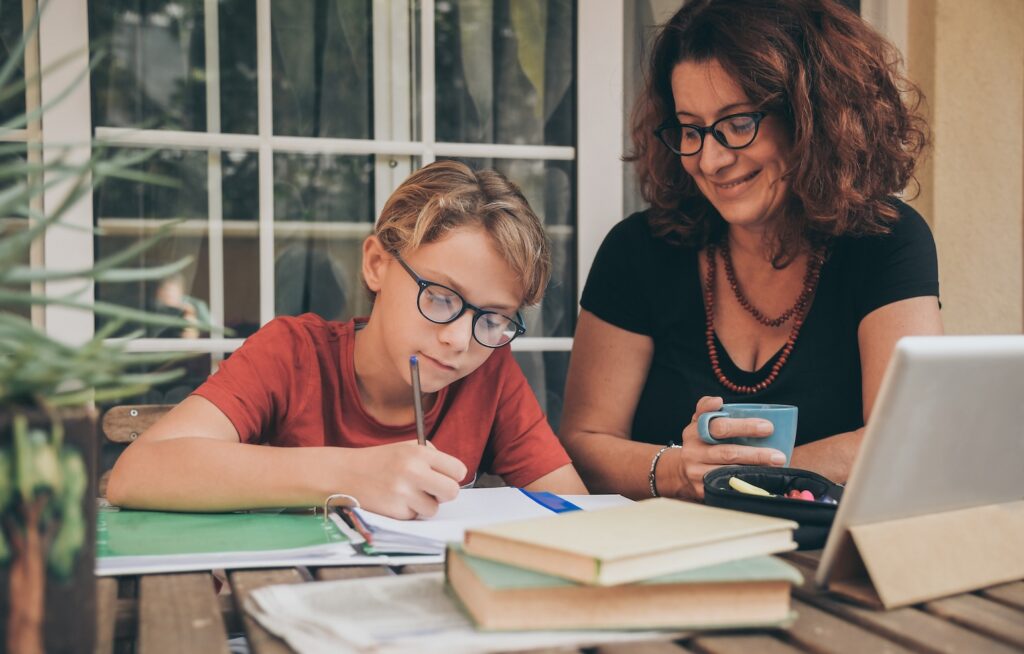
The arguments opened with the discussion of “a strong education,” with journalists acknowledging how homeschooling provides customized, one-to-one teaching “difficult to replicate in a classroom.”
“Children can move at their own pace, spend more time on difficult material, advance quickly in stronger subjects, use online courses, join co-ops and pursue options such as early college enrollment,” the article noted.
However, critics often counter with questions over parents’ credentials and allude to “significant academic gaps” among some homeschool graduates – despite statistical evidence of homeschooled students outperforming their public-schooled counterparts on standardized tests.
While Silenas diplomatically praised both sides as making “excellent points,” even he, as a former teacher, admitted homeschooling tends to have academic advantages over public school.
“The fact that some parents manage to do a better job than some teachers indicates how badly the school system has deteriorated,” he observed. “If you managed to fix your car better than a mechanic did, what would you think of that mechanic’s skills?”
‘Where is the demand for education reform?’
Arguments also included socialization, with advocates describing “active networks” of homeschool students spanning different ages as well as their same-age peers, according to the article.
“If the purpose of a school is broader, to provide both education and socialization, then, at least in theory, regular schools probably offer better opportunities to do so,” Silenas argued.
The article failed to mention documented research showing the typical homeschooled student is “well-socialized,” according to Homeschooling Backgrounder.
“In recent research, homeschoolers have demonstrated the sufficiency of their socializing experiences, on some issues showing better results than conventional schools,” the association noted, citing studies from Stetson University among others.
Silenas also conceded some disadvantages of socialization, “such as bullying and peer pressure,” alongside the positives of support and friendship.
“Some parents likely do not trust schools to provide positive social experiences while minimizing negative ones,” he wrote.
“What I do not understand is why the majority of people – non-homeschoolers – agree that regular schools suffer from many problems yet choose to do nothing about them.
“Where is the outrage that New York’s school system spends more per student than any other state, at levels exceeding even the world’s highest-spending countries in international comparisons, yet achieves only mediocre results?
“Where are the demands to remove ineffective teachers or guarantee every child’s safety?
“Where is the demand for education reform?
“If you believe in the school system, and fund it with your taxes, why not take a larger interest in making it better?”