Analysis: Army secretary resignation exposes decades of military neglect
The battle inside the Pentagon over modernization and readiness has burst into public view as Secretary of the Army Dan Driscoll resigned after meeting President Donald Trump.
Driscoll has…
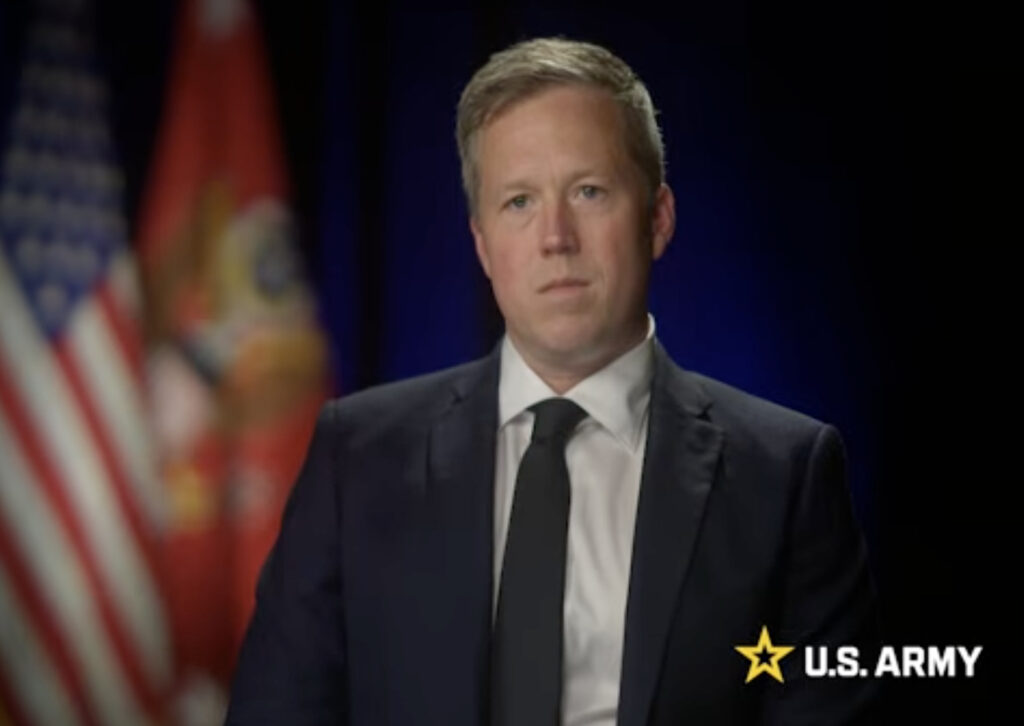
The battle inside the Pentagon over modernization and readiness has burst into public view as Secretary of the Army Dan Driscoll resigned after meeting President Donald Trump.
Driscoll has protested to the White House about the high number of general officers removed, including Driscoll allies, under Secretary of War Pete Hegseth.
Concurrently with the Driscoll resignation, a story has appeared in the Washington Post that claims top Pentagon leaders are warning Hegseth the military can’t sustain the war against Iran without weakening its ability to respond to other conflicts at home and around the world.
Last year, the Government Accountability Office (GAO) sounded the alarm bells, noting “U.S. military readiness has been degraded over the last 2 decades” while warning the Pentagon still needed to act on most of the 100 recommendations GAO made on improving readiness.
It’s a big comedown for a military that simultaneously supported decades of Iraqi and Afghan operations, which at their peak sustained 190,000 ground troops.
“Secretary Driscoll has been highly effective in advancing President Trump’s agenda to Make America Strong Again at the Department of the Army by providing outstanding leadership during historic military operations,” said White House Spokesperson Anna Kelly, accepting the resignation, according to multiple media outlets.
An unnamed Army official told Defense Scoop that Driscoll first met with Trump before offering his resignation.
The Atlantic writes “four people familiar with the conversation” told the magazine the president expressed “surprise” about the high turnover of general officers.
CBS News reports at least “20 generals, admirals and civilian defense leaders have been fired or have departed their jobs since Pete Hegseth became defense secretary at the beginning of the second Trump administration.”
Surprised or not, Trump accepted the resignation.
And historical records show the turnover is not unusual, especially as the military switches to readiness and war fighting as its goal.
Of the 42 division, corps and Army commanders who participated in 1941 maneuvers in Louisiana prior to World War II, 74% were relieved or retired afterward, according to an Army history.
An additional “20 of the 27 division commanders [were] relieved in 1942,” for a total of 51 removals.
“Instituting this standard of effectiveness rather than the principle of seniority was a tremendous change in the culture of the officer corps,” said the Army about the change in leadership.
Specifically, Driscoll was reportedly upset about the firing of Col. David Butler, Driscoll’s chief spokesperson. Butler was let go in part because he served as spokesperson for Gen. Mark A. Milley, a staunch Trump foe, said CNN.
Milley and Trump clashed on a number of issues, including controversial phone calls the general made to his Chinese counterparts, over the head of the commander-in-chief, allegedly promising to notify China in advance of any intended U.S. attack.
Driscoll was also upset that four officers, two black officers and two female officers, were stricken from the promotion list by Hegseth, reported the New York Times.
The Times framed the issue as undermining confidence in the tenure-based promotion system versus Hegseth fighting against “foolish,” “reckless” and “woke” leadership from prior administrations that based promotions on identity.
“We do war fighting here at the Department of Defense,” Hegseth told a gathering of senior commanders in February 2025, “and we want to restore that through a laser focus on readiness, lethality and warfighting across the spectrum.”
But the resignation may also be symbolic of a larger rift inside the administration and the Pentagon about war fighting and the role of the military in international relations.
Driscoll was Vice President JD Vance’s classmate at Yale. Driscoll’s association with the vice president, multiple media outlets noted, offered the former Army secretary some political cover inside the Trump administration.
Vance has been the face of a less interventionist foreign policy on the right, as demonstrated by his recent peace talks with Iran to settle the Islamic Republic’s 50-year-old conflict with the U.S.
Supporters said Driscoll was highly instrumental in the crash drone program, helping the U.S. to quickly transition to cheaper drone technology.
But he’s also been criticized for chopping the at-sea prepositioning of Army stocks necessary for deployment anywhere in the world, known as APS, which looked more like a financial than a readiness move, especially as it relates to the Indo-Pacific region.
“What we’ve learned in past exercises and operations is [that] APS is incredibly important,” but hard to manage, Lt. Gen. Christopher Mohan told Breaking Defense. “It’s very expensive to maintain.”
The decline in readiness has been a long time coming, as successive administrations have downgraded the military’s ability to confront multiple threats, a bipartisan commission told Congress in 2024.
“The Joint Force is at the breaking point of maintaining readiness today,” Jane Harman, a Democrat who headed the Commission on the National Defense Strategy, told the Senate Armed Services Committee in 2024. “Adding more burden without adding resources to rebuild readiness will cause it to break.”
(Image credit: Screenshot/YouTube/U.S. Army)