‘A cultural space for gratitude’: Historian says Thanksgiving tradition reflects American principles
Whatever the historical details of the first Thanksgiving, the holiday has become a living tradition of gratitude passed from generation to generation, says Wilfred McClay, a history professor at…

Whatever the historical details of the first Thanksgiving, the holiday has become a living tradition of gratitude passed from generation to generation, says Wilfred McClay, a history professor at Hillsdale College in Michigan.
“The question is not how accurate is the story about the original Thanksgiving. The story is what’s become of it,” McClay told Heartlander News in an exclusive interview. “The story is how it binds us together in a way that is almost unique in our national experience and is irreplaceable. It’s worth a million times more than knowing exactly what happened in November of 1621.”
McClay holds the Victor Davis Chair in Classical History and Western Civilization at Hillsdale. His books include Land of Hope: An Invitation to the Great American Story, a U.S. history textbook for high school and college students.
McClay distinguished between the historical record and the heritage of Thanksgiving. While historical facts and dates do not change, a tradition endures from generation to generation, he said.
“A tradition has a life of its own. That’s really what it comes down to. It has a life of its own, and it carries something with it,” he said. “It’s a living thing. History is not.”
Loudoun County recommends ‘Day of Mourning’ lesson
McClay was responding to reports about instructional resources recommended by Loudoun County Public Schools (LCPS) in Virginia. Among the suggested materials is a lesson that presents Thanksgiving as a “Day of Mourning” for Native Americans.
The district updated its 2024 Resources for Recognition Days & Months guide for the 2026-27 school year, the Washington Free Beacon first reported. The guide designates November as “Indigenous Heritage Month” and asks teachers to present “a narrative that is historically accurate and includes multiple perspectives.” It does not list Christmas among its December recognition days, according to the Free Beacon.
For Thanksgiving, the guide suggests The Real Story of Thanksgiving for students in second through fifth grades. The lesson says “many American Indian tribes think of Thanksgiving as a ‘sad day for all Native Americans.’”
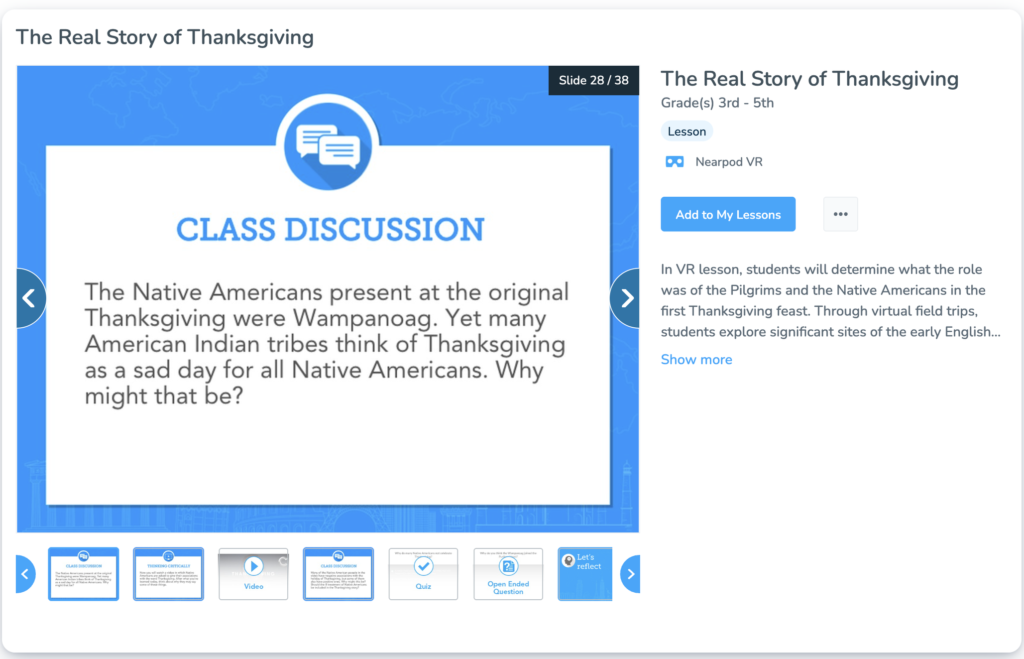
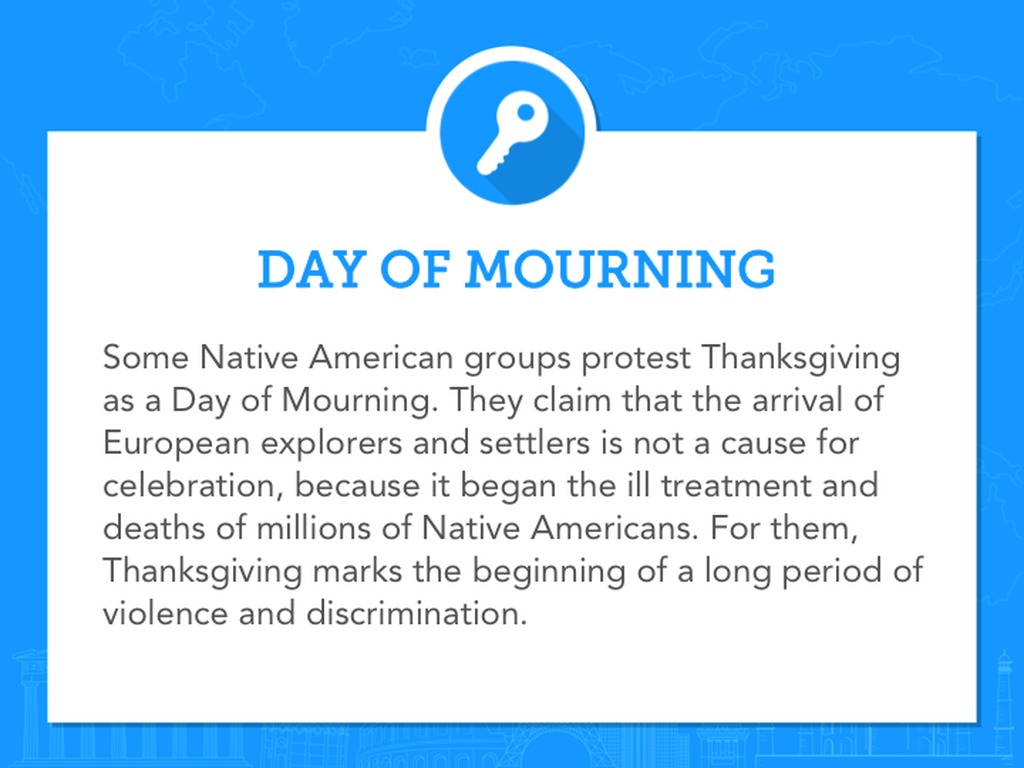
The lesson’s slides are labeled for third through fifth grades, but LCPS also recommends the material for second graders. Another slide describes Thanksgiving as a “Day of Mourning” and the beginning of “a long period of violence and discrimination” for Native Americans.
In Massachusetts, where the first Thanksgiving took place, the Boston City Council passed a resolution this month recognizing Thanksgiving Day, Nov. 26, as a “National Day of Mourning” to address “historical injustice.”
McClay: Teaching children shapes their souls
But McClay said teaching seven-year-olds to mourn a holiday with a longstanding place in American life is “child abuse.” He compared it to telling a second grader that his or her parents may divorce one day. Mourning implies a prior loss, he said, calling the lesson a “gross oversimplification of the record.”
“Mourning. It implies a whole sort of moral calculus that second graders are not capable of,” he said. “It’s an imposition on them of an emotional reaction grounded in a particular moral calculus that they don’t have the ability to possess. It is child abuse. It really is.”
Young children seek stability and “confidence in the things that he or she can rely on,” McClay said.
“You have to keep in mind, with the very young, that every subject you teach is also part of their formation, and their formation as whole and healthy human beings,” he said.
Teaching children to mourn their country at such a young age “damages their souls,” McClay said, paraphrasing a mentor who offered that insight as McClay was writing Land of Hope.
LCPS says resources are optional
The LCPS guide also recommends Keepunumuk, a book that reframes the “Thanksgiving story for a more inclusive America.” A suggested lesson for students in sixth through 12th grades calls Thanksgiving a “Day of Mixed Blessings” and asks students to consider how to be “sensitive and respectful to Native Americans on Thanksgiving.” It includes a HuffPost video titled Why These Native Americans Observe a National Day of Mourning Each Thanksgiving, the Free Beacon reported.
Heartlander News contacted Danyael Graham, supervisor of social and global studies in Loudoun County’s Teaching and Learning Department, but had not received a reply by publication. In a statement, the district described its guide as “a collection of optional instructional resources available to educators, not a prescribed curriculum.”
“To clarify, the Loudoun County Public Schools (LCPS) Resources for Recognition Days & Months guide does not label Thanksgiving a ‘Day of Mourning,’” LCPS told Heartlander News. “Rather, it includes multiple suggested resources that explore Thanksgiving traditions and historical perspectives, including Native American perspectives.”
Heartlander News had not mentioned the “Day of Mourning” language or grade levels in its question to the district. LCPS said the Virginia Department of Education uses the same curriculum.
The district’s guide also links to a National Education Association article offering advice on how to explain the reframing of Thanksgiving.
“If you get resistance from anyone, explain that you’re not taking Thanksgiving away, you’re redesigning it,” the article suggests. “It’s not a foreign concept to redesign and teach content differently. We do it for math and other subjects.”
Thanksgiving’s history and heritage
McClay agreed that traditional depictions of Thanksgiving likely differ from what happened at the 1621 harvest gathering in Plymouth, Massachusetts.
“It was a harvest celebration, and it’s also true that within a generation, the descendants of those present were at war with one another. The relationship with the Indians was not peaceable over the long term,” he said, adding that the settlers were “as much aggressed against as aggressors.”
But the holiday’s development reflects the human search for meaning, which “adapts . . . mundane materials to spiritual uses,” McClay said. He argued that Thanksgiving’s meaning is grounded in American founding principles and objected to those who “downgrade the story of America to make it a lie.”
“[They] say that the words of the Declaration of Independence were a lie. No, they were not a lie,” he said. “They were an expression of an aspirational ideal. Nobody would have said in 1776 that we had achieved that state, but that doesn’t make it a lie.”
Biblical ideas such as human dignity rooted in the image of God are “ingrained in our culture,” historian and author Bill Federer told Heartlander News. He argued that efforts to discard Thanksgiving are part of a broader attempt to separate Americans from their history.
“It is a socialist tactic called deconstruction, where you separate people from their path, get them into a neutral [position] where they don’t remember where they came from, and then you brainwash them into the future you have planned for them,” Federer said.
Thanksgiving’s focus on gratitude also carries a religious dimension because giving thanks implies someone to thank, McClay said. For some, he added, gratitude can begin a path toward God.
“I’m glad for Thanksgiving. I’m thankful for Thanksgiving,” he said. “I’m thankful that we had the creativity and imagination to make this into the holiday. It is to create this space for culturally speaking, it’s a cultural space for gratitude.”