Supreme Court declines to hear censorship case over refusal to use transgender preferred pronouns
The Supreme Court on Monday declined to take a First Amendment case involving Coloradans who said the government censored them for refusing to use “preferred pronouns” for transgender…
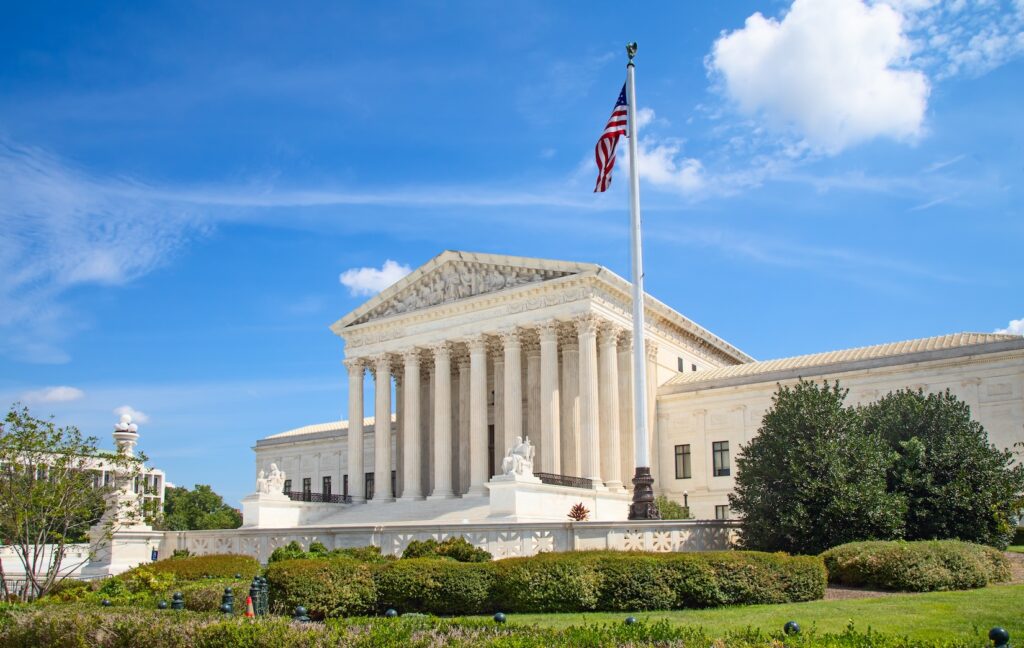
The Supreme Court on Monday declined to take a First Amendment case involving Coloradans who said the government censored them for refusing to use “preferred pronouns” for transgender individuals.
The justices turned down the case, Gays Against Groomers v. Garcia, without explanation. Gays Against Groomers, which did not respond to Heartlander News’ request for comment, describes itself as an “advocacy movement of gays, lesbians, and others in the community who oppose the sexualization, indoctrination, and mutilation of children under the guise of radical ‘LGBTQIA+’ activism.”
The case began in 2024, when Christina Goeke and Rich Guggenheim, members of the Rocky Mountain Women’s Network and Gays Against Groomers, respectively, sued after legislators silenced them during hearings on a bill aimed at making “legal name changes easier for transgender felons,” according to the Institute for Free Speech, which represents them.
“They refused to use the ‘preferred pronouns’ or assumed name of the man the bill was named for, so legislators interrupted them and cut off their testimony,” the institute said. “In Goeke’s case, lawmakers also erased part of her remarks from the official record.”
The case reached the Supreme Court after the 10th U.S. Circuit Court of Appeals upheld the dismissal of the lawsuit based on “legislative immunity,” noting that “the establishment and enforcement of rules of decorum for legislative proceedings fall within the sphere of legitimate legislative activity.”
The Institute for Free Speech argued that the 10th Circuit’s ruling “conflicts with precedent from the Supreme Court and other federal courts.”
“Under those cases, officials sued in their official capacity cannot invoke a personal defense like legislative immunity, and enforcing a rule is not the same as legislating it,” the institute noted.
“We’re disappointed that the Court declined to take up this case,” Institute for Free Speech senior attorney Del Kolde said in a statement. “Coloradans who want to weigh in on trans-related legislation must still choose between using government-mandated gender terminology and being silenced. The Tenth Circuit’s ruling gives legislative majorities a roadmap for censoring criticism by citizens who hold dissenting views, with no court able to stop them. That is bad for free expression.”
Although the state Legislature took that action, Colorado voters this month approved measures restricting transgender participation in girls’ sports and sex-change surgeries for minors.
Gov.-elect Phil Weiser and other Democratic lawmakers said they would look for ways to weaken or repeal the measures.