Nebraska voters reject online sports betting despite $22 million industry campaign
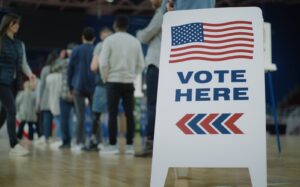
Nebraska voters rejected two ballot measures that would have legalized online sports betting, despite a nearly $22.5 million campaign by the gambling industry to win approval.
Opponents warned…

Nebraska voters rejected two ballot measures that would have legalized online sports betting, despite a nearly $22.5 million campaign by the gambling industry to win approval.
Opponents warned that the measures could expose children to gambling and leave people, particularly young men, worse off financially.
Unofficial returns showed about 55% of voters opposed Initiative 440, while 54.5% opposed Initiative 441. Both measures needed to pass for online sports betting to become legal.
Initiative 440 would have amended the state constitution to allow online sports betting. Initiative 441 would have allowed licensed racetrack casinos to create the betting apps, according to the state’s ballot guide.
“Nebraskans stood up to powerful gambling corporations with seemingly limitless resources and refused to let them buy their way into our state,” Nebraska Family Alliance Executive Director Nate Grasz said in a statement.
The defeat comes as sports gambling continues to expand nationwide.
Thirty-nine states and Washington, D.C., allow some form of legal sports gambling, according to the American Gaming Association. Nebraska is among them, allowing in-person sports betting at racetrack casinos. Meanwhile, Legal Sports Report says 31 states and Washington, D.C., allow online sports betting.
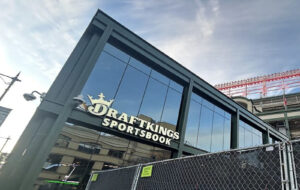
Tax Relief Nebraska, the group behind the measures, raised nearly $22.5 million, according to the Nebraska Examiner. DraftKings and FanDuel each contributed $10.4 million.
Former Nebraska football coach Tom Osborne opposed the measures, as did state Auditor Mike Foley and Treasurer Joey Spellerberg.
The campaign in favor of the measures outspent opponents about 20-to-1. Supporters argued that legalizing online sports betting would help reduce property taxes.
“Voters in Nebraska looked right past that,” Spellerberg said.
Supporters also argued that because some Nebraskans use offshore sportsbooks or place bets in other states, Nebraska should tax and regulate the industry.
They claimed the industry would provide more than $166 million in property tax relief over 10 years.
Grasz disputed that argument.
“This was never about lowering property taxes, this was never about helping Nebraska families,” he told Nebraska Public Media.
Lynne McNally, WarHorse Casino’s director of government relations, said rejecting the measures would cost Nebraska residents money.
“I’m disappointed for the state of Nebraska,” she told Nebraska Public Media.
Election betting surges
The vote came as Americans placed substantial bets on the midterm elections.
Kalshi and Polymarket saw nearly $2 billion in midterm prediction market trades as of Monday, The Washington Post reported.
Some worry these platforms could undermine trust in American elections.
“Treating prediction markets such as Kalshi and Polymarket as trustworthy sources for election-related information rather than as platforms for speculative wagering based on opinion raises the risk of confusion and misinformation,” the Brennan Center for Justice wrote. “In particular, the markets could be used to promote false claims of election fraud when actual results differ from predictions.”
Although Nebraska voters rejected mobile sports betting, prediction markets pose a separate challenge. Some platforms offer sports wagers in Nebraska, claiming federal law allows them to offer contracts outside state sports betting regulations.
For example, Fanatics launched its prediction platform in 24 states last December, including Nebraska.
Those bets fall outside the state’s sports betting tax system.
Although the ballot measures failed, Lance Morgan, president of the Winnebago Tribe’s business arm, said supporters would try again at the ballot box in the future.
(Image credit: SecretName101, cropped, CC BY 4.0 https://creativecommons.org/licenses/by/4.0, via Wikimedia Commons)