Viral photo reimagines 6-year-old as 25-year-old, highlighting tensions over AI in schools
A South Carolina district is working to address concerns about artificial intelligence after a mom posted an AI-generated picture of her 6-year-old, re-envisioned to look 25 – part of a classroom…
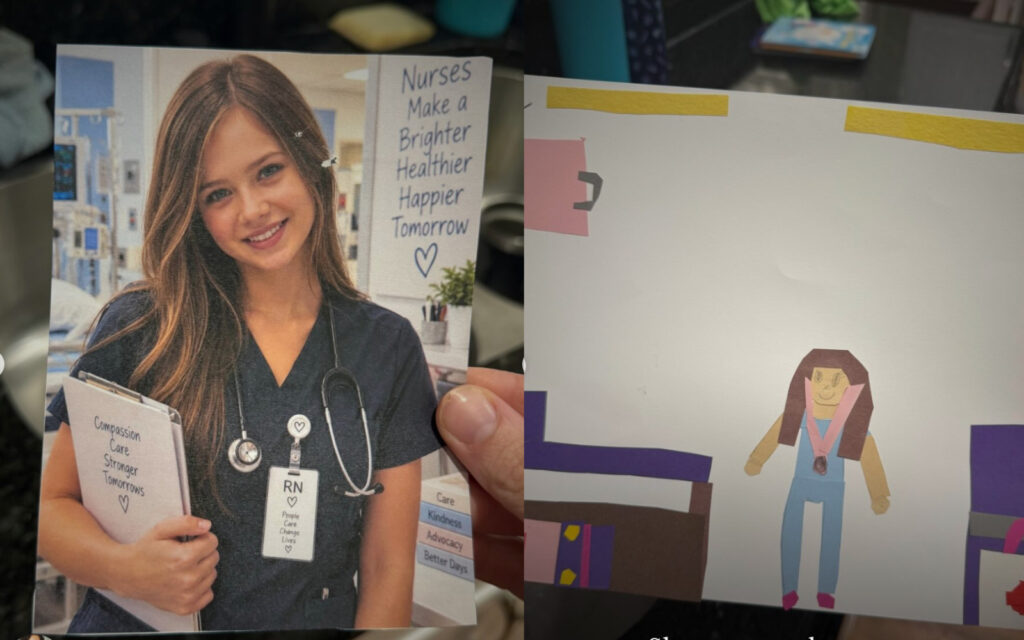
A South Carolina district is working to address concerns about artificial intelligence after a mom posted an AI-generated picture of her 6-year-old, re-envisioned to look 25 – part of a classroom assignment.
“Why do adults feel the need to insert a multibillion-dollar industry into something children already do better than us?” Nikki Anderson demanded in her Instagram post, which has more than 766,000 likes.
“Where did they get consent for AI image processing? Which company received the photographs? Were the images retained, logged, shared with subprocessors or used for model improvement?”
She further noted that the photography consent for her child’s school “does not include uploading to generative AI programs.”
The incident raises further questions about the role of technology in classrooms, even as parents and health experts question how and where teachers use AI, even if it’s just for learning.
‘Both the opportunities and responsibilities’
After Anderson’s post went viral, Charleston County School District provided an emailed statement saying it recognizes “both the opportunities and responsibilities that come with the use of artificial intelligence in education.”
“Once concerns were brought to the school’s attention, the principal directed that similar assignments be discontinued, and the district followed its established procedures to address the matter,” the statement noted, as reported by USA Today.
However, many parents noted that the discussion around AI is rapidly changing and that educators may introduce assignments parents haven’t approved ahead of time.
“It’s hard to imagine how that ties into something that they would be learning,” said Jason Yeh, co-founder of the venture firm Patron, which invests in consumer technology.
Because of situations such as Anderson’s, more parents are calling on schools to exercise caution around assignments involving AI – particularly when they may affect students’ personally identifiable information.
“Schools need to figure out the best way to incorporate relevant technology to help people learn better,” Yeh concluded.
Younger students face greater risks because of their relative immaturity, according to analysts such as Panayiota “Pani” Kendeou, a professor of educational psychology at the University of Minnesota.
“Elementary school students are still developing foundational knowledge and skills, including reading, writing, reasoning and the ability to manage their own learning,” she told Yahoo. “These foundations require sustained practice. As AI tools become more common, it is important to ensure that students continue to have opportunities to build these foundations themselves.”
While Anderson doesn’t think her daughter’s assignment was intentionally malicious, she is “pretty against AI” because of concerns about child development and abuse.
“All parents are just kind of on high alert right now because we’re trying to protect our kids’ imagination and privacy,” she said, noting that AI has been linked to an increase in child sexual abuse material.
As Heartlander News previously reported, school districts have varied in their approaches to technology use after parents raised concerns over screens and their effect on children and teens.
In North Carolina, one rural district banned technology on Tuesdays and Thursdays, with noticeable results.
“With laptops put away, the class was a lot more chatty, they were goofing around a little bit more in the hallway, and several eighth graders I talked to said they really like the switch,” NBC reporter Tyler Kingkade said. “It gives them a break, they have fewer headaches, and they talk to friends more.”
(Image credit: Screenshots/Instagram)