Trump EPA chief warns no one should spend Biden-era green bank money: ‘Those grants are canceled’
Environmental Protection Agency (EPA) Administrator Lee Zeldin said Wednesday that Biden-era climate grants are canceled “litigation aside” and that anyone holding the money should return it to…
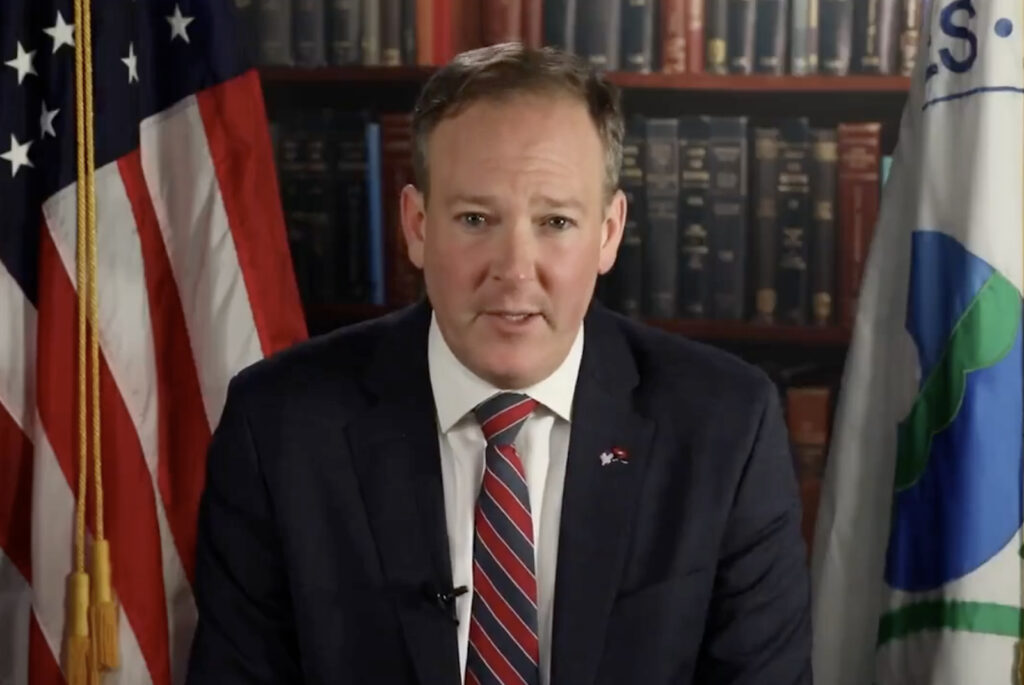
Environmental Protection Agency (EPA) Administrator Lee Zeldin said Wednesday that Biden-era climate grants are canceled “litigation aside” and that anyone holding the money should return it to the federal government.
The Biden administration’s $27 billion Greenhouse Gas Reduction Fund (GGRF), created in 2022 under the Inflation Reduction Act, was designed to help finance clean energy projects in low-income communities. After billions of dollars were awarded to politically connected nonprofits, the program came under investigation by the EPA’s inspector general, the Department of Justice (DOJ) and the Federal Bureau of Investigation (FBI).
Litigation has continued since the Trump EPA froze the Citibank accounts holding most of the program’s funds. Several grantees sued the EPA and Citibank, arguing that the Biden EPA had acted appropriately in distributing the money.
A federal appeals court ruled Oct. 9 that a court-ordered stay does not cover money one grantee moved out before the stay took effect.
“We have made it very, very clear to the eight prime recipients of that funding, and made very clear to Congress, media [and] to the public that those grants are canceled. So, no one should be distributing money. If they’re moving $1, they should be moving it back to the federal government,” Zeldin told reporters in response to a question from Heartlander News. “Litigation aside, the grants are canceled.”
The grantee, Coalition for Green Capital (CGC), transferred $2.65 billion to four funds managed by Wall Street firms after the Biden EPA approved changes to its grant three days before President Donald Trump’s inauguration, Heartlander News first reported. The Trump EPA previously told Heartlander News that the last-minute changes turned the program’s deployment model “on its head” and limited government oversight.
CGC did not respond to Heartlander News’ request for comment.
Zeldin said he could not comment directly on the litigation but noted that Congress rescinded the program through the One Big Beautiful Bill Act. In a separate written statement to Heartlander News, the EPA said it was reviewing the court’s decision.
“I would imagine that no one would be out there in the public saying, ‘Oh, cool! We have a few billion dollars that we can do whatever we want with.’ The grant is canceled. Congress rescinded the program. We’re talking about U.S. tax dollars and I’m sure Americans are not going to want to see any of their money wasted,” Zeldin said.
Zeldin also told reporters that the EPA found “many different middlemen” while investigating the GGRF’s Solar for All component, “each collecting at least 15 to 25 percent to administer the program.” He has repeatedly criticized the GGRF, citing concerns about taxpayer oversight and “self-dealing.”
The Trump EPA has also noted CGC’s ties to the Obama and Biden administrations, including a former policy director who went on to lead the GGRF.
In a Sept. 3 motion for clarification, CGC argued that it had always understood the stay did not apply to grants disbursed “before this dispute arose.” Records on USAspending.gov show subgrants totaling $2.65 billion to the four funds, dated Jan. 31, 2025, months before the stay took effect.
According to CGC’s filings with the EPA, four major firms – StepStone, Brookfield, Apollo and Energy Capital Partners – each manage one of the four subgrantees. Several sources previously told Heartlander News that the firms’ roles appeared inconsistent with what CGC had originally told the Biden administration it would do with the money.
Eric Soskin, a former federal inspector general who served under both the Biden and Trump administrations, told Heartlander News that the D.C. Circuit’s ruling clears the way for the funds withdrawn by CGC to be used.
Soskin said the January 2025 amendments “appear to have significantly changed how the program is being carried out, which likely undercuts the effectiveness of ongoing oversight over whether those funds are used properly or at risk of waste and fraud.”
He compared the issue to the Solyndra scandal. When the solar manufacturer defaulted on loans backed by $530 million in federal guarantees, less than 10% of the money could ultimately be recovered.
“Once this money is spent, it will be difficult to track and even harder to recoup,” Soskin said, adding that the government may need to consider “taking a more direct approach to this particular grantee.”
“Of course, any such action would need to be legally tenable: based on credible evidence of a False Claims Act or Title 18 fraud violation. Absent such action, however, it will now be hard to safeguard those funds that have already left Citi,” Soskin said.
Roderick Law, communications director for the conservative watchdog group Functional Government Initiative, told Heartlander News that “the last-minute transfers during the Biden administration appear designed to muddy the waters and avoid ordinary oversight – the kind of dysfunction that leaves taxpayers with less visibility and weaker accountability.”
“Whatever the outcome of the broader litigation, taxpayers still deserve a full accounting of where the money went and what residual oversight remains,” Law said.