Analysis: Oil flows return to prewar levels as Americans await lower prices, Iran war’s outcome
Gulf oil shipments have returned to prewar levels, while Iran’s shipments of crude have effectively hit zero over the last month, marking a reversal for the Iranian regime.
Instead of…
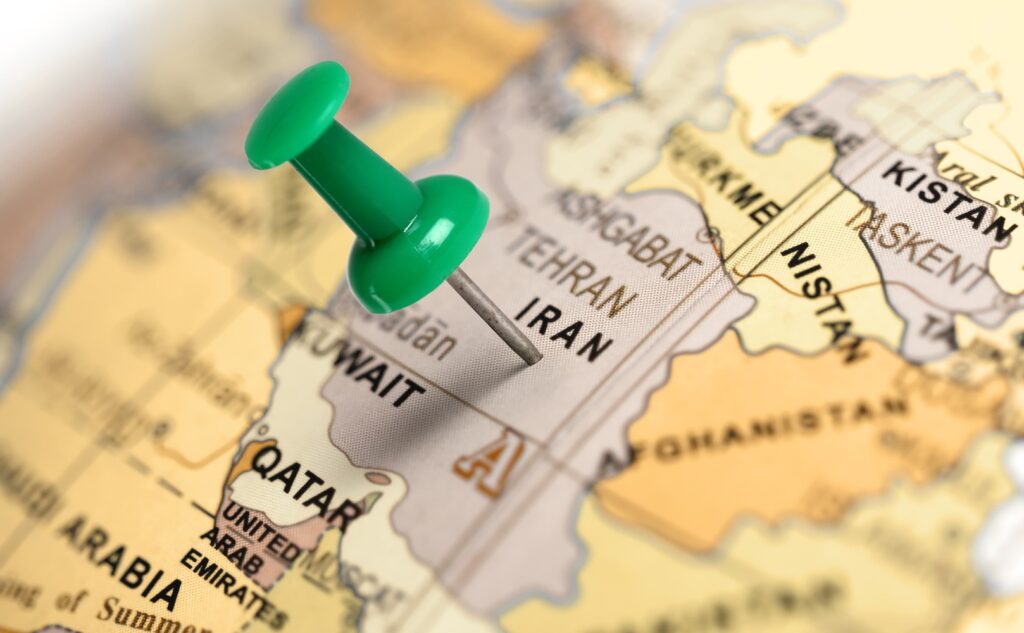
Gulf oil shipments have returned to prewar levels, while Iran’s shipments of crude have effectively hit zero over the last month, marking a reversal for the Iranian regime.
Instead of having a stranglehold on a strategic oil route, Iran may have diminished what was once considered near-nuclear leverage against the U.S.
Investment bankers JP Morgan and Goldman Sachs both agreed that the Mideast oil flow is at prewar or nearly prewar levels.
The commodities data tracker Kpler noted that the supply recovery comes as producers have moved shipments away from the Strait of Hormuz to alternate routes.
“Around 40% of crude now leaves without crossing Hormuz, up from 17% before the war, as Saudi Arabia and the UAE make greater use of pipeline routes,” said Kpler. “The volumes have recovered, but through a fundamentally different export system.”
Bloomberg analyst Stuart Livingstone-Wallace warned that an accumulated deficit “of well over a billion barrels of lost Middle East supply” continues to hang over the market, keeping fuel prices elevated.
While spot oil prices have come down from nearly $106 to $92, Americans are wondering when gas prices will go down as well.
“Well, it goes up like a rocket and it comes down like a feather is the explanation,” Don Strenk, of Strenk Management Consulting, which provides services to retail gasoline franchises, told Heartlander News. “But I think this might come down a little bit faster than the past.”
He noted that the price of crude is still high and that the market has to be disciplined because retailers “lost money on the way up a little bit.”
Strenk said even if oil prices collapse, relief at the pump won’t be immediate.
“It’ll take two, three weeks after if all of a sudden we resolve everything,” he added.
Sanctions affecting Iran’s finances
Still, it’s a significant victory for the Trump administration, which clamped down on illicit Iranian oil trading to bring total exports for the Near East country to zero.
“Iran has a new oil minister,” said Secretary of the Treasury Scott Bessent, who is leading the economic sanctions offensive against Iran. “Considering Iran has not loaded a single barrel of crude onto a vessel since August 25th, what is the oil minister managing?”
The financial data accumulating against the regime is damning, thanks to U.S. sanctions and countries such as China no longer buying its oil. Iran’s President Masoud Pezeshkian said that the state can’t even get the money that China owes it from previous purchases.
Iran’s money in China is “blocked,” he told Fox News as he visited the United Nations in late September.
Iran’s Central Bank has pledged $2 billion to prop up the rial, which has been hit by nearly 90% inflation as a result of the sanctions.
“The main problems in the foreign exchange market are declining foreign currency revenues, difficulties in transferring money and sanctions,” said Kamran Nadari, an economist and university professor, according to Iran International. “Selling banknotes cannot solve these structural problems.”
But just as Americans shouldn’t expect a collapse of gas prices at the filling station, they shouldn’t assume the regime will simply collapse because it runs out of money.
“The regime can shift much of the economic burden onto ordinary Iranians,” Saeid Golkar, associate professor of political science at the University of Tennessee at Chattanooga, told Heartlander News. “People can become dramatically poorer, public services can deteriorate and inflation can continue, all while the state retains enough resources to pay the IRGC, Basij, police and intelligence services.”
Golkar cited Cuba and North Korea as examples of states where people have become poorer while the regime maintains power, with Iran having “a much larger, more diversified economy [and] significant domestic production” compared to the other two regimes.
“The crucial turning point comes when personnel begin to doubt both the regime’s ability to provide for them and its ability to protect their future,” he added. “Before that point, economic pressure may lead to a smaller, more privileged coercive core rather than widespread defections.”
Still, there are factions in Iran who disagree about Iran’s ability to slug it out with the U.S. without endangering the regime’s survival.
The longer-term outlook
The Institute for the Study of War and The Critical Threats Project at the American Enterprise Institute reported that there are three factions inside Iran attempting to influence policy and that “some regime actors believe the present situation is untenable for Iran.”
The October election in Israel and U.S. midterm elections in November may be the demarcation lines for which faction eventually wins in Iran.
“You have to remember they hope both [Israeli Prime Minister Benjamin Netanyahu] and Trump will be out of power soon, or be decapitated because of November and October elections,” said Golkar.
The shift to alternative oil shipment routes indicates that the Iranian strategy of using the Strait of Hormuz to leverage the world’s dependence on oil routes may have a long-term unintended consequence. In the end, it may serve to diminish the importance of Iranian oil and Iranian control of an oil route that previously was indispensable to Middle East producers.
Energy executives and the Gulf states of Iraq, Kuwait and Saudi Arabia have all indicated they will invest in routes that bypass the Strait of Hormuz, reported Reuters, even as they continue to improvise new routes.
“Tehran’s moment of maximum leverage in the Strait of Hormuz has passed,” wrote Stephanie Campbell in the Washington Post in September.
But like motorists looking for lower gas prices and those seeking the collapse of the regime, it might be a while before the conclusion is made obvious.