Study: Boston busing program ‘remarkably successful’ in boosting college attendance, graduations
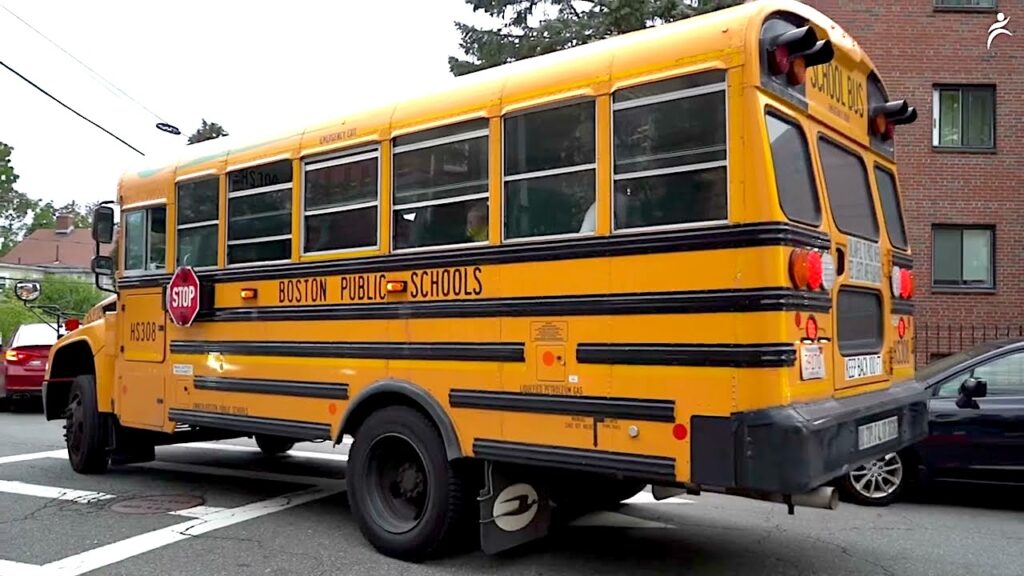
Peer pressure can have positive effects when it comes to college attendance rates, one study concludes – even using something as simple as a bus ride to suburban Boston schools.
“The…
Peer pressure can have positive effects when it comes to college attendance rates, one study concludes – even using something as simple as a bus ride to suburban Boston schools.
“The still-operating program, known as Metco, buses a few thousand mostly black and Hispanic students from Boston to a number of mostly white suburban schools,” writes Matt Barnum for Chalkbeat.
Over the years, the program has been “remarkably successful” in increasing participants’ chances of completing high school and college – boosting college graduation rates from 26% to 38%, according to the article.
“Metco, in short, proved educationally and economically transformational for many. Big effects like these are not common in education research. For that reason alone, they’re worth trying to learn from, even if we know that outsize gains are inevitably hard to replicate.”
‘Changing the type of school you go to’
The study’s author, Tufts University economist Elizabeth Setren, admits researchers still can’t explain “what is actually leading to these gains,” but she encourages education leaders and policymakers to continue exploring her findings.
“Districts and school systems across the country are doing some form of racial or socioeconomic integration, so we can learn from this,” she told Chalkbeat.
“In this scenario, students went from a setting where college-going is not [the norm] to a place where it’s very common. I’ve heard Metco alums say they went from the question being, ‘Do you want to go to college?’ to ‘Where are you going to college?’”
On average, students in the program had smaller class sizes – about two students fewer than their peers – and attended schools with more Advanced Placement class options, even though they don’t take AP classes at a higher rate, Setren noted. The environment also impact their behavior.
“They are less likely to get suspended and their attendance rate is higher.”
When asked whether the study suggested more benefits came from “who you go to school with” over “the type of education you get,” Setren responded, “It’s very hard to tease that apart.”
“If we think of what happens with Metco, it’s dramatically changing the type of school you go to,” she concluded. “It’s shifting the type of peers you have. It’s shifting the type of teachers you have. To me it’s something about the shift in college expectations or maybe the peers, but it’s hard to disentangle.”
The news comes against a backdrop of falling public school enrollment statewide.
Since the COVID-19 pandemic, the most affluent 20% of Massachusetts districts have lost more students than the other 80% combined, according to a recent Boston University study.
“The pandemic changed the calculus for some parents,” reported Brookline News, “who came to favor alternatives to public school that they wouldn’t have otherwise considered.”