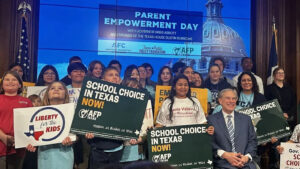
Texas mother of dyslexic children praises school choice for providing alternative education opportunities
Renee Evans, who has three children with dyslexia, credits school choice with helping them obtain the education they need.
Evans placed her children in City School in Austin four years ago….
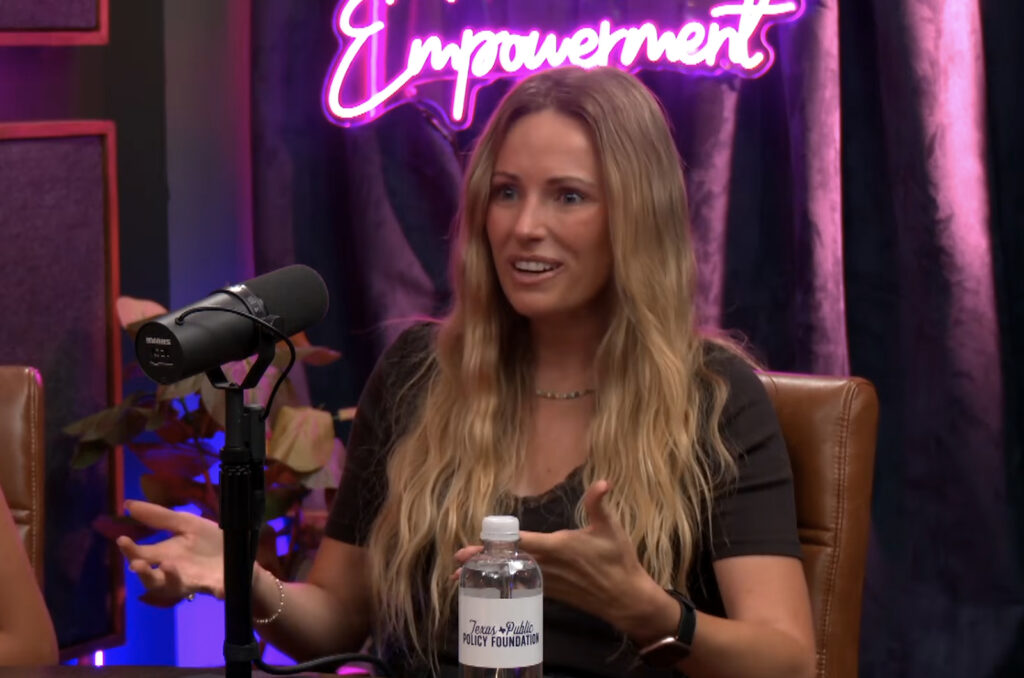
Renee Evans, who has three children with dyslexia, credits school choice with helping them obtain the education they need.
Evans placed her children in City School in Austin four years ago. They love the small class sizes, one-on-one attention and supportive Christian community, but still require additional learning programs, teaching specialists and tutors – all of which cost money.
Now, thanks to the new Texas Education Freedom Accounts, which began this year, the family has enough money for the extra services.
“[TEFA] covers our tuition so that we can put some money toward the (services) that they need just to be able to stay in the same grade level as their classmates,” Evans told Mandy Drogin on a recent episode of Parent Empowerment. “We couldn’t afford all of that without the help.”
One City School student who appeared on the program said the school helps keep her calm.
“I feel like there’s a lot of understanding in this school… if I’m having an anxiety attack, I can step outside, take a breath, and refocus and come back in. In public schools, I feel like that would be less of an option,” the student, who suffers from an autoimmune disease, said.
Evans and her husband work in ministry, which made choosing a school that supports their values a top priority.
“A big draw for us is we’re actually involved in our kids’ education, and it’s not leaving it in the hands of someone else, but we get to be active.”
The Evans are one of many families empowered to choose the education and services that fit their children thanks to school choice.
Texas inaugurated its $1 billion program this year. It received more than 274,000 applications and funded 101,000 scholarships. Students with disabilities received priority for the scholarship funds, followed by students from lower- and middle-income families.
Like many private school parents, Evans is pleased with the progress she sees in her children and wants more families to be able to access school choice.
“When Kayla’s teachers began to say things like ‘she actually volunteers to read out loud now’ – like that is a bigger deal than you can imagine,” she said. “I think everyone should have access to these accounts.”