‘Novel of the century’? The Left praises gay novel about class struggle, violence
Marlon James’ LGBTQ novel The Disappearers has been hailed by The New York Times as “the novel of the decade and possibly of the century thus far.” But a reading reveals literary sins so…
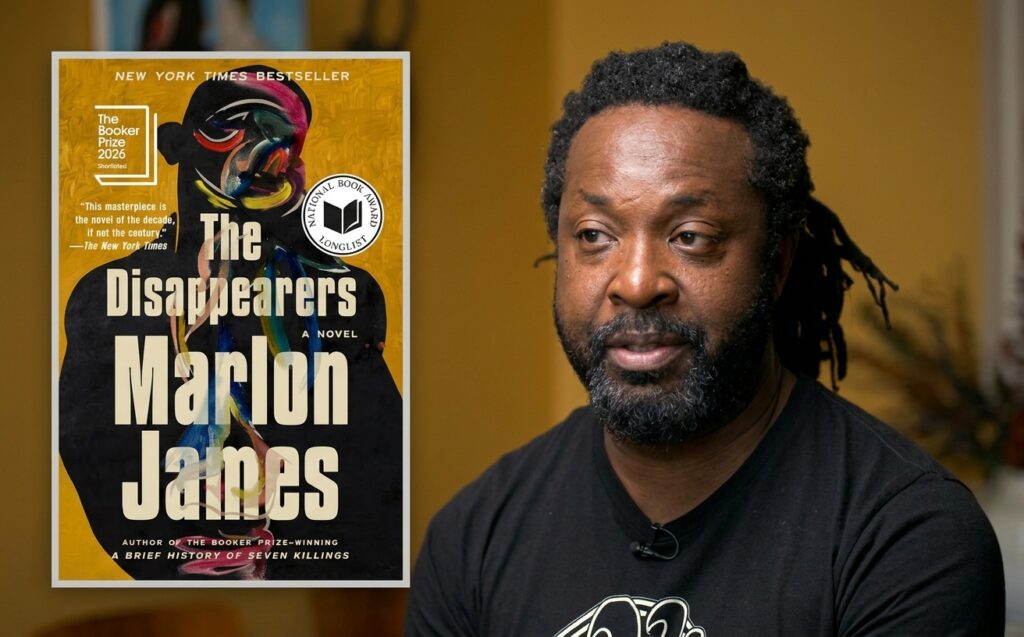
Marlon James’ LGBTQ novel The Disappearers has been hailed by The New York Times as “the novel of the decade and possibly of the century thus far.” But a reading reveals literary sins so numerous it may struggle to qualify as the comic book of the century.
Without the progressive political message it carries, at best it would be celebrated as an overly long graphic novel with such artifice that it could only be aimed – inappropriately – at teens and young adults.
This isn’t just a bad book with gratuitous gay sex and sexual violence. Rather, liberal praise means it’s a bad book that progressives will likely demand children read by shoehorning it into curriculums.
That path may already be mapped.
Set in Jamaica in 1988, the book’s primary tension centers on eight gay men who meet secretly to adapt a play about the violence and depravity of homosexual sex in prison into its opposite: an anthem of gay sexual liberation.
The original play, Fortune and Men’s Eyes, used coerced homosexual sex to indict the prison system.
Sex and violence
In his novel, James uses the play to plant a flag of homosexual liberation and defiance.
Early on, the men become comfortable sharing the inevitable progressive origin stories of how abuse shaped their sexual identities.
Just then, they are set upon by a “vicious” gang of citizens who beat them for staging the play.
We know very little about these attackers, who are described as Christians, cops and reggae singers.
They form a secret society called the Blackjacks who share their violent thoughts about gay men, women and AIDS, in a single chapter that reads like the Penguin, the Joker or other villains plotting against Batman in their lair – if the supervillains were Christians.
Unfortunately, the novel follows the contemporary Hollywood trend of inventing history to make it conform with today’s progressive manifesto rather than reflecting history as it occurred.
In doing so, it ignores the hypocrisy of celebrating coercive, gay prison sex as it condemns violence against gay men in Jamaica who celebrate coercive, gay prison sex.
It also fails to admit the fact that one did not need to be gay in Jamaica in 1988 to be the victim of violence.
Where are their stories?
James himself says the inciting incident in the book was based on a rumor.
“The Disappearers is based on a violent incident that was rumored to have happened but was never proven,” he said, adding, “But in Jamaica we trust rumors more than facts,” a good summary of the liberal intelligentsia’s post-truth framework.
The inauthenticity isn’t just revealed by the tension created by an attack you know was invented.
Dated language
One particularly out-of-date line of dialogue says, “Eddy, your superpower is that you always read people right, from one sentence, one word, even over the phone.”
Using the catchword “superpower” there tags it as early 2025 more than it does 1988.
It’s not a slip that you’d expect from “the novel of the century.”
Instead of creating an organically authentic 1988, James repeatedly announces the year through pop-culture references.
Prince, baggy pants, Less Than Zero and TV shows including L.A. Law, Dallas, Falcon Crest and Family Ties are just a few examples.
On some pages, there are two or three pop references, lest we forget what year it is.
The comic book template for The Disappearers may be intentional.
James was still an aficionado of Marvel comics at 44 years old.
“A lot of what I write about in terms of the fantastic I picked up from comics, particularly Marvel comics,” James told the U.K.’s Guardian.
And it shows.
His novel starts out with a cast, written like graphic novel character cards, because at 640 pages, the novel is so sprawling even critics who praise the book say it’s too long.
A New York Times critic admitted that at times he didn’t know who was talking, an amazing quality for the book of the century.
The character cards, which seek to remedy the confusion, expose the immaturity of the author whose tone often mimics that of an adolescent girl:
Trevor Caesar, Eddy’s frenemy, more enemy
Shelly deFreitas, party starter, most popular girl
Dionne, Eddy’s best friend
Streggeh Don, the hottest reggae singer
Kofi Myers, it’s complicated
Combined with its other sins – without revealing how the book ends – the novel is a parody of a Gay Avengers comic book rather than real literature.
And it’s coming to a school near you.
Already the Booker Prize is creating branded content for the novel, such as reading guides for classrooms to help your kids explore the “queer canon.”
Publisher Penguin Random House has added it to its higher education offerings, targeting American 21st-century, African American, Caribbean and comparative literature.
“This novel will be read decades from now, pored over in seminars and bookmarked on subway commutes,” said the Boston Globe.
Maybe. The critics and the novel itself seem to be looking for acclaim rather than finding it authentically.
One need not ask, however, whether the Boston Globe would be raving about this novel if the attackers were illegal immigrants or the victims were black, heterodox Christians.
The power of great literature, such as The Brothers Karamazov, doesn’t lie in the fact that the victim was heroic. It’s the universal truth that even though he was despicable, murdering him was wrong.
(Image credit: Marlon James, Screenshot/PBS News Hour; Book image from Amazon)