‘Healthy disrespect for government’: Sheriff praises Missouri’s Flock camera restrictions but warns of next privacy battleground
A Missouri sheriff is backing the state’s executive order restricting license plate surveillance cameras, calling it a vital check on government power. He also warns privately owned cameras and…
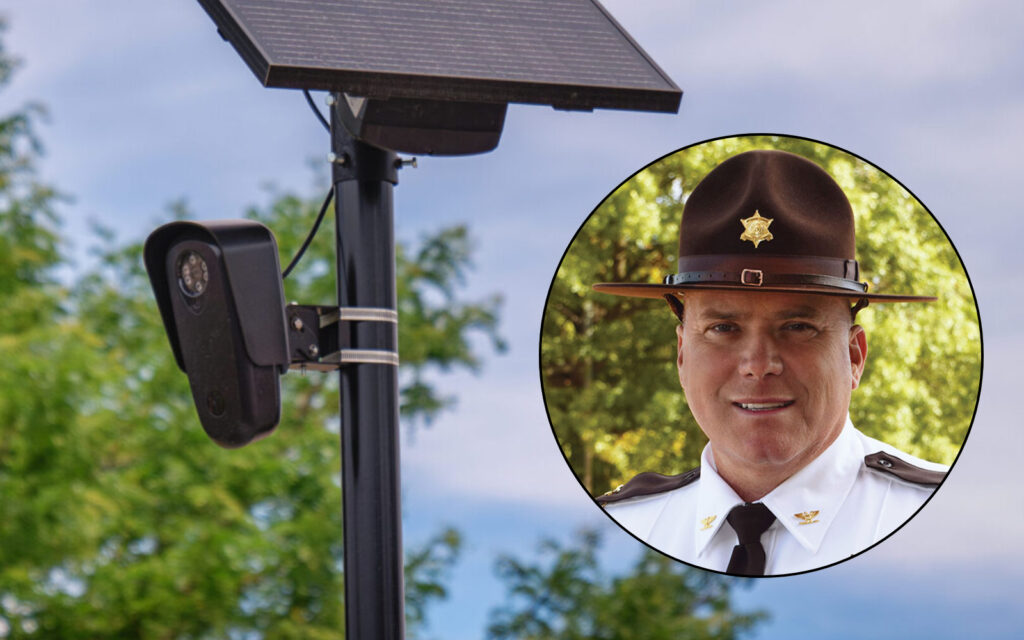
A Missouri sheriff is backing the state’s executive order restricting license plate surveillance cameras, calling it a vital check on government power. He also warns privately owned cameras and artificial intelligence may present a larger privacy loophole.
Jefferson County Sheriff Dave Marshak voiced complete support to Heartlander News for the new guardrails established by Gov. Mike Kehoe.
“I’m completely supportive of it, and I think there needs to be checks and balances on government technology,” Marshak said. “I’ve always said the average citizen needs to have a healthy disrespect for government, and this is part of that conversation.”
The push for stronger checks and balances comes just a month after a St. Charles County police employee was caught using the system to track her ex-husband. Another officer in a St. Louis suburb was accused of tracking his ex-wife.
The governor’s order mandates all state-funded law enforcement agencies delete non-target vehicle data within 30 days, bans AI facial recognition integration and imposes strict penalties for officer misuse.
What the order leaves out
Kehoe’s order sets clear boundaries for state-funded agencies, but it leaves out a massive portion of automated license plate readers (ALPRs) operating across Missouri.
Cameras purchased by private businesses, neighborhood associations and shopping centers remain unregulated under state standards, since the executive order applies only to government-funded systems.
Marshak explained his office contractually operates only 21 ALPR cameras in the county, yet deputies have access to roughly 150 systems across Jefferson County, which includes some southwestern St. Louis suburbs. The vast majority are paid for by local business owners and homeowner associations tired of crime in their neighborhoods.
“If you look at the totality of the cameras in Jefferson County, a majority of them aren’t even owned or operated by the sheriff’s office,” Marshak said, pointing out the current effort is simply the start of a broader statewide discussion.
He noted the order aligns with policies his department already follows, calling it a great first step as lawmakers prepare for the upcoming legislative session.
Beyond license plate readers
Marshak says license plate readers log only a vehicle’s presence at a specific location and time rather than tracking real-time movement. He believes the public’s focus will quickly shift toward far more invasive tools already entering the market.
“With AI enhancements and capabilities, this is the beginning of a conversation,” he said. “Some of the things I’ve seen in terms of the evolution of body cameras – capturing data from different people and running it across multiple platforms – I have greater concerns with some of the other emerging technology.”
Balancing privacy with effective policing remains an evolving challenge for Marshak, but he expects license plate surveillance will soon be eclipsed by larger debates over artificial intelligence.
“I think in three years, a conversation about ALPR technology will be past its prime,” he said.