Analysis: California ‘unlivable’? Paramount exit could confirm Hollywood’s slow death
Paramount Chief Executive Officer David Ellison has threatened to leave California in an ongoing battle over the state’s antitrust lawsuit against the company.
The development comes just days…
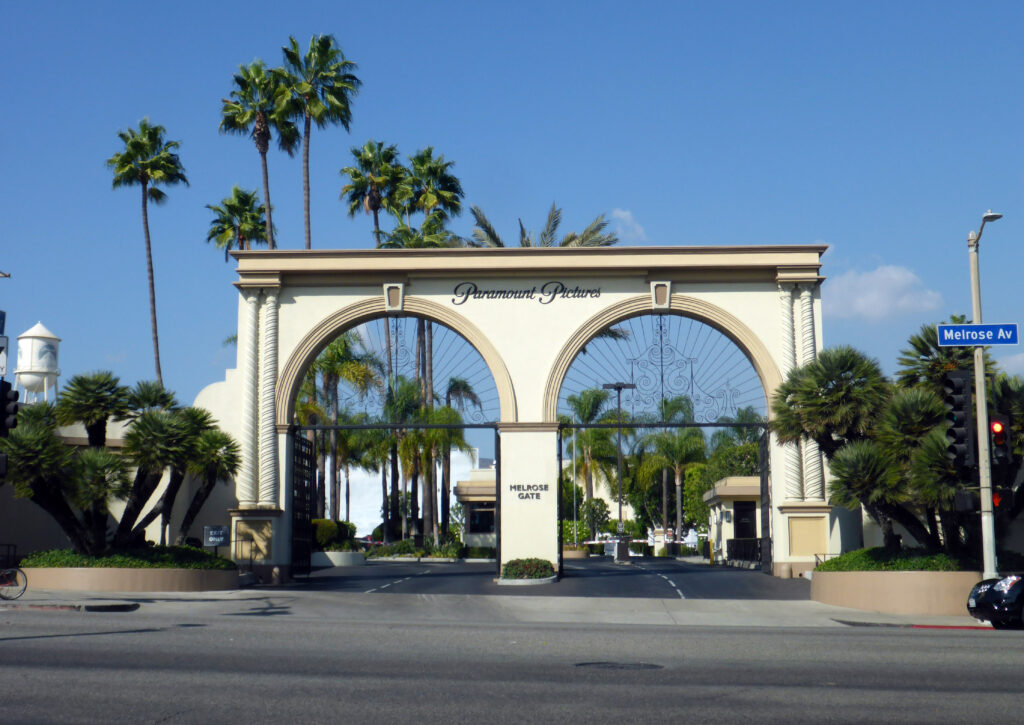
Paramount Chief Executive Officer David Ellison has threatened to leave California in an ongoing battle over the state’s antitrust lawsuit against the company.
The development comes just days after ABC’s longest-running show, American Idol, said it will be departing Hollywood for the Atlanta area, according to the Los Angeles Times.
“American Idol is gone and people still think Ellison is bluffing about Paramount leaving?” said reality star Spencer Pratt, a former Los Angeles mayoral candidate. “Are you people not aware of how insane our politicians are in CA? They are making CA unlivable.”
The relocation could cost the area “losses of between $1.01 billion and $2.03 billion in economic output between October 1, 2026, and September 30, 2031,” according to the county-affiliated Economic Development Corporation, reported the Times.
The company is also looking for space in Nashville, reported Politico.
Hollywood’s decline
If Paramount leaves, it would mark an acceleration in the decline of video and film production in California, which has been on a downward trajectory for years.
In January 2026, the trade publication FilmLA reported fourth-quarter 2025 shoot-day numbers were down 21.1% from the same quarter in 2024, while the year-to-date five-year average was down 36.6%. This is a seismic shift for an industry that once filmed the vast majority of productions in the Golden State.
In the second quarter of 2026, FilmLA reported a 12.7% decline, despite California spending $750 million on subsidies for the industry at the urging of current Los Angeles Mayor Karen Bass.
The Times noted the industry has lost 57,000 jobs over four years while more than 80 production companies have closed since 2022.
The story highlights the general outbound migration from California, people fleeing high property prices, high taxes and government regulation.
“The price tag has gone up on the California Dream, and many families are leaving the state for more affordable places,” said Evan White, Executive Director of the California Policy Lab at UC Berkeley.
People and businesses fleeing
Between July 2024 and July 2025, California lost 229,000 people to other states, marking the highest losses of any state.
Not just families are leaving.
Tracking the companies departing the state has been a cottage industry, with real estate giant CBRE keeping a comprehensive list – ironic, because it also fled the state, according to the Free Press.
Other large firms that left recently include Chevron, Tesla, SpaceX, X, Charles Schwab, Oracle, Public Storage, HPE, CBRE, McKesson, Palantir, D-Wave and Yamaha. Most moved to conservative, business-friendly states such as Texas, Florida and Tennessee.
“This is the final straw,” said Elon Musk about a law designed to prevent parental notification by schools in cases of gender dysphoria in 2024. “Because of this law and the many others that preceded it, attacking both families and companies, SpaceX will now move its HQ from Hawthorne, California, to Starbase, Texas.”
In fact, the disagreement went deeper.
Musk was involved in a dispute with the California Coastal Commission, which indicated it would disapprove an Air Force request for 50 SpaceX launches annually because commission members disapproved of Musk’s politics.
Others have left the Golden State amid a proposal to levy a tax on billionaires that will be on the ballot in November.
Director Steven Spielberg moved to New York at the beginning of the year, although he told the Los Angeles Times that he did so to be closer to family.
He was joined by other billionaires who collectively represent about $27 billion of the estimated $100 billion the tax is supposed to collect.
Similarly, much of Hollywood’s outbound migration has been self-imposed.
“The story of how L.A. steadily lost much of its homegrown industry to other locales is a tale of hubris, escalating costs, political inaction and fierce competition from states and countries hungry for a piece of the Hollywood pie,” the Times concluded.
One Hollywood insider said not just dollar costs, but also the cost of politics, makes the industry uneconomical.
Actor and comedian Rob Schneider said the financial losses created by progressive messaging inside films such as Snow White, The Marvels, Lightyear and Batgirl – which all subsequently bombed – have come close to making the studios more valuable as real estate than moviemakers.
The result could be for-sale signs on the Hollywood studios.
“Hollywood used to be about what brought us together,” Schneider wrote on Fox. “Now, it’s about what divides us. They’ve traded the Dream Factory for an Indoctrination Lab, and the American people are voting with their wallets and their remote controls.”
Schneider makes an excellent point.
The iconic 62-acre Paramount property at 5555 Melrose in Hollywood probably would be more valuable as condos.
Unfortunately, city zoning restrictions on studio use, like all the other rules killing Hollywood, would probably get in the way.
“You can’t do business here anymore,” Pratt added.
(Image credit: Coolcaesar, CC BY-SA 4.0 https://creativecommons.org/licenses/by-sa/4.0, via Wikimedia Commons)