Administration: ‘blockbuster’ jobs, GDP reports highlight Trump policy
Several reports from the federal government are pointing to an improving economy, which would mark the first time since 2008 the economy has sustained momentum without artificial…

Several reports from the federal government are pointing to an improving economy, which would mark the first time since 2008 the economy has sustained momentum without artificial stimulus.
The reports also highlight a key policy imperative of the Trump administration to rebuild manufacturing using tariffs.
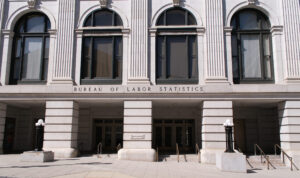
On Friday, the Bureau of Labor Statistics reported that 162,000 jobs were created in August, versus the consensus estimate of 53,000 jobs.
The jobs number for June was revised upward to 31,000, while July was also revised upward to 21,000 jobs after initial estimates posted a loss of 23,000 jobs.
Unemployment in August remained unchanged at 4.1%.
“Net, net, the labor market is alive and well and generating thousands of new jobs to help keep economic growth squarely in the plus column,” Chris Rupkey, chief economist at Fwdbonds told CNBC.
Job growth was posted across the board, with private jobs accounting for about 78% of all jobs as the number of federal employees continued to decline, reaching a 60-year low.
The big winner was leisure and hospitality jobs, which posted a gain of 62,000, of which 59,000 were restaurant or bar work.
Construction (22,000) and manufacturing (16,000) also made significant gains.
The one ugly number was wage growth, which has been moderate under a Federal Reserve policy that is seeking to keep wage growth and inflation near 2%.
Wage growth came in at 3.1% for August, while inflation came in at 3.4% annually for July.
National Economic Council Director Kevin Hassett told CNBC that the “blockbuster” jobs number is a reflection of Trump policy starting to be reflected in the economy.
“There’s a lot of policy success underneath it all,” he told the business network.
Specifically, Hassett said the ability to write off corporate investment is spurring unprecedented spending, while tariffs are responsible for growing the manufacturing base.
Indeed, the Atlanta Federal Reserve GDPNow estimate of the economy has gross domestic product (GDP) coming in hot at 4.7% for the third quarter with about 20 days left to go.
In the first and second quarters this year, GDP came in at 2.1% and 1.5%, respectively.
One of the biggest components this quarter is nonresidential fixed investment, which represents business investment that can be immediately written off. It’s currently contributing about a third of projected GDP growth, at 1.47%.
“Capital spending is through the roof,” said Hassett. “It’s getting set to about double since President Trump took office.”
While over the long term, the investments mean jobs, unfortunately, a lot of that spending is for buying components that are made overseas rather than here in the U.S.
Reuters notes that much of the capital spending is AI/data center-related, generating a trade deficit.
“Imports of capital goods jumped $14.4 billion to a record high $140.3 billion, reflecting strong increases in computers, computer accessories and semiconductors, likely related to the AI buildout,” said the wire service.
The Federal Reserve’s GDP estimate shows that those net exports (exports minus imports) have subtracted 1.46% from GDP estimates over the third quarter.
It’s one of the issues misunderstood by the public and the key to Trump’s insistence on tariffs: Every dollar that’s spent overseas is a dollar that doesn’t contribute directly to the growth of the U.S. economy.
Last week, Secretary of State Marco Rubio addressed the issue, noting that free trade agreements assumed American manufacturing didn’t matter anymore, that “it didn’t matter any longer where things were made.”
“But the result of it is that it deindustrialized America,” said Rubio.
For example, if the AI and data center components were bought in America, GDP for the quarter would be estimated to be up over 6%.
Prior to COVID-19, the last time GDP was that robust was when the U.S. was recovering from the 9/11 attacks and posted a 6.8% GDP rate.
Notably, the federal funds rate, interest rates set by the Federal Reserve, were at 1.01% at the time.
Today, the rate stands at 3.63%.
The latest GDP and jobs numbers mark some of the strongest growth since quantitative easing (QE) began in 2008, when the Fed started buying government bonds to stimulate the economy.
Between 2008 and 2022, the Federal Reserve purchased over $8 trillion worth of government securities on the open market to provide stimulus to the economy.
But even as QE wound down, the Biden administration continued to stimulate the economy with two huge spending programs: a $1.9 trillion COVID-19 stimulus and the so-called Inflation Reduction Act.
The current GDP estimate is all the more remarkable because the Trump administration has slashed federal employment to its lowest level since 1966.
“This means that just 1.6% of the civilian labor force is employed by Uncle Sam,” reported Heritage.
(Image credit: Photo by krakenimages on Unsplash)