New Kansas City disease dashboard launched by health department
A public dashboard displaying communicable disease rates in Kansas City – which includes illnesses such as COVID-19 and cyclosporiasis – has been released by the Kansas City Health Department…

A public dashboard displaying communicable disease rates in Kansas City – which includes illnesses such as COVID-19 and cyclosporiasis – has been released by the Kansas City Health Department (KCHD).
The Health Department’s Office of Population Health Science and the Division of Communicable Disease and Prevention worked together to create the KCHD Communicable Disease Dashboard.
“Public health data should be accessible to the people it is meant to serve,” Chief Science Officer Dr. Alex Francisco said. “The KCHD Communicable Disease Dashboard was designed to make local disease trends easier to understand and easier to follow over time.”
The data presented in the dashboard covers the roughly 319 square miles of Kansas City, Missouri. Kansas City, Kansas, statistics are not included.
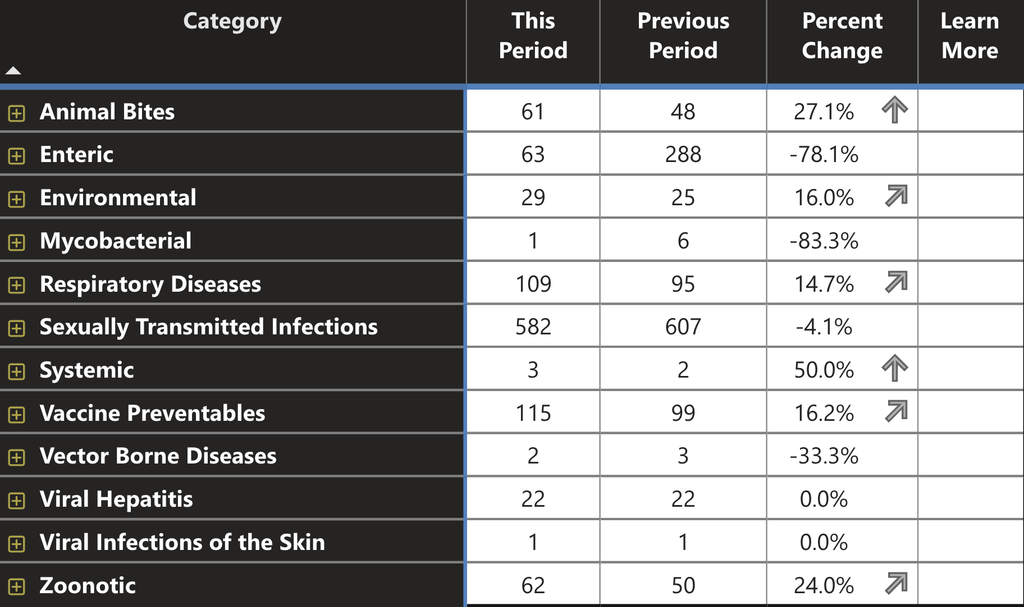
The dashboard uses Missouri’s disease tracking system, which is called ShowMe WorldCare, to show the number of people with diseases grouped into 12 categories based on how the diseases are transmitted or prevented.
The current disease categories are:
- Animal bites
- Enteric
- Environmental
- Mycobacterial
- Respiratory diseases
- Sexually transmitted infections
- Systemic
- Vaccine preventables
- Vector-borne diseases
- Viral hepatitis
- Viral infections of the skin
- Zoonotic
The number of people with each illness is displayed in a chart, and the time period can be specified based on a number of days, weeks, months or years. For the month of August, the category sexually transmitted infections had the highest amount of infections, with 582. Chlamydia had 408 infections, making it the top disease in the category.
Vaccine preventables – diseases that could allegedly be prevented with a vaccine – had the second-highest number of sicknesses, with 63 COVID-19 cases being the top contributor, which was up 23.5% compared to the month of July.
The dashboard’s launch follows an ongoing multi-state outbreak of cyclosporiasis believed to have been spread from iceberg lettuce. The parasitic disease has infected more than 2,000 Missourians, with nearly 300 of those located in Kansas City, according to the dashboard.
In August, 22 new cyclosporiasis cases were reported in Kansas City, compared to 237 cases in July.
“At a time like this, residents want to know the status of their community’s health, and they want to know that they can trust what is presented to them,” Director of Health Dr. Marvia Jones said about the dashboard. “I’m proud that we hold the community’s trust and that we can give them timely, accurate information.”