Energy experts: Keystone XL is a great idea doomed by political reality
President Donald Trump’s latest attempt to revive Keystone XL appears to have collapsed along with trade discussions between Canada and the U.S. over the…
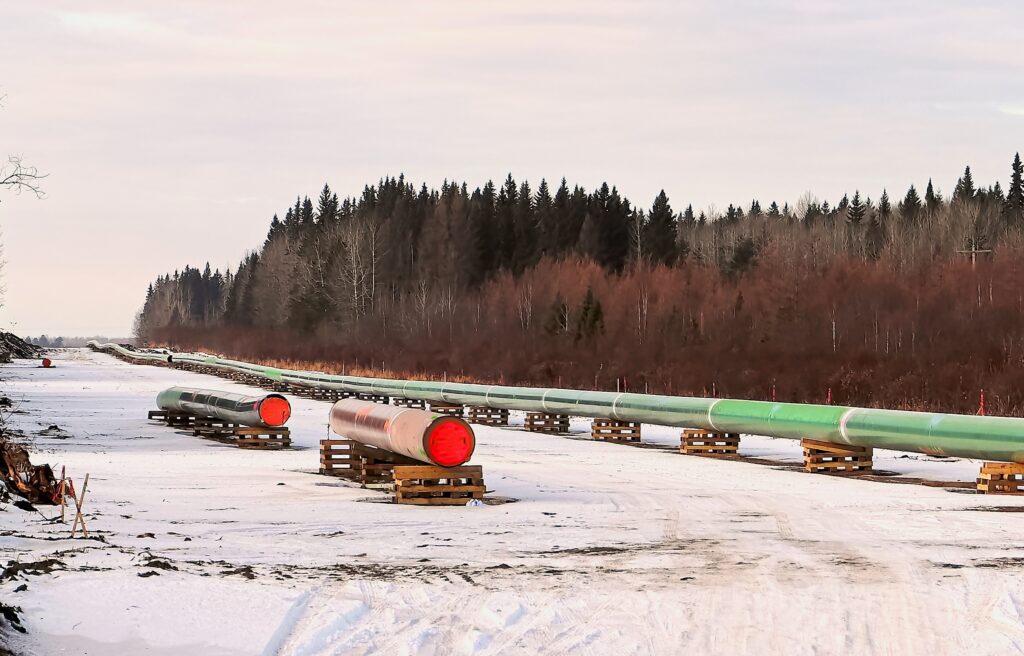
President Donald Trump’s latest attempt to revive Keystone XL appears to have collapsed along with trade discussions between Canada and the U.S. over the weekend.
Trump floated reviving the project last week as part of a tariff truce with Canada, but the 50% tariffs Trump had paused took effect on Saturday. Prime Minister Mark Carney said Canada plans to retaliate dollar-for-dollar starting Sept. 8, and Trump escalated the tariff threats on Monday, saying he will increase tariffs against Canadian cars, auto parts and steel to 50% at the start of 2027.
Before the truce collapsed, experts told Heartlander News that Trump’s mention of the pipeline may have been little more than a messaging tactic, though reviving Keystone XL would benefit both the U.S. and Canada economically while also shifting geopolitics in America’s favor.
“Unless President Trump could 100% guarantee the project could be permitted and completed before his presidency ends, what company will want to risk billions of dollars in capital on this particular project?” David Blackmon, an energy and policy writer who spent 40 years in the oil and gas business, told Heartlander News. “Certainly, a successful effort to renew and build the Keystone XL Pipeline is a laudable ambition that would enhance U.S. national security and provide an economic boost to both the U.S. and Canada. But chances of it happening seem slim due to a variety of factors.”
The project was effectively nixed by former President Joe Biden on his first day in the Oval Office when he signed an executive order revoking the project’s permits. Trump fought to resurrect it in his first term after the Obama administration also halted Keystone XL’s advancement in 2015.
While the Biden and Obama administrations objected to the project over environmental concerns and claimed it would not significantly contribute to the economy, energy experts told Heartlander News that reviving Keystone XL would carry economic and geopolitical benefits.
Blackmon argued that Biden did “great harm to the business world’s confidence in the fair and consistent application of U.S. law regardless of which party happens to win the presidency.”
Biden’s cancellation of Keystone XL cost TC Energy billions in invested capital, and the revoked permits took years to initially obtain, Blackmon noted.
TC Energy, the company that was heading Keystone XL, completed a spinoff of its liquids pipeline business in 2024. Canadian-owned South Bow now operates the existing Keystone Pipeline system. South Bow’s shares surged after Trump’s announcement.
“What company will want to bet billions on reviving this pipeline, knowing with near-certainty that any Democrat who might win the presidency in the 2028 election will just do it all over again?” Blackmon said. “Reviving Keystone XL makes for a great talking point. But I wouldn’t put a bet on seeing it ever come to fruition.”
“It’s good messaging,” Andrew Hale, a fellow at Advancing American Freedom (AAF) specializing in economics, trade policy and international relations, told Heartlander News. Hale argued that Trump’s mention of Keystone XL amounted to a messaging tactic, however.
“Why wasn’t this ever discussed before? It’s because he [Trump] needs to pull a rabbit out of a hat, and say, oh look, I’ve got to win for [the American people],” Hale said, critiquing the trade deals the Trump administration has made thus far and arguing they are little more than memorandums of understanding.
Hale extended that skepticism to the tariffs underpinning the negotiations themselves, arguing that no president has the authority to impose these levies against Canada through Section 338 of the 1930 Tariff Act and that the effort will eventually be halted in court.
James Taylor, president of the Heartland Institute, struck an optimistic chord on Trump’s mention of Keystone XL, telling Heartlander News that the project “is a slam-dunk win for American consumers and the American economy. There was never any remotely plausible reason to oppose it other than climate grandstanding. President Trump, by taking another look at Keystone XL, continues to fulfill his promise to make America’s economy great again.”
Diana Furchtgott-Roth, a distinguished fellow at the Energy Policy Research Foundation who served in several presidential administrations including the first Trump term, told Heartlander News that if the Keystone XL project were successfully resurrected, it would be beneficial for both America and Canada.
Canada has sour crude, while the U.S. has light crude and refineries built to process heavy crude, making a pipeline connecting the two mutually beneficial, Furchtgott-Roth explained.
Canada has exported more crude to China of late, with Furchtgott-Roth noting that it’s in America’s best interest that crude flows south instead, both for economic reasons and because of the geopolitical implications of deepening Canada-China energy ties.
It was “certainly harmful” economically for Biden to halt Keystone XL, Furchtgott-Roth said when asked about the executive order’s effects, and she emphasized that looking to the future, “the United States benefits significantly from trade with Canada and Mexico and it’s important that it continues.”