Analysis: Polling’s credibility problem just got worse thanks to these fake surveys
The words “fake poll” took on new meaning as a firm tied to several progressive candidates with apparent big leads closed after the group revealed its voter surveys were fabricated.
The…
The words “fake poll” took on new meaning as a firm tied to several progressive candidates with apparent big leads closed after the group revealed its voter surveys were fabricated.
The Los Angeles Times (LA Times) reported the polling outfit behind a widely credited survey, which showed Los Angeles Mayor Karen Bass with a 12-point lead over challenger Nithya Raman, said the survey was “a short-term social experiment.”
The company’s website said the purpose of the survey’s release was to track “how purported polling information could enter and spread through the political information ecosystem without independent verification.”
Previously, a poll by the same company, Median Strategies, showed Francesca Hong, the Democrat Socialist candidate in the Wisconsin race for the Democrat nomination for governor, with a 20-point lead.
Hong lost the race by less than 1% just a day later.
In the Los Angeles race, the voter survey for the company was more impactful.
“Doing the work, showing up and gaining momentum,” Bass tweeted about the poll. “Let’s do this, LA!”
She subsequently deleted the social media post.
The summary provided by Median also caused one media outlet to publish the results because it showed Bass doing well with a sizable portion of voters supporting a previous candidate, Spencer Pratt.
“Faced with a choice between the incumbent and a Democratic Socialists of America-aligned challenger, most Pratt voters appear to be treating Bass as the more familiar, more moderate option rather than sitting out the race,” Median wrote in an analysis, according to the LA Times.
The California Post subsequently repeated the analysis, saying Pratt voters could be the key to the race. The Post piece was syndicated on Yahoo.
But, whether Pratt voters decide the race or not, polling in general has been a race to the bottom of voters’ trust bucket.
The latest news from Median emphasized the trend rather than shining a new spotlight on it.
Previously, Heartlander News reported big discrepancies this cycle between polling and election results in Democrat and Republican races.
Independent of the Median survey, pollsters had big misses in Michigan and Wisconsin in the last month.
About two weeks before the Wisconsin Democrat primary, Marquette University published a survey that showed Hong with a 22-point lead in line with other widely published polls.
Michigan U.S. Senate polls for the Democrat primary also missed, showing the ultimate winner, Abdul El-Sayed, up 10-15%. El-Sayed squeaked out a win of just 1%.
Some critics were already complaining polls were having too much of an effect on the outcome of races even before the Median meltdown.
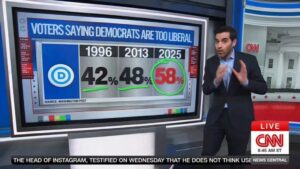
Polls “have been increasingly shaping media narratives and warping public perceptions,” editors at Washington Monthly wrote.
This criticism is generally accelerating in the wake of the Los Angeles survey news, especially among conservatives.
Patrick Ruffini, a GOP pollster, published his own study Tuesday of polling for U.S. Senate races in the last four election cycles, which found the “average polling error across all polls was D+3.7, and 73% of polls released overstated the Democrat relative to the election result.”
The study looked at 3,312 polls.
He cited polling in the 2020 South Carolina race as an example.
That survey showed then-Sen. Lindsey Graham in a race that was virtually tied “almost until the very end.”
Graham won by 10%.
Pew Research noted in its own study in 2024 that the way polls are done today, with faulty demographics and incentives, leads to faulty results.
One survey done by Pew showed 12% of respondents under 30 claimed they had a license to operate a nuclear-powered submarine, when in fact, the number for the nonexistent license is zero.
While Pew said the results were “inadvertently misleading the public,” the more likely explanation for the error is probably the correct one.
“Polling can drive outcomes,” Christian Grose, a USC political science professor, told the LA Times. “Favorable polls lead to more fundraising. There’s a bandwagon effect.”
Some critics have pushed back against the Median Strategies’ explanation that it was a social experiment about the polling ecosystem, calling it “bonkers.”
But the timeline established by the LA Times makes the experimental explanation at least a credible hypothesis:
- August 9: Median starts posting on social media.
- August 10: Median publishes the Hong poll very late in the Wisconsin race.
- August 11: Hong loses the Wisconsin primary.
- August 12: Median posts that it “got Wisconsin wrong.”
- August 13: Median releases the Bass poll; Bass and the Post republish.
- August 17: LA Times gets Median to admit the polls were fabricated.
- August 18: National coverage explodes and everyone starts talking retrospectively about the Wisconsin and LA polls.
The last date is probably the most important.
Because whether the survey was fraud, election manipulation, or another explanation, the discussion shows the lasting effect will be a large social experiment.
Polls have been getting it wrong for some time, and the Median episode highlights the problem.
“This is bad for the entire polling industry,” said Mike Yelovich, a GOP-aligned pollster.