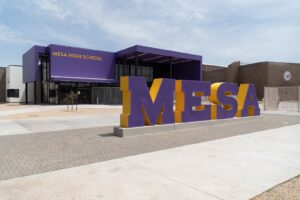
Arizona district addressing concerns over school culture, teaching, safety as student population declines
Arizona’s largest public-school district is “pursuing several responses” to a study of students who left for multiple factors, including “school culture, teaching quality and student…
Arizona’s largest public-school district is “pursuing several responses” to a study of students who left for multiple factors, including “school culture, teaching quality and student safety,” according to the local ABC affiliate.
“We’re a continuous improvement school district,” Superintendent Matt Strom told journalists. “We’re not scared of feedback in Mesa Public Schools. We honor it. We want to take it in. We want to get better.”
The district, which enrolled nearly 56,000 students last academic year across 78 schools, contacted 1,647 high school students who withdrew from the district in a survey by WestEd, an educational research firm.
Relocation accounted for almost a third (31%) of those students leaving, but a close second involved school culture (29%).
Next at 20% each came teaching quality, then bullying and student safety, the ABC affiliate reported.
“Strom said about 150 people who left the district responded to the WestEd survey — a relatively small portion of the high school students who departed — and noted that some departures are part of normal transitions, such as students moving from fourth to fifth grade or eighth to ninth grade and choosing different options.”
Given this feedback, the district will use the findings to re-evaluate current policies including “annual revisions to its student discipline system,” according to the news outlet.
‘Not a decision we take lightly’
About a year ago, the district took steps to downsize operations and cut staff roles in response to an estimated budget shortfall of at least $9 million.
“This is not a decision we take lightly and has been developed with careful consideration and transparency,” Strom said at the time in a YouTube video.
Meanwhile, the number of students attending was also projected to decrease by approximately 4,900 over the next three years, according to Strom.
Arizona has struggled in public rankings over the quality of its schools, ranking 48th nationwide last year over a range of aspects including graduation rates, test scores and environmental safety.
“The state tied with four others – Idaho, Alaska, New Mexico and Washington, D.C. – for the highest dropout rate,” Arizona Central reported at the time the survey was released.
School safety concerns also factored into the ranking, including the number of police officers required in each school along with the presence of weapons, drugs and violence on campuses.
The ranking came even as public funding increased to record levels of at least $13,000 per student.
“Taxpayers pay both state and local taxes,” said Superintendent of Public Instruction Tom Horne. “Combined they contribute about $13,000 per student (some estimates are higher) for every student in public school.”