Humanizing headlines: Remembering the stories of Oct. 7
A pile of blackened, burned debris scars the landscape and shocks every visitor, standing as a reminder of those who no longer stand – those who lost their lives to mass murder.
This is not the…
A pile of blackened, burned debris scars the landscape and shocks every visitor, standing as a reminder of those who no longer stand – those who lost their lives to mass murder.
This is not the famous pile of shoes at Auschwitz. It is the car wall, a graveyard of vehicles representing hundreds who failed to escape the Nova music festival after Hamas terrorists crossed the Israel-Gaza border and murdered hundreds of Israelis on Oct. 7, 2023.
Over the past three years, Israel – or at least the Middle East – has appeared in American headlines almost daily. But the headlines fail to adequately capture the racist evil of Hamas’ ideology. Many American media organizations have also embraced antisemitic narratives. Ordinary people who remain largely unfamiliar with the Israel-Hamas conflict may fall prey to those ideas if they do not become familiar with the real events and the real people behind the headlines.
The Nova Festival
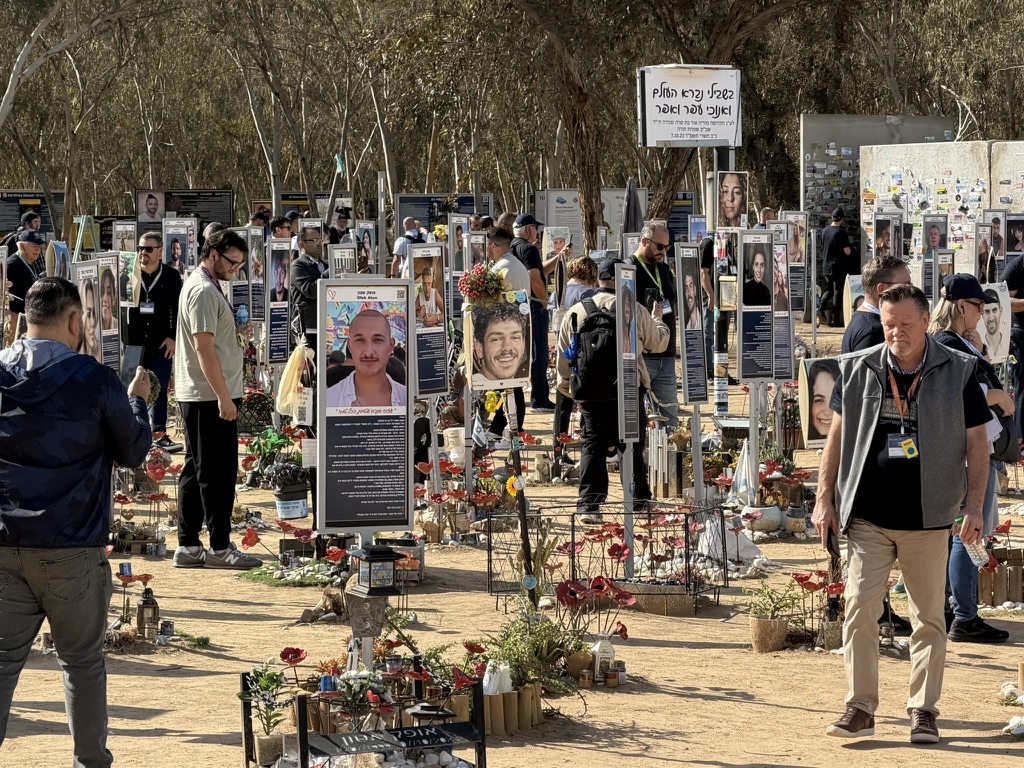
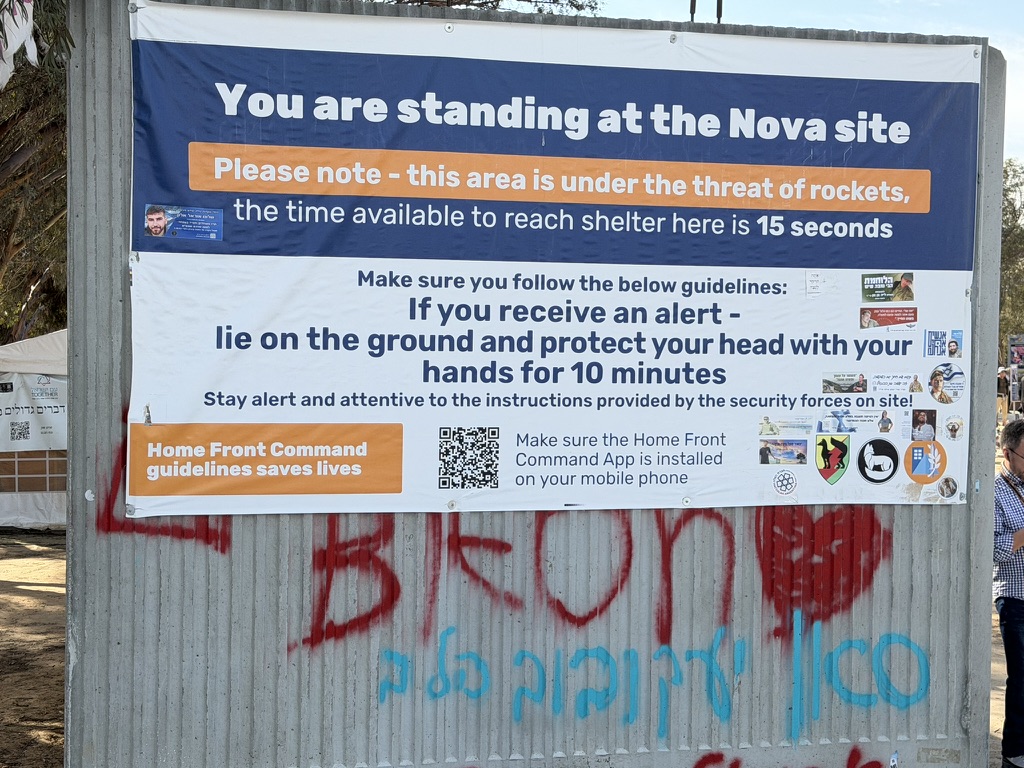
The Nova Festival site commemorates the place where music lovers once danced and celebrated for hours before Hamas terrorists descended on them – like lions on gazelles – during the early morning of Oct. 7.
Shalev Biton, now 27, grew up loving music. A singer and aspiring music producer, he attended the festival with friends for a reunion after a year of traveling. Early that morning, piercing sirens jolted him awake. Shalev and his friends ran through dusty fields for hours, surviving only because a Bedouin Arab hid them beneath his raised barn.
Today, Shalev shares his story with visitors at the festival site and audiences around the world. His words are filled with hope and a longing for peace. He ends his story by encouraging others to live with adventure because no one knows when the last day of life will come.
On the festival grounds, families of those who were killed have planted eucalyptus trees in neat rows to honor the victims. Nearby, memorial signs fill the space where the main stage once stood. Smiling photographs hang above short biographies describing each person’s life and passions.
Most tell similar stories: They were bright lights. They loved others. They died too soon. Two hundred words seem insufficient to summarize a life cut short.
Sivan’s story
The kibbutzim are small Israeli communities along the Gaza Strip. They were among the first places Hamas terrorists attacked after years of planning and preparation.
I visited Kfar Aza, a kibbutz in the Gaza Envelope, this summer. The day before my visit, Israel Defense Forces soldiers discovered additional human remains that had not previously been recovered.
An entire section known as the “young generation” neighborhood remains frozen in time, locked at 6:30 a.m. on Oct. 7, when the first terrorists attacked. Many of the homes are charred and blistered. Their metal roofs appear warped after melting and hardening again in fires ignited by rocket-propelled grenades. Red spray-painted bull’s-eyes mark nearly every home, indicating that Israel Defense Forces soldiers recovered human remains there.
One of those homes belonged to Sivan Elkabetz. After completing her mandatory military service, she was pursuing a computer science degree at Sapir College in Sderot. She was 23 when she and her boyfriend, Naor, were killed in Kfar Aza on Oct. 7.
Nearly three years later, Sivan’s home remains largely untouched. Her parents placed memorial signs for her and Naor at the front entrance and covered the cracked living room walls with posters bearing their photographs. An EOS body wash bottle still sits crookedly beside the sink. Dust-covered spices remain on the kitchen counter. The home could belong to any young woman.
The narrow hallway leads to the saferoom where Sivan and Naor were killed. A torn mattress lies on the floor. Every surface bears bullet holes.
The bomb shelter
Residents of the Gaza Envelope have only 15 seconds to reach shelter after warning sirens sound. Bomb shelters line major roads and are built into homes, many decorated with Hebrew messages and colorful murals. They were designed to protect against rockets, not ground assaults, so they do not have locking doors.
On Oct. 7, about 30 to 40 people crowded into one shelter while trying to escape Hamas terrorists. When my tour group visited, we could fit only about 10 to 15 people inside.
According to the account presented at the site, terrorists repeatedly threw grenades into the shelter before firing volleys of gunfire into the saferoom. Only those pressed against the back wall survived because the bullets did not penetrate through the rows of bodies in front of them.
Nearly three years later, the concrete walls are peeling and pocked with blast damage. Visitors have placed photographs of those who were killed among the peeling plaster and written messages calling for justice.
Humanizing headlines
These and many other stories are what Americans should remember when they think about Oct. 7. Many Americans know little about the attack, while public attention has largely focused on the protests and demonstrations that followed. Others remain silent because they do not fully understand what Israelis experienced that day. We cannot confront antisemitism without understanding the stories that rarely make the headlines.
Oct. 7 is not simply a date from a television news report or a newspaper headline. It is the story of thousands of real people with families, dreams and lives that were forever changed.
Ashley Luke, a Heartlander News summer intern, visited Israel on a trip with Hillsdale College.