Kansas, DOJ ask court to end in-state tuition for illegal immigrants
Kansas Attorney General Kris Kobach and the Trump administration have asked a federal court to block Kansas from providing in-state college tuition and certain scholarship benefits to…

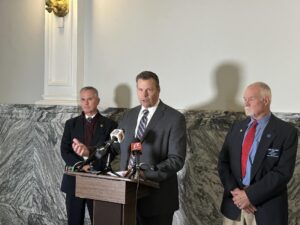
Kansas Attorney General Kris Kobach and the Trump administration have asked a federal court to block Kansas from providing in-state college tuition and certain scholarship benefits to illegal immigrants, something it has offered for more than 20 years.
However, the policy remains in effect pending judicial approval of a proposed settlement, and Kansas Gov. Laura Kelly is asking to defend the policy in court.
The Justice Department sued Kansas in June, arguing the state’s law violates federal law by providing tuition benefits to some illegal immigrants that are unavailable to certain American citizens who live outside Kansas.
“For decades, the Kansas Legislature gave preferential treatment to illegal aliens over American citizens,” Associate Attorney General Stanley Woodward said.
“We encourage all states to follow the commonsense correction of Attorney General Kobach by ending policies that reward illegal entry with educational benefits unavailable to U.S. citizens,” Woodward said.
Kobach, a Republican and former gubernatorial candidate who lost to Kelly in 2018, agreed with the federal government instead of defending the state law. He and the Justice Department jointly asked the court to declare the law invalid and permanently block Kansas officials from enforcing it.
Kansas adopted the policy in 2004 under Democratic Gov. Kathleen Sebelius.
The law allows illegal immigrants to receive in-state tuition after attending a Kansas high school for at least three years and graduating or receiving a Kansas GED. Students also must promise to seek legal status when eligible.
Federal law says a state cannot give an illegal immigrant a college benefit based on residence unless it offers the same benefit to every American citizen, regardless of where that citizen lives.
As Heartlander News previously reported, Kobach warned state lawmakers in February that Kansas would likely lose if the Justice Department sued.
“For more than 20 years, Kansas has been violating federal law with impunity,” he said at the time.
The Republican-led Kansas Legislature tried to end the policy earlier this year, passing Senate Bill 254, which would have stopped illegal immigrants from receiving in-state tuition and other state benefits, but Kelly vetoed it. Although Republicans control both legislative chambers, they did not have enough votes to override her.
Kelly, a Democrat, is now asking the court to let her defend the tuition law because Kobach will not. She argued the policy helps students who grew up in Kansas and can later join the state’s workforce.
“In pursuing higher education, these young Kansans are a net benefit to our entire state,” the governor said.
The Mexican American Legal Defense and Educational Fund and the American Civil Liberties Union of Kansas have also asked to join the case. They represent a student group whose members benefit from the lower tuition rates.
Assistant Attorney General Brett Shumate said the Justice Department plans to continue challenging similar laws across the country.
“Kansas’s unconstitutional and un-American laws should never have been passed in the first place and are prohibited by federal law,” Shumate said. “The Department of Justice has won on this exact issue in Texas, Oklahoma, Kentucky, and Nebraska, and we will take this fight to any states that fail to put American citizens first.”
Besides the wins in those states, the Justice Department has cases pending involving Illinois, Minnesota, Virginia, California, New Jersey, Kansas, Massachusetts, Rhode Island, Maryland and Colorado.
The federal government is also examining college scholarships reserved for illegal immigrants. The Education Department has opened civil rights investigations into the University of Louisville, the University of Nebraska at Omaha, the University of Miami, the University of Michigan and Western Michigan University.
The department is investigating whether scholarships limited to recipients of Deferred Action for Childhood Arrivals, or DACA, or illegal immigrants unlawfully exclude American students based on national origin.