Trump admin releases sweeping memo to expand religious liberty
The Trump administration wants federal agencies to provide greater protection for religious Americans when making rules, enforcing laws, managing workers and awarding government funding, a…

The Trump administration wants federal agencies to provide greater protection for religious Americans when making rules, enforcing laws, managing workers and awarding government funding, a sweeping new memo states.
Acting Attorney General Todd Blanche signed the 26-page Justice Department document last week. It replaces guidance issued in 2017 and incorporates major Supreme Court rulings from the past nine years.
“Religious liberty is one of our Nation’s founding principles and a fundamental right guaranteed by the Constitution,” Blanche said in a release. “It is essential that federal agencies fully respect and protect the ability of all Americans to live out their faith in daily life, including in their interactions with the federal government.”
The memo creates no new laws. Rather, it directs federal departments on how to apply the First Amendment, the Religious Freedom Restoration Act, Title VII of the Civil Rights Act and other existing laws.
It lays out 21 guiding principles, including that religious freedom covers much more than attending church or privately holding a belief. It also protects a person who acts, speaks or refuses to act because of a sincere religious belief.
The memo says religious freedom “is not a mere policy preference to be traded against other policy preferences.”
Those protections apply to individuals, churches, schools, charities, associations and some businesses. People do not lose their religious rights when they enter the workplace, participate in public life, run an organization or seek a government grant or contract, it says.
The guidance also rejects the idea that the First Amendment requires the government to remove nearly all signs of religion from public life.
The Establishment Clause bars the government from forcing people to participate in religion or favoring one faith over another. However, the memo says it “does not compel the government to purge from public life anything an objective observer may think endorses religion.”
That part of the guidance reflects the Supreme Court’s 2022 ruling in Kennedy v. Bremerton School District, in which the court ruled a public high school football coach’s personal prayer after games was protected by the First Amendment.
The memo says officials cannot ban private religious expression simply because another person complains about it or feels uncomfortable.
It also includes a section on parental rights, specifying that parents have a constitutional right to direct their children’s religious upbringing and education.
That right applies to choices parents make outside the home. The government may not make access to a public benefit, including public education, dependent on parents giving up their religious freedom.
The guidance cites Mahmoud v. Taylor, the landmark 2025 Supreme Court decision involving parents who objected to LGBT-themed books in elementary classrooms. The court ruled the Maryland school district had to notify parents and allow religious families to opt their children out.
Heartlander News reported in March that the district later agreed to pay the parents $1.5 million and provide advance notice before using materials about family life and human sexuality.
Federal agencies also must review how they treat their workers.
The memo says agencies should provide clear information about religious accommodations and train staff members on workers’ rights. Some accommodations include schedule changes, shift swaps, time off for religious holidays and, in some cases, remote work.
Employers cannot reject an accommodation based on speculation about possible problems. Under the Supreme Court’s 2023 decision in Groff v. DeJoy, an employer must show the accommodation would impose substantial costs in the full context of its business.
Federal workers also may keep religious books at their desks, wear religious clothing or jewelry, discuss their beliefs and invite co-workers to religious services.
The memo also strengthens protections for churches and faith-based employers.
The government generally may not interfere with a religious organization’s internal decisions about its ministers, teachers or other workers who carry out its religious mission. Religious employers may require workers to follow beliefs and conduct standards tied to the organization’s faith.
For example, the memo says the government cannot force a Catholic seminary to admit women seeking to become priests. It also says a Lutheran school may hire practicing Lutherans, Christians or workers willing to follow its religious code of conduct.
Faith-based groups also must receive a fair opportunity to compete for federal grants and contracts. Agencies generally cannot require a church, school or Christian charity to surrender its religious identity or religious hiring rights to receive government funding.
The guidance also reviews existing conscience protections for health care workers. Federal law protects certain doctors, nurses and medical groups that refuse to perform, help with or refer for abortions or sterilizations because of religious beliefs or moral objections.
The memo requires agencies to consider religious liberty before finalizing new rules or policies. Agencies should consider naming an official to review proposed rules and may seek assistance from the White House Faith Office.
If members of the public raise serious religious freedom concerns during a rule’s public comment period, an agency must carefully consider and respond to those concerns.
Agencies also must review potential religious liberty violations before starting or continuing enforcement actions. The memo warns federal officials they can sometimes face personal lawsuits and monetary damages for violating the Religious Freedom Restoration Act.
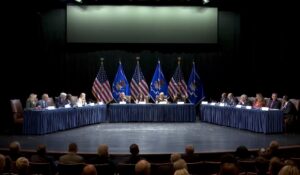
The new guidance follows a recommendation from Trump’s Religious Liberty Commission. As Heartlander News reported, the commission studied religious discrimination in education, health care, the military and other parts of public life during seven hearings over 10 months.
Its final draft report called on the Justice Department to update the 2017 guidance and explain how recent Supreme Court rulings protect religious expression.