Faithful Christian ministry celebrates 80 years at the southern border, teaching Spanish-speaking pastors, missionaries
A historic Bible institute in the Texas Rio Grande Valley is celebrating 80 years of training pastors, missionaries and Christian educators.
The ministry began as a megaphone and tent…
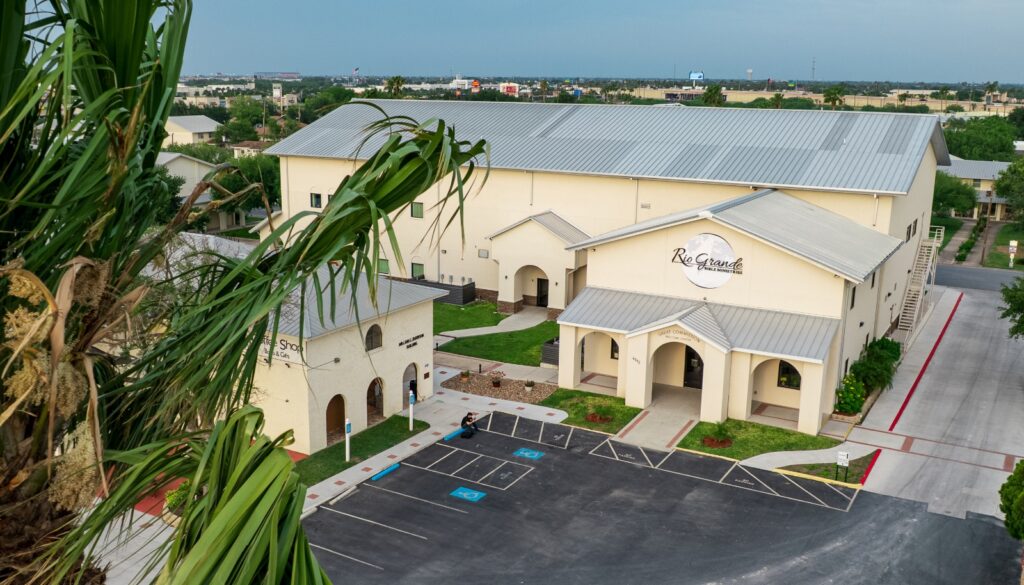
A historic Bible institute in the Texas Rio Grande Valley is celebrating 80 years of training pastors, missionaries and Christian educators.
The ministry began as a megaphone and tent evangelism effort. Rev. M.C. Ehlert arrived in the area in 1937 to preach the gospel along the border. He quickly saw a great need to train Hispanic believers because little Bible training was available for them.
Ehlert founded the school in 1946 and purchased 40 acres of land in Edinburg, Texas. Classes officially began in the spring of 1947.
Today the campus sits about 20 minutes from a bridge to Mexico.
Growing a family of ministries
Now operating as Rio Grande Bible Ministries, the organization includes the Bible college, a radio station, a winter volunteer center called Bibleville and a missions arm known as Rio Grande Global.
The institution has seen massive growth and global reach over the last eight decades:
- More than 7,800 students trained
- More than 300,000 listeners tuned into Radio Esperanza
- 130 winter volunteers helping on campus every year
- More than 25 countries reached
Developing Christ-centered leaders with a biblical worldview for the global church is the school’s mission, according to Vice President of Media Billy Jackson. Living on campus with his wife and kids, Jackson regularly interacts with students from Argentina, Bolivia, Colombia, Ecuador, Mexico and Honduras.
“God could have decided to write his message perfectly in the sky so everyone around the world could read his message in their language,” Jackson told Heartlander News in an exclusive interview. “Or he could have sent an angel to proclaim it, but he chose to come and live with us. When he wanted to begin his church and make disciples, he chose life-on-life. We’re called to make disciples and that means living with them teaching them and it’s not just in the classroom.”
Experienced professors and strict accreditation standards give the institute its value, Jackson said. Many professors are retired missionaries who teach exactly what they lived on the field. The institution evaluates students rigorously and will hold back anyone who isn’t ready for ministry.
Institute resumes teaching in English
After a 70-year pause, the ministry is resuming English Bible classes, a program originally dropped in 1955 to focus on Spanish-language training for missionaries.
Many young people in the Rio Grande Valley struggle to write college-level papers in Spanish despite speaking the language fluently, Jackson noted. Reintroducing English allows these students to survive academically and become fully bilingual pastors.

“We have more Spanish speakers in the U.S. than any other country in the world besides Mexico,” Jackson said. “More than Spain, more than Argentina, any of the countries you can think of that have Spanish speakers, we have more in the U.S. We need Spanish-speaking pastors in the U.S., and that’s something that we’re waking up to.”
To overcome a drastic increase in student-visa denials – roughly 90% of its international student applications were denied last semester – the ministry is planning to establish a satellite campus in Latin America.
Rio Grande Bible Ministries is testing this expansion model by reopening South Dakota’s former Cornerstone Bible College as Rio Grande Hot Springs. This stateside satellite campus will help staffers perfect the administrative process before they open a location in Mexico, Central America or South America.
Despite navigating a roller coaster of U.S. immigration policy changes through the decades, the school remains strictly focused on scripture.
“As long as the Lord wants us to be here, we will continue on,” Jackson said. “The day the Lord says that our work is done, we’ll close up because it’s His kingdom that’s going forever. It’s not a Rio Grande that’s going forever, and so as long as He keeps bringing us students to train, our mission continues.”