Alabama’s rapid school choice expansion stands out nationally, report finds
Alabama’s school choice program has grown rapidly, reaching 34,000 students in its second year – growth unmatched by any other state at the same stage, according to the Alabama Policy…
Alabama’s school choice program has grown rapidly, reaching 34,000 students in its second year – growth unmatched by any other state at the same stage, according to the Alabama Policy Institute.
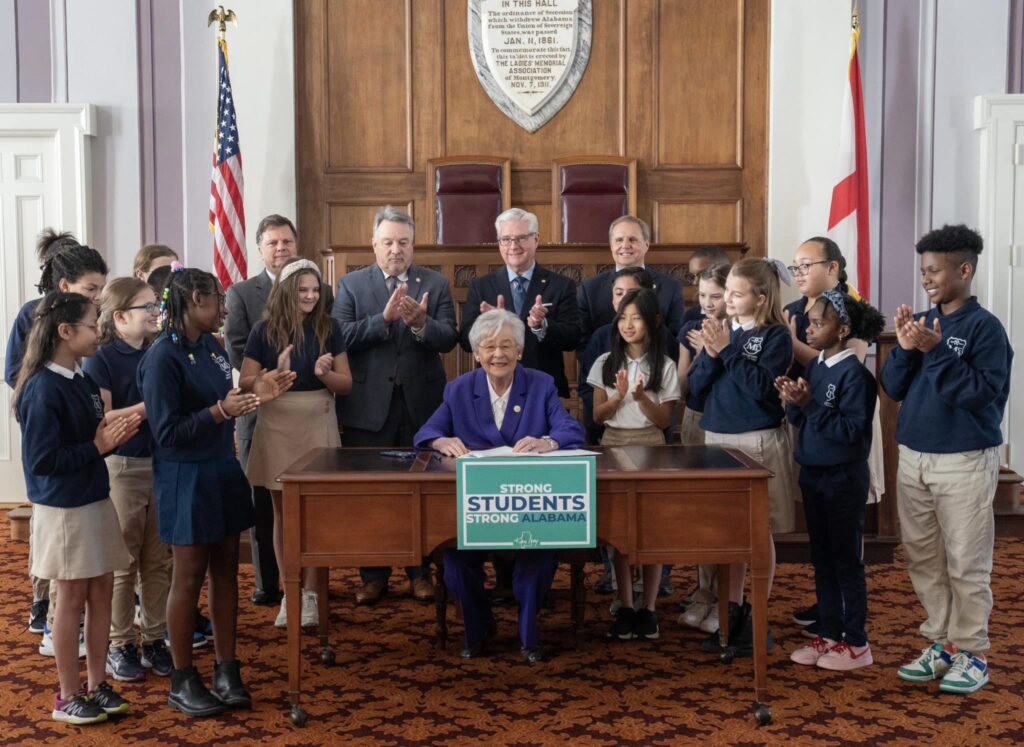
“No other state in the country has successfully launched an ESA program and scaled it from zero to more than 34,000 approved students in its first two years,” the institute said this month after Gov. Kay Ivey announced full funding for all approved students. “Alabama stands entirely alone in achieving this level of success in educational freedom.”
The Yellowhammer State’s education savings account program is not the nation’s largest – Florida operates several larger programs, and Texas launched an ESA program this year serving 100,000 students – but its rapid enrollment growth and the state’s commitment to fully funding all approved applicants are unique.
“Historically, state education savings account programs operated under an incremental model, implementing highly restrictive eligibility requirements,” the institute said. Arizona, one of the nation’s largest school choice states, had about 12,000 students before expanding its program to universal eligibility, while Florida combined existing programs into new frameworks to achieve its nation-leading enrollment.
The institute credited Ivey and the Republican-controlled Legislature, which it said “stepped up to the plate and hit a home run for Alabama parents and their kids.”
“By establishing an income cap of 300% of the federal poverty level at launch, directing the program from the professionally run and educationally agnostic Alabama Department of Revenue, utilizing a robust digital distribution partnership, and signaling a clear transition to universal access by year three, Alabama managed to capture massive parental demand immediately,” the institute said.
EdChoice, a national school choice advocacy organization, confirmed Alabama is the fastest state to scale to 34,000 ESA students.
Nathan Sanders, policy and advocacy director at EdChoice, praised Ivey and state lawmakers for supporting the program, including their decision to fund all approved students and to expand access. The program will be open to all families starting next year.
Sanders said Alabama followed the lead of states including Florida, West Virginia, Arkansas, Iowa and Texas, “which are embracing universal eligibility ESAs,” unlike some neighboring states.
“Alabama is breaking away from states like Georgia, Louisiana, Mississippi, or South Carolina, which are stuck with more limited ESAs.”
Nationally, more than 1.5 million students participate in school choice programs across 35 states. A new federal school choice program begins in January and is expected to expand those numbers.