State protections for religious liberty: Arkansas, Tennessee rank top in fifth annual report
In an annual report ranking state protections for religious liberty, Arkansas placed first, followed by Tennessee, while New York ranked last.
“Religious liberty is America’s first…
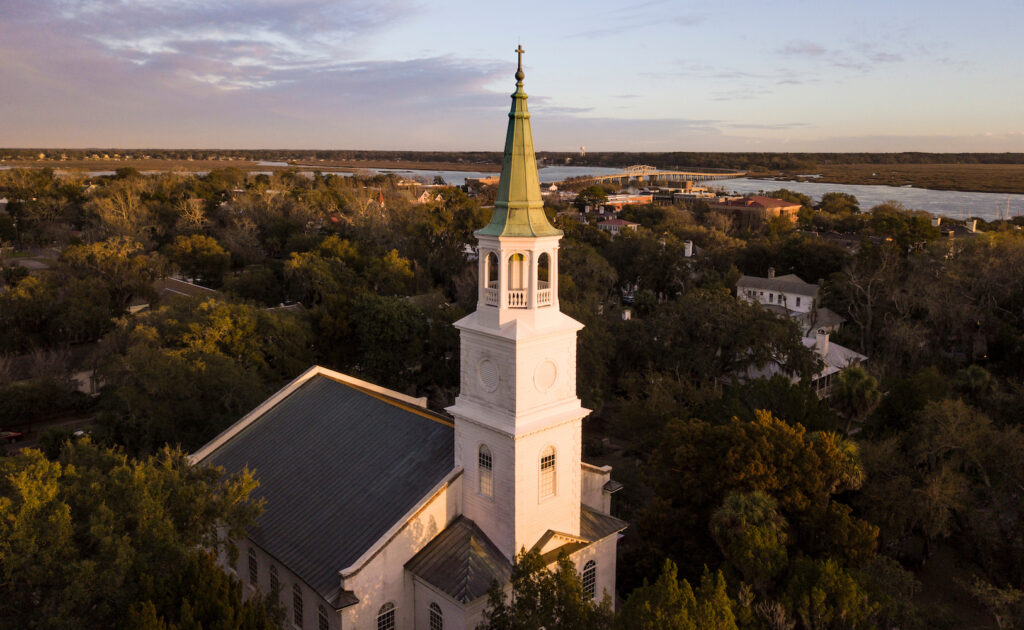
In an annual report ranking state protections for religious liberty, Arkansas placed first, followed by Tennessee, while New York ranked last.
“Religious liberty is America’s first freedom, and Arkansas is leading the nation in protecting it,” Gov. Sarah Huckabee Sanders said in a press release. “Our rights come from God, not government, and every American should be free to live according to their faith and conscience. We’ll continue defending that freedom and ensuring the Natural State remains the best place in the country to live, work and worship.”
First Liberty Institute released its fifth annual Religious Liberty in the States report Tuesday, grading states based on the presence or absence of legal protections for religious convictions. The report aims to encourage states to adopt stronger religious liberty protections because those safeguards have increasingly depended on state law since a 1990 U.S. Supreme Court decision narrowed federal protections, report director and historian Mark David Hall told Heartlander News.
“Since then it has become incumbent upon states if they want to ensure that religious liberty is protected to its fullest,” Hall said. “We need state legislation in place.”
The 2026 study evaluated 50 legal protections grouped into 20 categories, including education, foster care and healthcare.
Arkansas and Tennessee rose from sixth and 10th, respectively, in the 2025 rankings after each enacted new religious liberty protections.
Arkansas passed a law allowing individuals to decline to participate in or celebrate a wedding ceremony because of their religious convictions, including same-sex marriages.
“First Liberty Institute commends the state for acting proactively to protect ministers, judges, florists, bakers, photographers and many others from the sort of protracted litigation we have seen in other states,” the report states. “We encourage legislators in other states to introduce bills modeled on Arkansas’s statute in their states.”
Tennessee enacted a broad medical conscience law protecting religious convictions in healthcare rather than limiting protections to specific procedures such as abortion.
“Many states protect medical professionals from having to participate in abortions if they have religious objections, but a good general conscience law protects a wide range of individuals and institutions from having to participate in multiple medical procedures (including abortion, sterilization and contraception) if they have objections to doing so,” the report explains.
The document also praised Georgia and Wyoming for enacting Religious Freedom Restoration Acts in 2025 and highlighted Montana, South Carolina and Idaho for passing religious liberty laws since 2022.
Hall said the study considers laws enacted before Dec. 1 of the review year, allowing states to improve their rankings each year by adopting additional protections, often modeled after laws in other states.
“We look at all the states, and we see which of these protections they have and which they lack,” Hall said. “We give them a score and we calculate the percentage of protections they have, but because we’re Americans, we rank the states and we put them in a competition.”
Competition can cause states to improve.
“We hope that will engender a friendly competition where state legislatures will want to do better in the rankings and will hopefully pass religious liberty laws.”
Red states vs. blue states
The results generally divide along political lines, with Republican-led states more likely to enact religious liberty protections and Democrat-led states more likely to repeal or oppose them.
“I’m afraid it’s become a red-state, blue-state thing. Although it doesn’t have to be, and it shouldn’t be,” Hall said.
Political affiliation does not always predict a state’s ranking, however. Illinois, a blue state, ranked fifth, while Nebraska, a red state, placed 44th.
Hall said many of Illinois’ religious liberty protections predate 1999, when Republicans were more competitive in the state. By contrast, conservative states such as Nebraska, West Virginia and Wyoming have historically enacted fewer statutory protections because religious liberty has faced fewer political challenges.
“Because the climate’s relatively friendly to religion and religious liberty, it seems less necessary,” said Hall, but he encouraged those states to enact protections now to preserve religious liberty if political conditions change in the future.
Religion is often called America’s “first freedom” because it appears first in the First Amendment to the U.S. Constitution. Hall said the protection was understood by the Founders to apply broadly, even though most Americans in the 18th century identified as Protestant Christians.
Religion and religious liberty are still important today.
Hall said the nation’s founders believed republican government depended on a moral citizenry, which they generally associated with Christianity.
“The actual assumption is, the Americans are Christian people who are worshiping God, trying to live according to teachings of the Bible,” Hall said. “Christianity generates the morality necessary for a republican form of government to work, and they [the Founders] would have also been concerned with learning virtue in other ways, of course, by reading the classics or by studying rule books.”