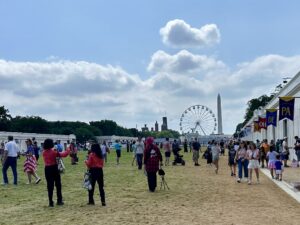
The Founding colonies – RI, CT, NJ, DE, MD, Washington D.C. remind Americans where this nation began at The Great American State Fair
(Editor’s note: A series on The Great American State Fair, held in Washington, D.C., in honor of America’s 250th birthday, written by Heartlander News interns.)
As colonies…
(Editor’s note: A series on The Great American State Fair, held in Washington, D.C., in honor of America’s 250th birthday, written by Heartlander News interns.)
As colonies that signed the Declaration of Independence, visitors’ hopes were high that these booths would display rich history in honor of America’s 250th birthday, but many were left disappointed.
Rhode Island and Connecticut
Reminiscent of its refusal to send delegates to the Constitutional Convention in 1787, Rhode Island was absent from The Great American State Fair, as was Connecticut. In the late 1770s, these states championed the Revolutionary War and the founding of a new nation but did not participate in the fair.
Delegates Roger Sherman and Oliver Ellsworth of Connecticut devised the Great Compromise at the Constitutional Convention, creating America’s dual system of representation that remains in place today: the House of Representatives, where representation is based on population, and the Senate, where all states have two senators.
Rhode Island was the first of the original colonies to declare independence from Britain, doing so in May 1776 before the Declaration of Independence was signed. The exhibit did not highlight these examples of state and national history, leaving visitors wanting more.
New Jersey
Known for its iconic beaches and boardwalks along the Jersey Shore, New Jersey brought the boardwalk to Washington. The booth featured a sunny atmosphere and a giant sandcastle sculpture created by Schaffer Art Studios. Visitors walked beneath string lights and fake seagulls suspended from the ceiling to evoke the Jersey Cape.
Artificial intelligence renderings of George Washington riding roller coasters at the Jersey Cape promoted ways visitors could spend America’s 250th birthday in New Jersey. Representatives from the state stamped fair passports and talked with visitors about state history and Cape May County, home to several iconic boardwalks.
Delaware
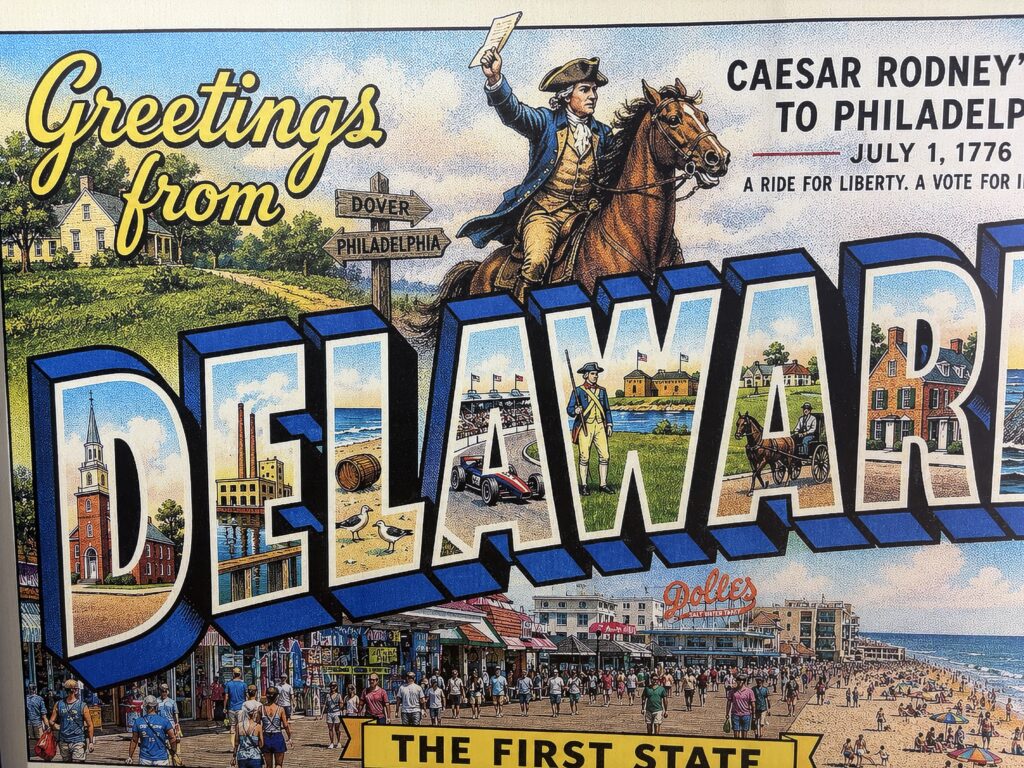
The first state to ratify the Constitution in 1787, Delaware featured colonial and Revolutionary War history through the Caesar Rodney Institute. Materials about Caesar Rodney informed visitors about the Founding Father’s 80-mile ride from Delaware to Philadelphia to cast the tie-breaking vote for Delaware in favor of American independence.
While highlighting some of the state’s history through informational posters, the booth offered little entertainment overall. Rodney’s ride is an often-overlooked part of Revolutionary history, but beyond this exhibit, little else was displayed.
Maryland
The yellow, red and black colors of the state flag’s coat of arms covered the inside of Maryland’s booth, where representatives promoted attractions and destinations in the state neighboring the nation’s capital. Maryland offers coastal attractions including the Chesapeake Bay and Fort McHenry.
The booth featured magazines highlighting attractions throughout the state and a photo station where visitors could pose for an AI-generated image of themselves dressed in historical clothing from the era of their choice. A line of tourists frequently waited for their chance to transport themselves to a different era of American history.
Washington, D.C.
Although not a state, Washington, D.C.’s booth at The Great American State Fair included a map of the city and informational pamphlets about local attractions. The walls were covered in silhouettes of landmarks and lesser-known facts about the city.
By the end of the fair, many of those facts were difficult to read because booth attendants encouraged visitors to sign their names with permanent markers or draw pictures on the walls. Multicolored signatures and messages covered the walls. A world map and a map of the United States allowed visitors to place pins showing where they were from, a common feature in many state fair booths.
The booth lacked substantial historical information about the city or the nation’s capital. Although the fair was held in Washington, D.C., the booth did little to highlight the city’s history or significance.