Analysis: Another high-level ouster in China highlights Xi’s tightening internal controls
Under the guise of a continuing anti-corruption campaign, China’s Communist Party has ousted one of the country’s most prominent Politburo members, the third such purge since 2022.
Analysts…
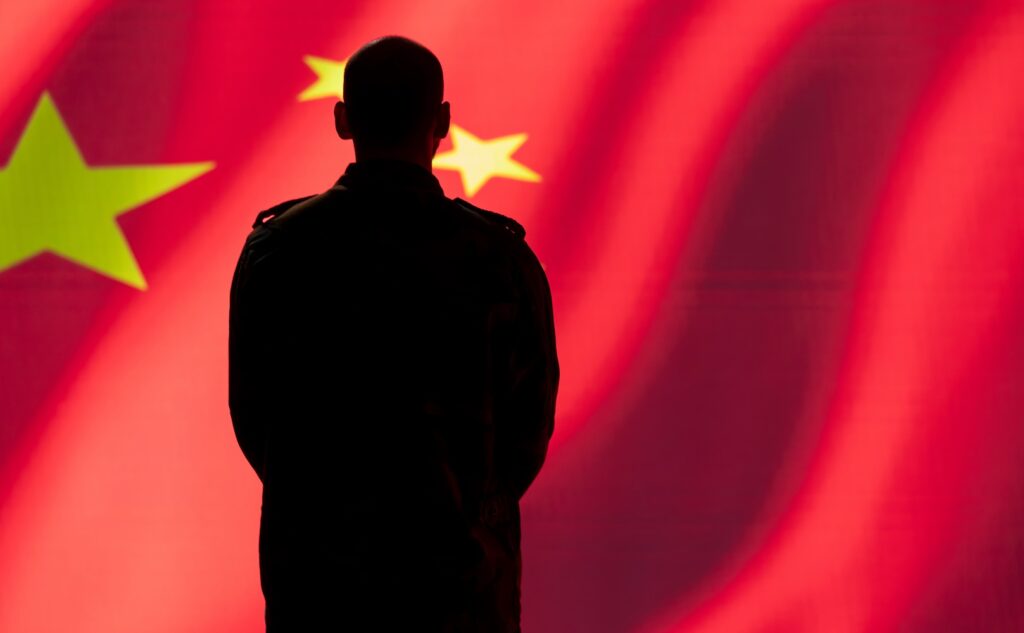
Under the guise of a continuing anti-corruption campaign, China’s Communist Party has ousted one of the country’s most prominent Politburo members, the third such purge since 2022.
Analysts say the move is part of Chinese President Xi Jinping’s broader campaign to consolidate personal power, strengthen Communist Party control over the country and prepare China for potential future military conflict.
The party’s own statements characterized the latest purge in political terms.
China announced Tuesday that former Politburo member Ma Xingrui had been expelled from the Chinese Communist Party (CCP) and removed from public office, Reuters reported.
“A decision to purge someone of Ma Xingrui’s rank is taken at the very top, with Xi Jinping’s backing,” Jean Christopher Mittelstaedt, professor of modern Chinese studies at the University of Zurich, told Reuters.
The charges came after investigators accused him of accepting bribes, abusing his authority and engaging in “power-for-sex and money-for-sex” transactions.
The CCP also alleged Ma allowed family members to profit from his political influence, Reuters reported.
The official CCP announcement framed the case primarily as a political betrayal.
“An investigation revealed that Ma Xingrui had lost his ideals and beliefs and political stance, betrayed the Party’s purpose and original mission,” the statement said.
It further alleged he “seriously violated political discipline and rules, failed to effectively fulfill his primary responsibility for comprehensively and strictly governing the Party.”
Ma, 66, is no ordinary provincial official.
Before entering China’s highest political ranks, he was an executive in the country’s aerospace industry, according to the South China Morning Post.
He also governed Guangdong province and later served as Communist Party secretary for the strategically important Xinjiang region.
His removal places another senior figure from China’s defense and technology establishment at the center of Xi’s expanding purges.
In October 2025, He Weidong, the former vice chairman of the Central Military Commission, which is led by Xi, was expelled from the armed forces and the party, Reuters reported.
The charges in these cases are almost beside the point, according to China specialists.
Xi’s anti-corruption campaign has evolved into a political instrument extending well beyond policing financial misconduct, they argue.
“The scope and depth of these purges showcase Xi’s resolve to renovate the PLA [People’s Liberation Army], root out corruption, eliminate obstacles to his ambitious military modernization objectives and ensure absolute political loyalty,” a report by the Center for Strategic and International Studies (CSIS) said.
Researchers at the institute concluded the campaign seeks not only to dismantle personal corruption networks but also to ensure the military remains subordinate to CCP leadership and especially loyal to Xi if faced with either military conflict or internal unrest.
“The scope and depth of these purges showcase Xi’s resolve to renovate the PLA [People’s Liberation Army], root out corruption, eliminate obstacles to his ambitious military modernization objectives and ensure absolute political loyalty,” a report by the Center for Strategic and International Studies (CSIS) said.
Researchers at the institute concluded the campaign seeks not only to dismantle personal corruption networks but also to ensure the military remains subordinate to CCP leadership and especially loyal to Xi if faced with either military conflict or internal unrest.
“Behave and do what you are told,” Steve Tsang, director of the SOAS China Institute in London, told The New York Times about the central purpose of the anti-corruption campaigns.
Former CIA China analyst Jonathan Czin, now with the Brookings Institution, described Xi’s recent purge of top military leaders as a change in Chinese politics as usual.
“This is potentially a seismic shift in Chinese politics under Xi, and how he governs – this really demonstrates nobody in that system is safe, truly,” Czin told CNN in January.
One thing is clear: The anti-corruption drive is not really about corruption.
Xi’s own wealth has been estimated by U.S. intelligence sources at nearly $400 million, with another $700 million allegedly hidden through family members, the Washington Times reported.
The newspaper said some congressional aides estimate Xi’s net worth at closer to $2 billion.
This occurred despite a reported annual salary of about $22,000 in 2019.
CSIS researchers have argued Xi’s campaign is rooted in his concern over the collapse of the Soviet Union, which he has tied to fears that the CCP will lose power if people begin to question the state’s version of history or its legitimacy.
Former CIA analyst John Culver, now at CSIS, said Xi views ideological discipline and absolute party control over the military as essential safeguards for his power.
Ma’s downfall comes amid a broader purge of officials tied to Xinjiang, the South China Morning Post reported.
The development suggests investigators are examining a wider network of officials connected to one of Beijing’s most troubled provinces.
Xinjiang has become one of China’s most controversial regions because of allegations of mass detention, forced labor, systemic rape, organ harvesting and religious repression.
Previously, CCP leaders assigned to China’s most sensitive posts were often considered politically untouchable because of their longstanding ties to the country’s top leadership.
But those days could be over.
“For Xi to get rid of a guy like this is really remarkable,” Czin told CNN after the military purge of another senior official in January.
“Because there’s so little trust and because the politics are so vicious” in the CCP, he added.