Off the grid – WA, OR, ID, MT, WY fail to bring the wonder of the Northwest U.S. to The Great American State Fair
(Editor’s note: A series on The Great American State Fair, held in Washington, D.C., in honor of America’s 250th birthday, written by Heartlander News interns.)
Known for its…
(Editor’s note: A series on The Great American State Fair, held in Washington, D.C., in honor of America’s 250th birthday, written by Heartlander News interns.)
Known for its beautiful landscapes, outdoor culture and the tendency to get lost in the woods, the Northwest corner of the United States seemed to get lost on its trip to Washington, D.C. A few of the states did not show up at all, and the rest delivered a lackluster experience at The Great American State Fair.
Washington and Oregon
Nearly 3,000 miles – the approximate distance between the Northwest coast and Washington, D.C. – proved an apparently insurmountable journey for both Washington and Oregon. The blue states announced they would not participate in The Great American State Fair, but unlike North Carolina and Pennsylvania, industries and sponsors from those states also did not attend. One booth at the fair represented both states and included a stock backdrop highlighting important inventions and landmarks. The State Fair provided the display for states that skipped the celebration.
Home to three national parks – Mount Rainier, Olympic and North Cascades – Washington’s natural beauty stuns visitors.
North Cascades National Park connects to areas near Crater Lake National Park in Oregon, carrying the region’s scenic beauty into the neighboring state. The two states are also home to major companies such as Amazon and Starbucks, both founded in Washington, and Nike, headquartered in Oregon.
Idaho
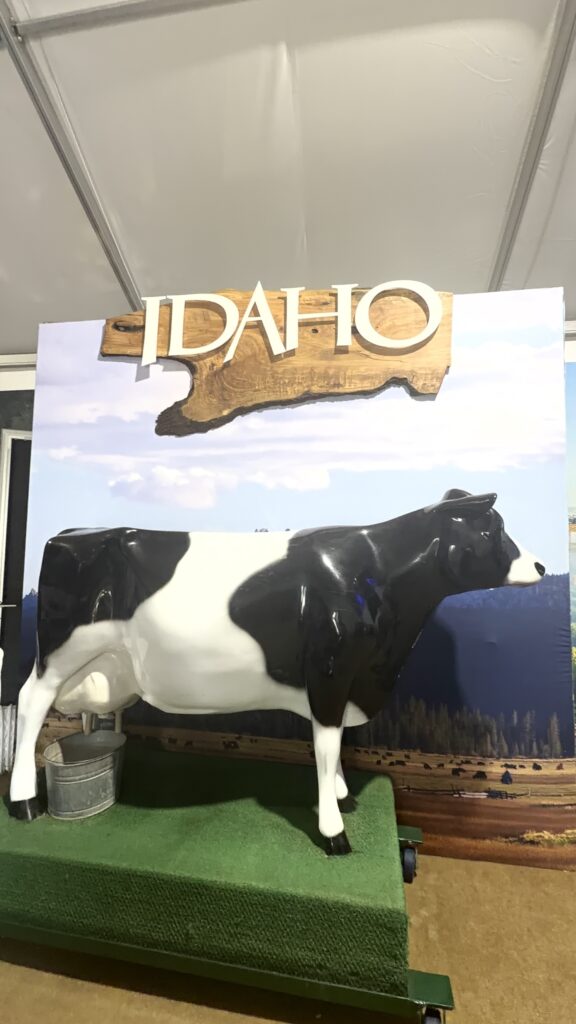
Typically known for its potato production, Idaho’s booth featured more of the state’s culture than a starchy crop. It included (yes, another) life-sized cow because the state ranks third in the nation for milk and dairy production, behind California and Wisconsin.
The booth also featured an interactive trivia game testing players’ knowledge of Idaho crop production. The state highlighted its boutique wine industry and noted its geography is well suited for growing wine grapes. The booth included an inflatable raft representing river rafting opportunities on the state’s many waterways.
Montana
Known for Native American culture, snow and cowboys, Montana’s booth highlighted the state’s topography and attractions. A pitched tent inside the booth represented the camping and outdoor culture of the Rocky Mountains. Beneath a replica dinosaur rib cage, visitors could become paleontologists and dig for fossils in a sand table. The booth also included a plaque recognizing the 12 tribal nations with reservations in Montana.
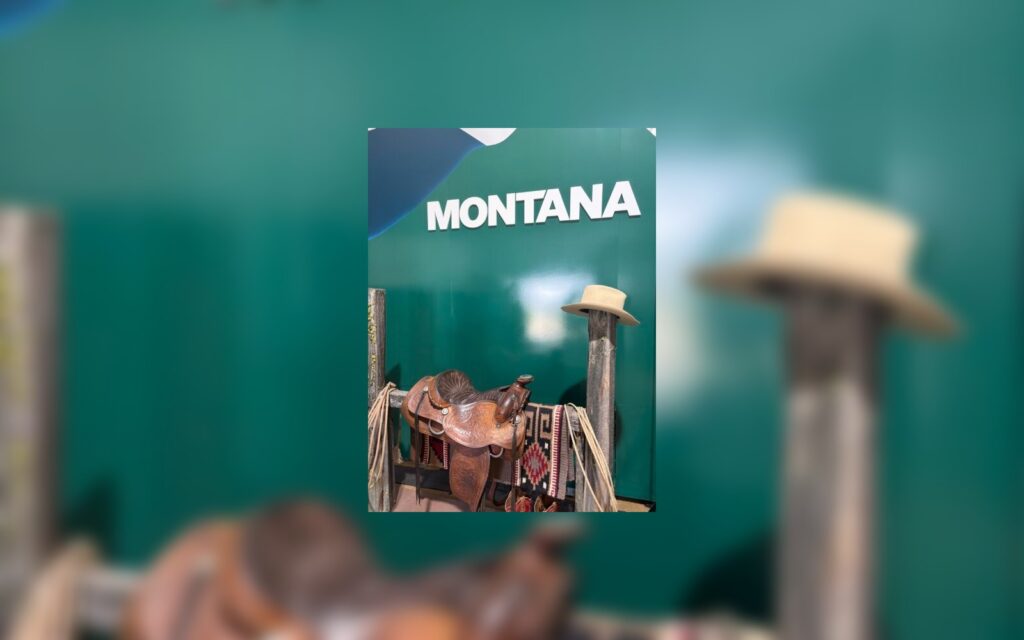
Outside Montana’s designated booth, a fence post with a horse saddle, cowboy boots, a hat and a lasso represented the state’s cowboy culture, which was also on display each day at The Great American State Fair Rodeo. Montana was one of the rodeo’s sponsors, highlighting cowboy culture as part of its own heritage, not solely that of Texas.
Wyoming
The least populous state in the United States is also the 10th largest by land area, covering 62.6 million acres. Wyoming is home to about 584,000 residents, averaging about six people per square mile. Although the state is home to Yellowstone and Grand Teton national parks, its booth was underwhelming.
Banners featured facts about the state’s natural resources and highlighted notable people from Wyoming, including hoop dancer Jasmine Pickner Bell. A large photo of Devils Tower, a rock formation considered sacred by many Native American tribes, included a plaque noting it was America’s first national monument.
Although the Northwest is home to some of the nation’s most spectacular landscapes, its state fair booths failed to impress or bring that beauty to the nation’s capital.