Nevada districts begin school closures, mergers in response to falling enrollment, rising maintenance costs
Two Nevada districts – the rural Douglas County School District and urban Clark County School District – have begun closing schools this year to reduce costs as enrollment continues to…
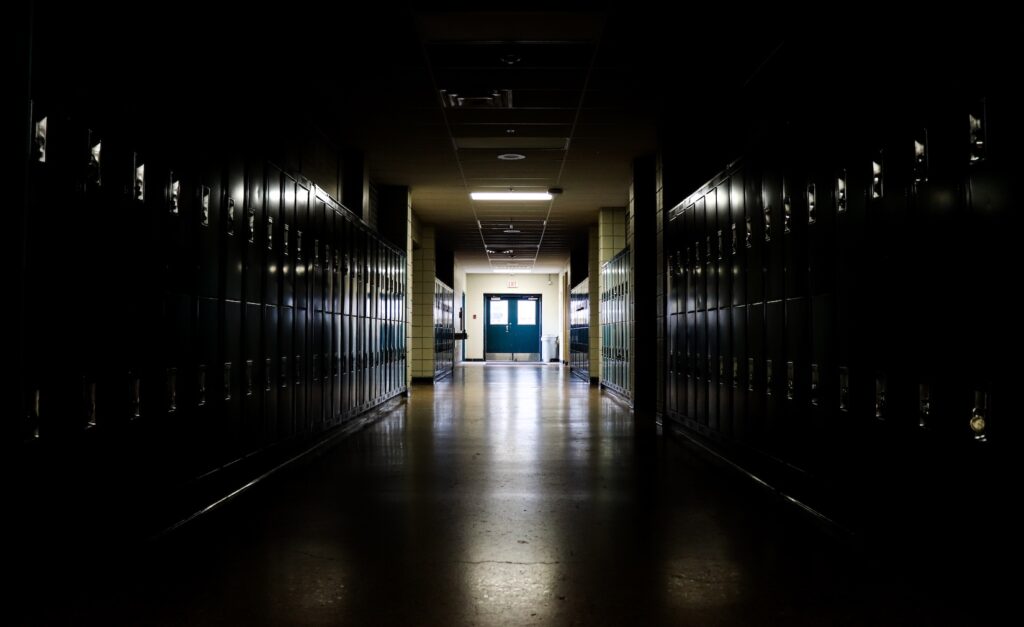
Two Nevada districts – the rural Douglas County School District and urban Clark County School District – have begun closing schools this year to reduce costs as enrollment continues to decline.
“Funding concerns are especially dire for the Douglas County School District, which faced a $5.4 million budget deficit this year and was recently placed on fiscal watch, during which its finances will be closely monitored by the state,” wrote the Nevada Independent.
The Minden-based district, which received a B+ grade on Niche, enrolled approximately 4,500 students this year – a 17.4% enrollment decline since 2016, according to the article.
As a result, the district is shuttering C.C. Meneley Elementary School in its first closure in 18 years, journalists wrote.
“Superintendent Frankie Alvarado said in a June 15 interview the district expects overall enrollment to fall by 1,000 students in the next five years. Under current funding, losing 250 students in a year can cost the district an estimated $2.5 million in annual revenue.”
Meanwhile, Clark County closed the only elementary school in Goodsprings, which had been built in 1913 and had only two students during the 2025-26 academic year, the Independent noted.
“In elementary school, when they get down to a certain point of low enrollment, it becomes very difficult to have all the bells and whistles, to have music, to have other specials,” said Felicia Gonzales, the district’s deputy superintendent of business operation. “But when you have a school that is full … then you have all the personnel that’s needed to really fully service all the students.”
Maintenance concerns also factored into the decisions to close schools.
For example, Clark County had planned an ambitious construction campaign to rebuild 18 schools, but decided to pull back because of inflationary pressures, according to the Las Vegas Sun.
“Inflation rates have been out of control nationwide,” Jason Goudie, then the district’s chief financial officer, said at the time the article was published in 2024. “We’ve seen schools go from costing $29 million-$30 million, to $50 million.”
‘We live in a world of numerous uncertainties’
Also in 2024, the Nevada Department of Health and Human Services warned the state may take years to recover economically and educationally from decisions made during the COVID-19 pandemic.
“Most industrial sectors were negatively impacted by the number of jobs and wages that were lost due to these closures,” the report said, noting the remote learning systems initiated at that time caused problems for school-age children.
Geoffrey Lawrence, the Nevada Policy Research Institute’s director of research, criticized the restrictions implemented by then-Gov. Steve Sisolak in 2020.
“In reality, we live in a world of numerous uncertainties, but people have been able to adapt to these uncertainties by developing elaborate, entrepreneurial systems to produce and deliver to people the things they need to overcome the challenges presented by the natural world,” Lawrence said.
“It’s therefore no surprise that economic uncertainty abounded, student achievement plummeted, deaths of despair surged, and hundreds of thousands of previously self-sufficient Nevadans were left to rely on a dysfunctional public support system that couldn’t even process claims timely just to meet their basic needs.”