80% of public school students live in states with weak open enrollment laws, study finds
A new Reason Foundation study shows wide differences in K-12 public school open enrollment policies across the country, with 80% of public school students living in states with weak or…

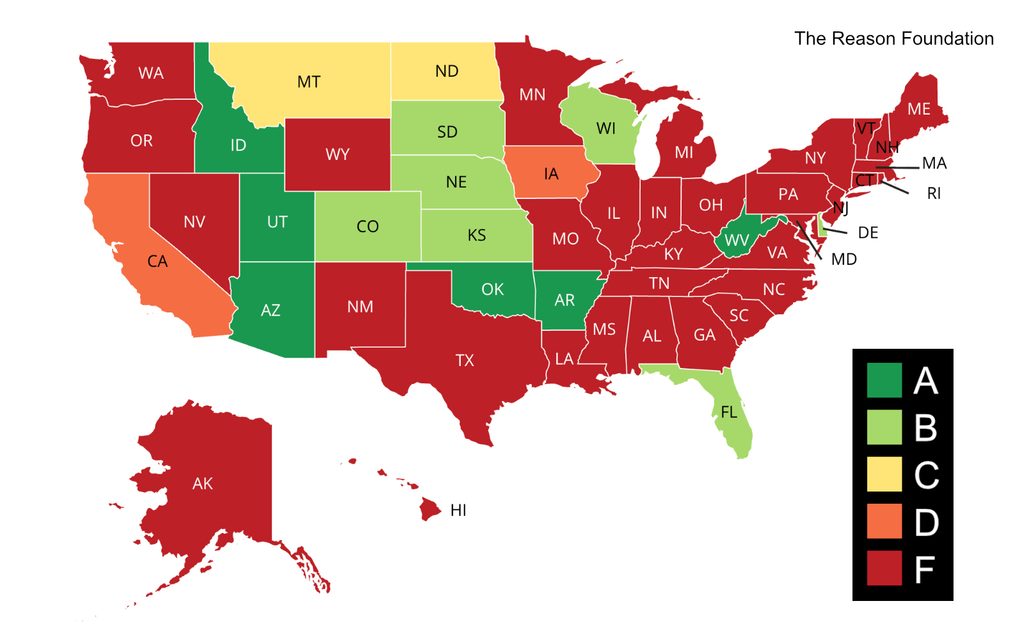
A new Reason Foundation study shows wide differences in K-12 public school open enrollment policies across the country, with 80% of public school students living in states with weak or ineffective transfer laws.
Open enrollment allows families to transfer their children to public schools outside their assigned boundaries. This includes cross-district programs for moving to an entirely different school system and within-district policies for choosing a different school inside their current district.
The report found varied conditions across the states. Kansas earned a B+ grade, for instance, but neighboring Missouri received an F.
Great Lakes states fall behind
Illinois, Indiana, Michigan and Ohio all earned failing grades.
Illinois heavily restricts transfers and allows districts to charge tuition.
Michigan operates a voluntary program but penalizes districts 5% of their state funding if they refuse to participate.
Ohio also runs a voluntary cross-district program. Nonparticipating districts there routinely charge tuition fees averaging $11,000 per student.
Indiana eliminated tuition barriers recently but still treats open enrollment as entirely voluntary for school districts.
Great Plains states offer a mixed bag
Kansas has a B+ grade and a seventh-place national ranking. The Sunflower State launched a statewide cross-district open enrollment policy in 2024. The law prohibits tuition and requires districts to publish open seats by grade level.
Nebraska earned a solid B grade after passing reforms this year to strengthen transparency and admissions.
South Dakota earned a B- for mandating cross-district and within-district open enrollment, though it still allows districts to charge tuition. North Dakota sits in the middle with a C+ grade. It mandates cross-district enrollment and bans tuition, but the state ranks lower because of dismal transparency reporting.
Iowa earned a D+ but recently passed legislation requiring school districts to report why they deny transfer applicants.
Minnesota and Missouri both failed with F grades. Minnesota mandates cross-district open enrollment but allows districts to impose artificial participation caps.
Missouri law requires within-district policies but lacks space-available guarantees. Missouri’s existing cross-district transfer programs force parents to pay tuition out of pocket.
Best and worst nationwide
The report identifies Oklahoma as the strongest champion of public school choice. The state earned a near-perfect score for its enrollment policies. It also has several private school choice programs, although those were not considered in Reason’s rankings.
Arkansas and Idaho round out the top three. These states require districts to participate, removing tuition barriers. They also require transparent capacity reporting to show parents exactly where open seats exist.
Alaska, Maine, Maryland and North Carolina tie for last place in the study. In essence, these states keep families trapped by their ZIP codes by offering no legislated open enrollment guarantees. North Carolina has grown its private school choice program to more than 100,000 participants. Alaska also offers school choice, and Maine has a program for rural students.
(A boy sits at his desk at Victory Christian Academy near St. Louis, Missouri. Image credit: Stuart McMillian/Heartlander News)