U.S.-Iran cease-fire agreement to be signed Friday
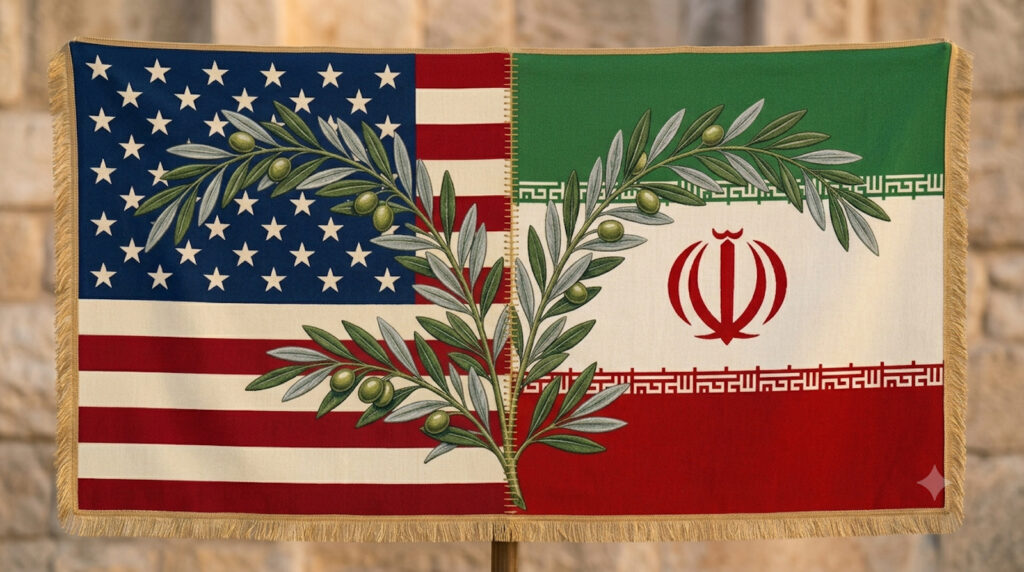
The U.S. and Iran have reached a tentative peace agreement, with a formal signing set for Friday in Geneva, Switzerland.
Both sides have confirmed that Iran will neither pursue…
The U.S. and Iran have reached a tentative peace agreement, with a formal signing set for Friday in Geneva, Switzerland.
Both sides have confirmed that Iran will neither pursue nor attempt to purchase nuclear weapons, nor further enrich weapons-grade uranium, under the terms of the agreement.
The nuclear program was at the center of the dispute between the U.S. and Iran, with American and international officials saying Iran was just weeks from producing weapons-grade material when the war began.
“They want to make a deal, but we haven’t heard those secret words: ‘We will never have a nuclear weapon,’” the president warned in the State of the Union speech before the start of hostilities.
The treaty would represent “a breakthrough” in Middle East peace, Reuters reported.
“What the president has done is created the real space to transform that region – cooperation between the Gulf Arab allies and the Israelis and now hopefully a new era with the Iranians,” Vance said.
Vance noted that much of the progress will depend on Iranian compliance with the nuclear portion of the deal.
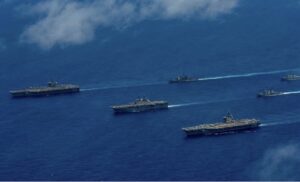
Trump announced on Truth Social that he has “fully authorized the toll-free opening of the Strait of Hormuz” and ordered the immediate removal of the U.S. naval blockade.
“Ships of the World, start your engines,” he wrote. “Let the oil flow!”
The strait, a chokepoint for 20% of the world’s crude oil, has been effectively closed since February.
Spot prices for West Texas Intermediate crude were trading at $80 per barrel on hopes for peace, after reaching as high as $114 in April at the height of the war. Before the war, it was trading around $56 per barrel.
Futures prices have fallen to $75, indicating that at least the oil market is convinced the peace agreement is stable.
Pakistani Prime Minister Shehbaz Sharif, who mediated the talks, announced that both sides “have declared the immediate and permanent termination of military operations on all fronts, including in Lebanon.”
This came despite an attack by Israel Sunday against Lebanon, which caused Trump to lash out at Israeli Prime Minister Benjamin Netanyahu, the Daily Caller News Foundation reported.
The international reaction has been overwhelmingly positive, except from Israel.
French President Emmanuel Macron said France is willing to do its part to ensure the Strait of Hormuz remains open.
“This agreement must enable the urgent and unconditional reopening of the Strait of Hormuz, which the international mission established with the United Kingdom is ready to support,” he said on X.
U.K. Prime Minister Keir Starmer called it “a hugely important step forward in ending the war, ensuring regional stability and re-opening the Strait of Hormuz.” He pledged British forces to help keep the waterway open.
But the Times of Israel reported that despite fighting alongside the United States, the Jewish state was not involved in the negotiations and believes its interests have been abandoned.
“We will not compromise on Israel’s security interests and the protection of our citizens, and we will not withdraw from the security zones,” Defense Minister Israel Katz said. “If Iran attacks Israel because of the events in Lebanon, we will strike it with full force.”
Finance Minister Bezalel Smotrich called the agreement “bad for Israel and for the entire free world. Period,” The Times of Israel reported.
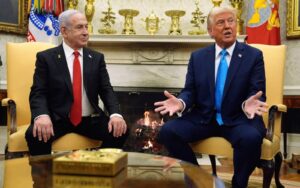
Trump and Netanyahu have clashed repeatedly as the United States has tried to end the war in the Middle East, with Trump accusing Israel’s leader of trying to sabotage the negotiations.
Still, the agreement is simply an extension of an existing cease-fire that would allow 60 days of negotiations over a final treaty, meaning Israel could still have some influence over the outcome.
Over the next two months, the U.S. and Iran must negotiate the disposition of Iran’s 440-kilogram stockpile of 60%-enriched uranium, the status of the Fordow enrichment facility, the terms of restored nuclear inspections and the release of Iran’s frozen funds.
The New York Times reported that the president told the newspaper in a phone call that he wants Iran to stop enriching uranium for at least 20 years, while Iran has countered with a 10-year moratorium.
But Trump has been unequivocal about the need for Iran to give up its nuclear material.
“The Enriched Uranium (Nuclear Dust!) will either be immediately turned over to the United States to be brought home and destroyed or, preferably, in conjunction and coordination with the Islamic Republic of Iran, destroyed in place,” Trump said.
Previously, the president said U.S. forces could enter Iran and secure the nuclear material in an operation that would take a few weeks. He held off because it would expose U.S. troops to additional dangers.
“They still had missiles left, that means they would pinpoint you and just keep lobbing them in until one gets through, and people would have gotten killed,” he told the New York Post.
In the meantime, U.S. military forces are monitoring the sites.
Trump has repeatedly said he would resume the war against Iran if it does not come to a comprehensive agreement on nuclear weapons.
(Image credit: Created by Gemini AI)