Federal guidelines clear the way for universal school choice; holdout governors urged to opt in
The Treasury Department offered a glimpse this week of how the new federal school choice tax credit will work, giving educators and policymakers insight into the program.
The…
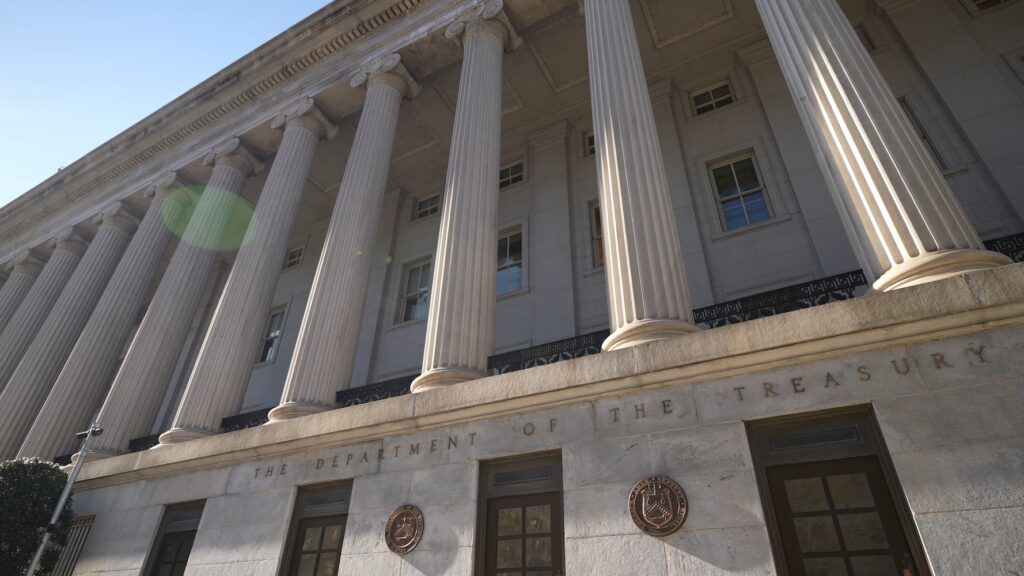
The Treasury Department offered a glimpse this week of how the new federal school choice tax credit will work, giving educators and policymakers insight into the program.
The American Federation for Children, which sent two representatives to a roundtable hosted by the IRS and Treasury Department Tuesday, said the new guidelines give “every governor in every state the clarity they need to opt in immediately.”
“The guidance released today made clear what families and education leaders have known since the law passed: the EFTC benefits children across educational settings – public, private and even homeschool in some states,” the federation said Wednesday in a release. “Treasury will also issue clear rules to prevent misspending. With 31 states already opted in or signaling intent to do so, the remaining holdout governors must act now.”
The Education Freedom Tax Credit passed last year as part of President Donald Trump’s One Big Beautiful Bill Act. Starting in January, taxpayers can donate up to $1,700 to scholarship-granting organizations in participating states in exchange for a tax credit. Those organizations will then award scholarships to students to attend private schools and pay education expenses. Public school students can also use funds to pay costs such as tutoring.
The scholarship amounts are not capped and will be determined by the scholarship organizations, a Department of Education and Treasury fact sheet says.
While taxpayers in any state can contribute, scholarships can only go to students in states that participate. One report estimated non-participating states could leave more than $20 billion on the table.
All Republican-led states have opted in, but only two Democratic governors – New York Gov. Kathy Hochul and Colorado Gov. Jared Polis – have said their states will participate. Republican lawmakers in Kansas, Kentucky and North Carolina have overridden vetoes by Democratic governors to join the program.
The federation and education freedom advocates are urging the remaining governors to opt in.
The new guidelines will likely restrict states from imposing new requirements on scholarship organizations beyond what federal law requires, a spokesman for American Federation for Children told The Lion in an email. They could also clarify that homeschoolers can participate if their co-op or microschool is classified as a school in their state. Public, private and religious schools may use the program.
Treasury Deputy Assistant Secretary for Tax Policy Kevin Salinger said the rules will aim to allow easy but reliable income verification using pay stubs, tax returns and W-2 forms. Students from households receiving needs-based federal or state assistance, as well as foster children, will qualify without separate income verification. The government is “considering other safe harbors for students attending schools in low-income areas,” Salinger wrote in a summary of the meeting.
To prevent fraud and abuse – a frequent and often exaggerated charge lodged against school choice programs – Salinger said the “goal is to pair broad opportunity with strong, administrable safeguards.” Those include requiring independent audits of the scholarship organizations, though smaller organizations could use an internal committee to conduct the audit, which leadership would then sign under penalty of perjury.
“Rather than requiring states to recreate the compliance review from scratch, states could use the audit to help verify that each organization satisfies the requirements to be an SGO under Section 25F, identify apparent deficiencies and determine whether further inquiry or removal from the state list is appropriate,” Salinger wrote.
“Participating states would still be expected to take reasonable steps to prevent fraud and abuse, including processes to prevent duplicate awards to the same student for the same expense. One possible approach would be to require a formal scholarship acceptance certifying that no other award has been received for the same expense, but we welcome input on administrable ways to address this risk. We are also considering appropriate safeguards to help prevent misuse of scholarship funds.”
To safeguard donor information, the government will likely propose using a unique donor number generated under an IRS-provided method instead of a Social Security number to track and receive the credit. The IRS may open a portal for scholarship organizations to use, but it might not be ready when the program launches Jan. 1.
Although details about the eligibility of specific expenses are still forthcoming, Salinger said the agencies “fully intend that scholarships may be used to support additive academic tutoring and special needs services.”
Final rules are expected during the back-to-school season, Salinger said, but no later than the end of September.
Tommy Schultz, CEO of the American Federation for Children, called on governors “sitting on the sidelines” to join the program.
“Treasury has made clear that this tax credit will have strong safeguards against misspending, that students across educational settings can receive scholarships and that states cannot use regulatory red tape to kill this tax credit,” Schultz said.
“Every family deserves access to the education that’s right for their child, and every governor who has pledged to act once the rules were clear must now do exactly that. The time to opt in is now. AFC will continue to stand with parents seeking this life-changing opportunity.”