Bringing ‘sentencing certainty’ to Missouri: Gov. Kehoe signs sweeping juvenile crime bill
A new Missouri law will soon keep repeat juvenile offenders off the streets and allow police and prosecutors to share criminal history data to better track juvenile criminals.The governor signed…
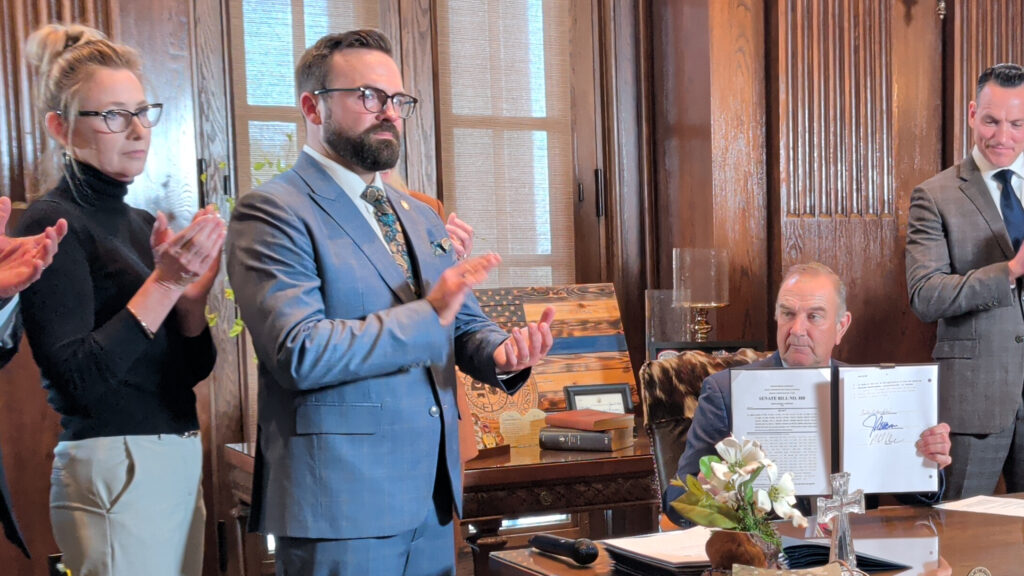
A new Missouri law will soon keep repeat juvenile offenders off the streets and allow police and prosecutors to share criminal history data to better track juvenile criminals.
The governor signed Senate Bill 888 Tuesday that also increases penalties for sexual crimes and streamlines how parole eligibility is calculated.
Sen. Nick Schroer and Rep. Brad Christ sponsored the legislation to end "catch and release" policies for minors. Schroer said it took five years to get the comprehensive package passed.
"The catch and release process we were seeing throughout the state of Missouri had to end, and it took five years," Schroer said. "I want to thank the governor and his team for all they've done and making sure this thing was done properly. We worked diligently until three or four in the morning on the Senate side, and his team was right there with us the entire time."
Attorney General Catherine Hanaway said the bill was win for urban areas like St. Louis and Kansas City.
"The number one issue I heard from sheriffs, police officers, prosecutors and victims about was truth in sentencing, and particularly in our urban areas, real concerns about juvenile justice, Hanaway said.
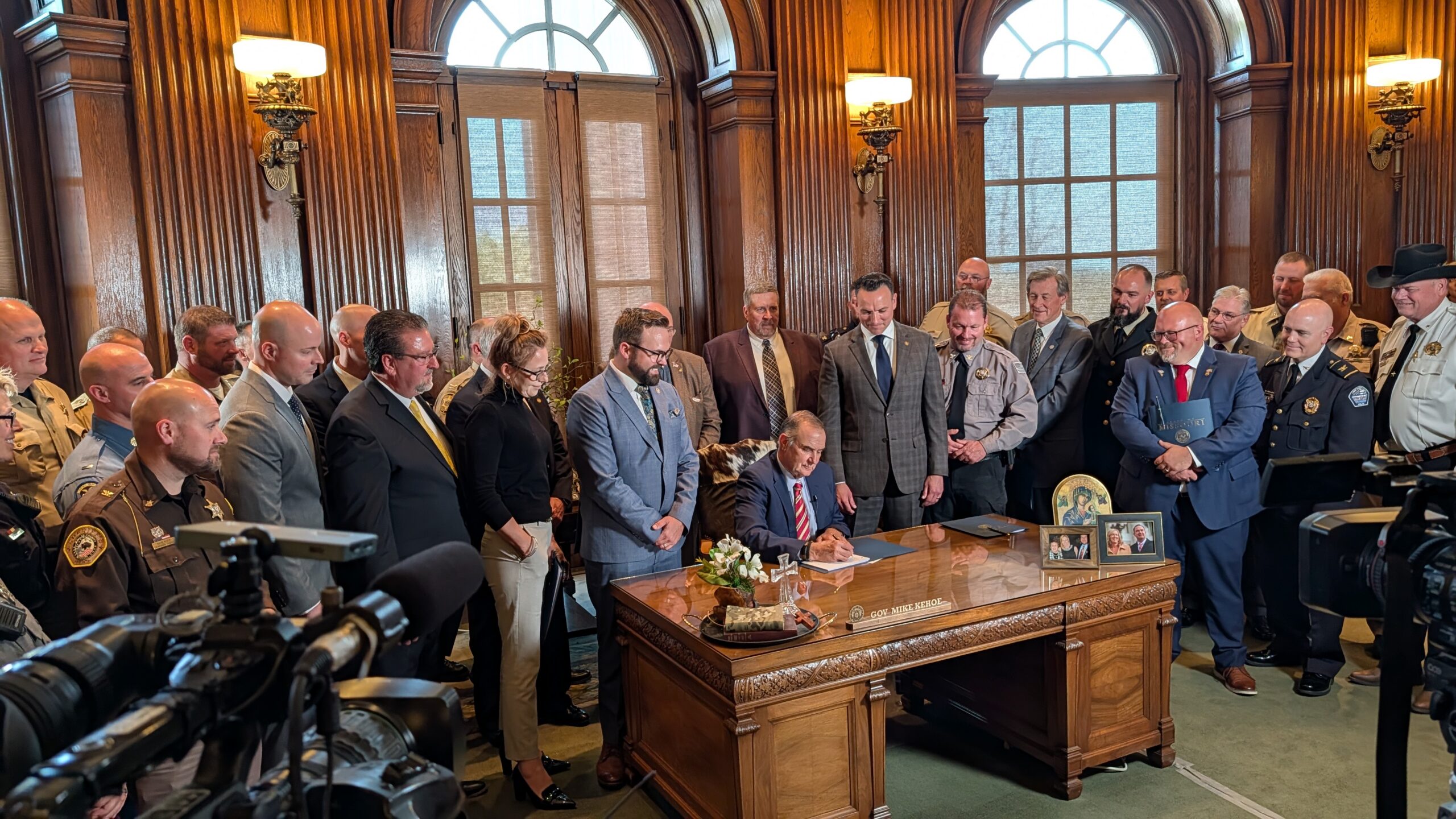
Gov. Mike Kehoe referred to the bill's changes as "sentencing certainty" rather than sentencing reform. He said the law gives communities and law enforcement confidence in knowing exactly how long an offender will actually serve.
"You want to continue to punish the bad guys doing bad things in our communities," Kehoe said. "Certainly we should not be managing prison populations by being soft on crime. We always want to be as tough as we can…on that."
Kehoe answered a question whether the law focuses too heavily on criminalizing youth over restorative justice, noting lawmakers worked through the night to address those concerns.
"Listen, if a juvenile is going to act like an adult and commit a crime as an adult, they need to understand those unfortunately have consequences," Kehoe said.
Closing the loopholes
The new law permits prosecuting or circuit attorneys to directly file motions to transfer a minor to an adult court of general jurisdiction for serious offenses.
"This would require the juvenile officer to have a relationship with the prosecutor and the judge," Schroer told Heartlander News.
He said juvenile officers sometimes ignored recommendations from judges to certify violent teens as adults.
Under the new law, juvenile officers are required to consult with prosecutors concerning any offense for which the child could be certified as an adult. This includes Class A or B felonies, felony sex crimes, or three distinct felonies committed within a 180-day period.
Prosecutors will also be provided with police reports, witness statements, and the Missouri Juvenile Detention Assessment Form (JDTA) used in the case.
"If the prosecutor determines the kids is a threat to society, we're going to move forward, Schroer said. "If the juvenile officer is not going to try to certify the kid, we're going to do it now."
The legislation also changes how multiple crimes are handled during juvenile detention assessments.
Schroer said some jurisdictions previously interpreted the assessment form to count a spree of multiple offenses–like breaking into 15 cars in one night–as a single crime.
Now, the law requires juvenile officers to consider all legally sufficient charges submitted by cops when determining whether to detain a child.
"We fixed it in this bill by saying, 'Look, this form isn't mandatory,'" Schroer said. "If you're a juvenile officer and you want to use it for whatever, you have to take all these separate crimes separately, and you can't couple them in to say they went on a crime spree one night."
The legislation further mandates agencies who detain juveniles for "fingerprintable offenses" to forward the detention information and finger prints to a central location. This information will then be available to criminal justice agencies through the Missouri Uniform Law Enforcement System (MULES).
While much of the bill goes into effect toward the end of August, some of the broader sentencing and parole reforms includes in the legislation will not take effect until January 1, 2028.
"This gives law enforcement and the prosecutors and the judges and the juvenile officers time to figure out how they going to implement these changes." Schroer said.
Police chiefs and sheriffs from all over the state showed up in support of the bill at the signing Tuesday, leaders from St. Louis City and St. Louis County police departments appeared to be absent.