On President’s Day, if you aren’t getting inundated with mattress sales in your social media feed you might get a glimpse of a grainy black-and-white photo of a bearded man in a stovepipe hat.
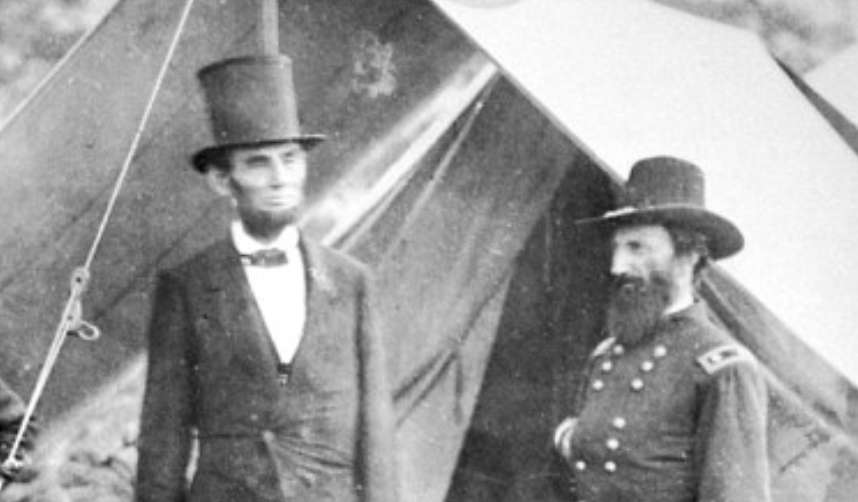
The photo may cause you to remember the rail-splitter from Illinois and the emancipator of a million souls: Abraham Lincoln.
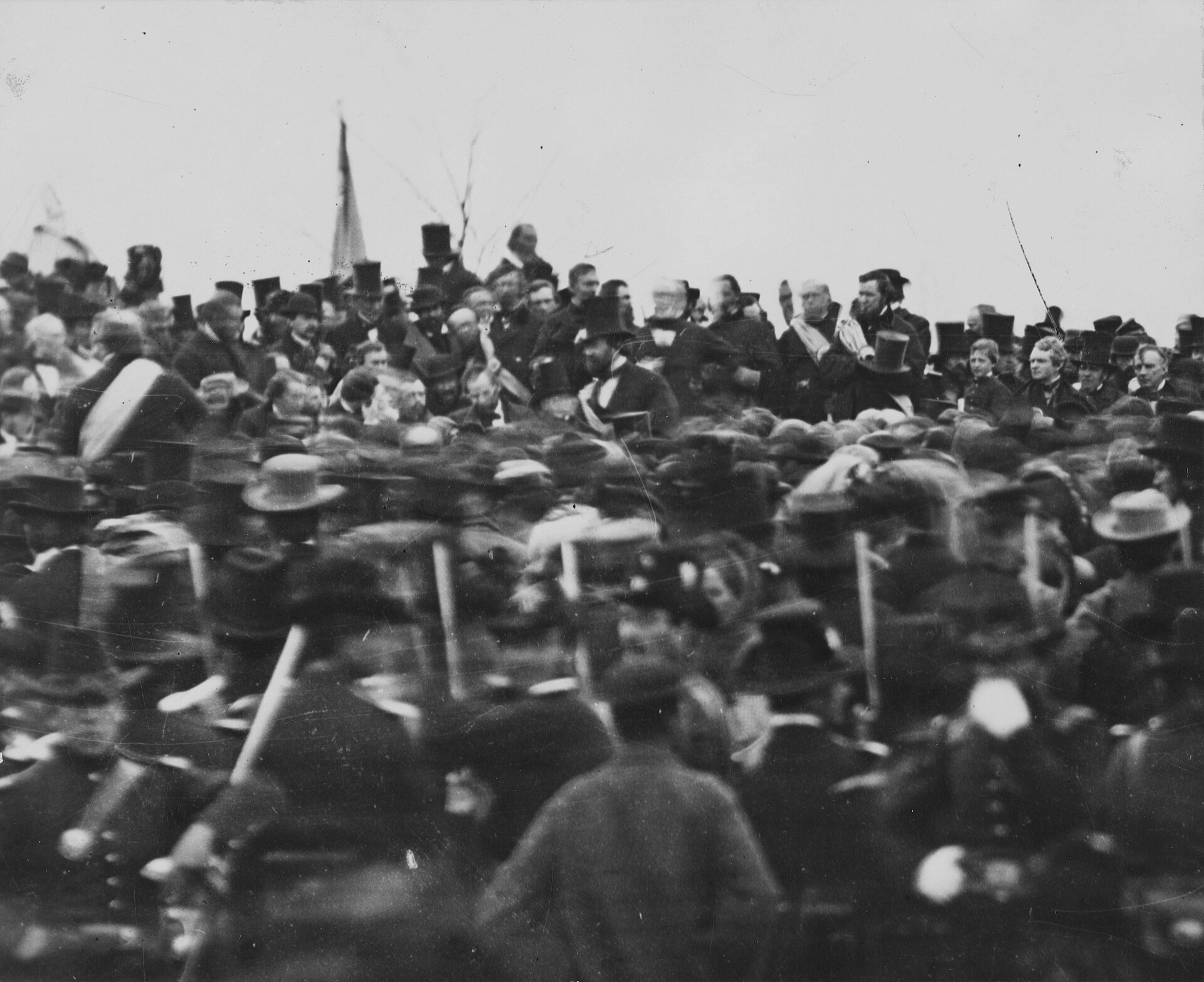
But to get a real sense of who Lincoln was, all you have to do is look back at a November afternoon in 1863 when he gave his famous Gettysburg Address.
At the time, the Civil War was a grueling, bloody stalemate. But in just 10 sentences and 272 words, Lincoln set the tone for the future of the union — a “government of the people, by the people, for the people.”
Lincoln connected the ongoing sacrifice of the Union soldiers directly to the principles of the Declaration of Independence, emphasizing the war was a test of whether a nation “conceived in liberty, and dedicated to the proposition that all men are created equal” could long endure.
The two-hour warm up
We often forget Abraham Lincoln wasn’t even the main attraction on the day of the speech. The keynote was Edward Everett, the rockstar speaker of his day.
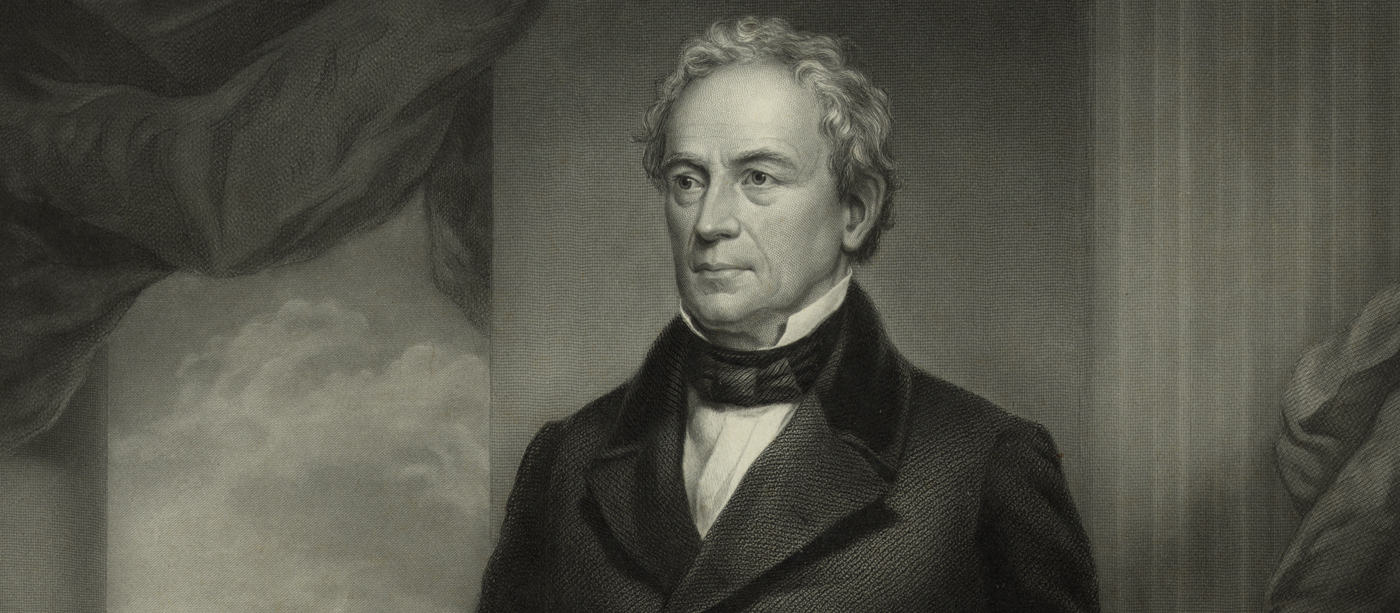
The former President of Harvard and U.S. senator spoke for two solid hours. Lincoln followed him and spoke for roughly two minutes.
The contrast was so sharp that some thought Lincoln had failed.
“The cheeks of every American must tingle with shame as he reads the silly, flat, and dishwatery utterances,” wrote The Chicago Times — a defunct Democrat newspaper.
A Massachusetts newspaper called the Springfield Republican published a glowing review.
“Surprisingly fine as Mr. Everett’s oration was in the Gettysburg consecration, the rhetorical honors of the occasion were won by President Lincoln.
“His little speech is a perfect gem; deep in feeling, compact in thought and expression, and tasteful and elegant in every word and comma. Then it has the merit of unexpectedness in its verbal perfection and beauty…
“Turn back and read it over, it will repay study as a model speech. Strong feelings and a large brain are its parents.”
Everett himself realized the power of Lincoln’s succinct speech the very next day.
“I should be glad if I could flatter myself that I came as near to the central idea of the occasion in two hours as you did in two minutes,” Everett wrote in a letter to Lincoln.
Five handwritten copies of the Gettysburg Address exist today. Everett’s copy (see below) is stored at the Abraham Lincoln Presidential Library and Museum in Springfield, Illinois.
The Churchill connection
There is a fascinating link between Lincoln and another giant of history, Winston Churchill.
Churchill, who delivered his famous “Iron Curtain” speech in Fulton, Missouri, some eighty years ago, once called the Gettysburg Address the “most sublime speech in all of history.”
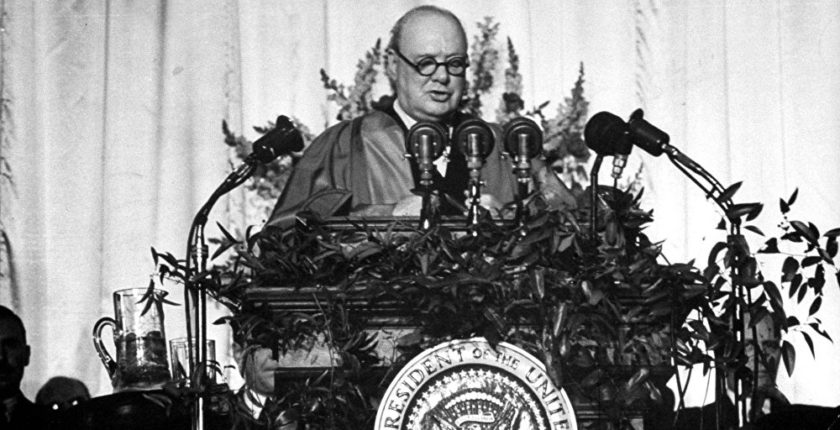
Poetic, isn’t it? A man whose own words defined the Cold War from a small Missouri gymnasium looked back at a tall, lanky Illinois lawyer and saw the ultimate master of the craft.
Both men understood that in times of existential crisis what we need is a vision, not a lecture.
The Gettysburg Address
Four score and seven years ago our fathers brought forth, upon this continent, a new nation, conceived in Liberty, and dedicated to the proposition that all men are created equal.
Now we are engaged in a great civil war, testing whether that nation, or any nation so conceived, and so dedicated, can long endure. We are met on a great battle-field of that war. We have come to dedicate a portion of that field, as a final resting-place for those who here gave their lives, that that nation might live. It is altogether fitting and proper that we should do this.
But, in a larger sense, we can not dedicate, we can not consecrate we can not hallow this ground. The brave men, living and dead, who struggled here, have consecrated it far above our poor power to add or detract. The world will little note, nor long remember what we say here, but it can never forget what they did here.
It is for us, the living, rather, to be dedicated here to the unfinished work which they who fought here, have, thus far, so nobly advanced. It is rather for us to be here dedicated to the great task remaining before us that from these honored dead we take increased devotion to that cause for which they here gave the last full measure of devotion that we here highly resolve that these dead shall not have died in vain that this nation, under God, shall have a new birth of freedom and that government of the people, by the people, for the people, shall not perish from the earth.
Listen to the Gettysburg Address recited and performed by Jeff Daniels.